The Adaptive University: Why Adaptive Capacity Is Higher Education’s Next Great Challenge
August 1, 2026 - 21:28

Universities have always been among society's greatest engines of innovation. Yet these institutions that produce so much breakthrough thinking often struggle to apply that same creativity to their own structures. The result is a growing gap between what the world needs from higher education and what traditional campuses can actually deliver.
The core issue is not funding or technology, but adaptive capacity. This is the ability of an organization to sense changes in its environment, interpret what those changes mean, and adjust its operations and strategy accordingly. For most universities, this capacity is remarkably low. Faculty governance, departmental silos, accreditation rules, and decades-old budget models all favor stability over responsiveness. When new demands appear, such as the rise of online learning, workforce reskilling, or AI-assisted research, the typical response is to bolt on a new program rather than rethink the underlying model.
Adaptive capacity matters because the pace of external change is accelerating. Demographics are shifting, employer expectations are evolving, and students are questioning the value of a four-year residential degree. Institutions that cannot experiment, fail fast, and scale what works will find themselves increasingly irrelevant. The challenge is not just to offer new courses, but to build the internal muscles for continuous reinvention. That means flatter decision-making, cross-disciplinary problem solving, and a willingness to let go of legacy practices that no longer serve their purpose.
The good news is that some universities are already showing the way. They are creating innovation labs, partnering with industry in new ways, and using data to guide curriculum changes in real time. But these efforts remain the exception. The next great challenge for higher education is not to produce more knowledge, but to become more agile in how it organizes itself to share that knowledge with the world.
MORE NEWS

September 16, 2026 - 01:06
University Pushes Career-Focused Education as Students Demand Clear Paths to EmploymentRider University is placing a stronger emphasis on career-focused education as students increasingly look for a direct connection between their college degree and a job after graduation. The school...

September 15, 2026 - 01:36
Bemidji State Launches Education Fair Series Across MinnesotaStudents from 11 area high schools gathered at Bemidji State University on Monday, eager to explore resources and plan the next chapters of their lives at the 2026 Minnesota Education Fair. The...
September 14, 2026 - 04:07
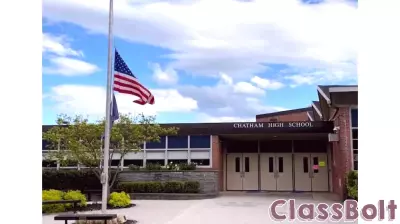
Chatham BOE to Vote on Adoption of Policies and Regulations Introduced at July 13 Meeting; Update on $54 Million ReferendumCHATHAM, NJ - The Chatham Board of Education is scheduled to vote on the adoption of the Strauss Esmay Policies and Regulations Manual during its meeting on Monday, Sept. 14 at 7:30 p.m. The...

September 13, 2026 - 22:50
California parents demand cameras in special education classes after alleged teacher abuseParents across California are calling for surveillance cameras in special education classrooms following allegations of teacher abuse. Online petitions supporting the measure have gathered...