What Learning Will Look Like Outside the Classroom by 2027
30 April 2026
Picture this: It’s a Tuesday afternoon in 2027, and a 14-year-old named Maya isn’t sitting in a classroom. She’s standing in a virtual rainforest, her smart glasses overlaying data about tree species and carbon absorption rates directly into her field of view. She’s not memorizing facts for a test—she’s actually solving a problem: How can we restore a degraded ecosystem in Borneo? Her “teacher” isn’t a person in a room; it’s an AI coach that adjusts the difficulty in real-time, while her peers in Jakarta, Berlin, and Nairobi collaborate on the same 3D model. This isn’t science fiction. It’s the bleeding edge of where education is heading. And by 2027, learning outside the classroom won’t just be a supplement—it’ll be the main event.
Let’s be honest: The traditional classroom has been creaking under the weight of its own design for decades. We’ve all felt it—that sense of being trapped in a system built for an industrial age that no longer exists. But here’s the good news: The walls are crumbling. By 2027, learning will look less like a lecture hall and more like a living, breathing ecosystem. It will be messy, personalized, and deeply connected to the real world. So, grab a coffee (or tea), and let’s dive into what this transformation actually means.
The Death of the “One-Size-Fits-All” Schedule
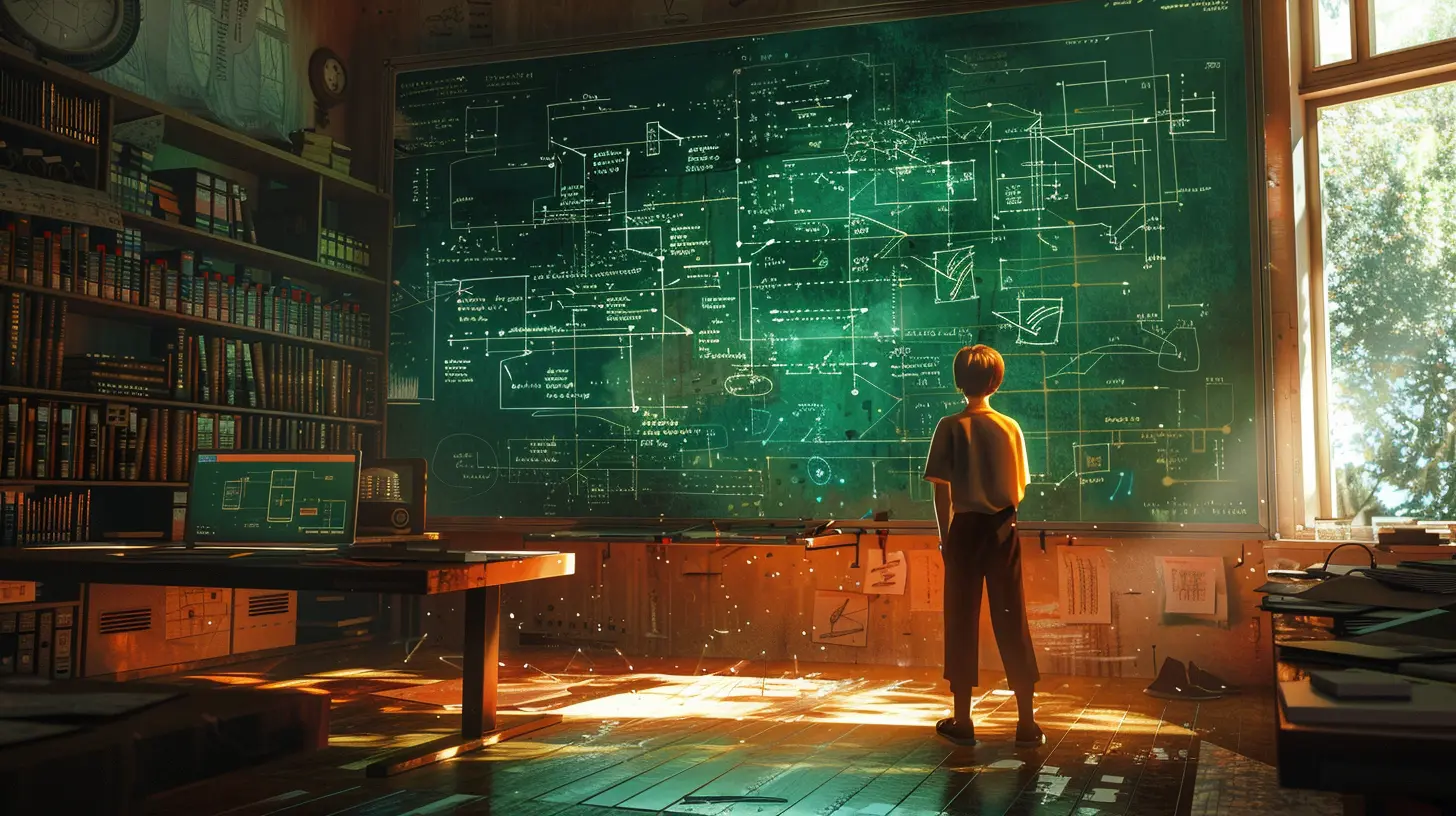
Have you ever noticed how weird it is that we expect every 12-year-old to learn fractions at exactly the same time on a Tuesday morning? It’s like expecting every flower in a garden to bloom on the same day. By 2027, that rigid schedule is going the way of the floppy disk. Learning outside the classroom will be asynchronous, but not in the boring, “watch a pre-recorded video” way. Instead, it’ll be rhythmic—aligned with your personal energy peaks, your family’s calendar, and even your local climate.Imagine a platform that doesn’t just deliver content, but senses when you’re most receptive. Maybe you’re a night owl who crushes advanced calculus at 11 PM. Or perhaps you’re a morning person who learns best after a 20-minute jog. By 2027, AI assistants will track your cognitive patterns (with your consent, of course) and suggest optimal learning windows. You won’t “miss” a lesson; you’ll just pick it up when your brain is ready. This isn’t about laziness—it’s about efficiency. After all, why force a square peg into a round hole?
But here’s the kicker: This flexibility will extend to where you learn. The “classroom” might be a corner of your living room, a park bench with a 5G connection, or even a moving bus. I’ve seen prototypes of “learning pods”—soundproof, climate-controlled booths that can be installed in public spaces like libraries or train stations. You swipe a card, pop in your earbuds, and you’re instantly in a focused study environment. By 2027, these pods will be as common as ATMs. The question isn’t if you can learn anywhere—it’s where you choose to.
The Rise of the “Micro-Credential” Economy
Let’s talk about the elephant in the room: degrees. For decades, a four-year university degree has been the golden ticket. But by 2027, that ticket is getting crumpled. Why? Because the world is moving too fast. By the time you graduate with a degree in cybersecurity, the threats have already evolved. Employers are waking up to a simple truth: A diploma doesn’t guarantee competence. What matters is what you can do.Enter the micro-credential. Think of it as a Lego brick for your resume. Instead of a single, monolithic degree, you’ll stack dozens of tiny, verifiable badges—each representing a specific skill. Did you master Python for data analysis? Badge. Can you negotiate a business contract in Mandarin? Badge. Did you build a functional drone from scratch? Badge.
But here’s where it gets interesting: These credentials won’t just come from schools. By 2027, you’ll earn them from anywhere. A weekend hackathon? That’s a badge. A volunteer project building wells in rural Kenya? That’s a badge. An online course from a retired NASA engineer? You guessed it—a badge. The key is that these credentials will be stored on a blockchain, making them tamper-proof and instantly verifiable by employers. Imagine applying for a job and having your entire skill portfolio pop up in seconds, no transcripts needed. It’s a world where your actions speak louder than your grades.
AI Tutors That Actually Know You
I’ll be the first to admit: Most AI “tutors” today are glorified chatbots. They’re about as personal as a customer service robot. But by 2027, that’s going to change dramatically. We’re talking about AI that doesn’t just answer questions—it understands your confusion. It can detect hesitation in your voice, track where your eyes linger on a diagram, and even sense when you’re getting frustrated.Let me give you a concrete example. Say you’re struggling with the concept of entropy in thermodynamics. A 2027 AI tutor won’t just re-read the textbook definition. It might pull up a real-world analogy: “You know how your room gets messier over time, even if you don’t touch it? That’s entropy in action.” Then it might adjust the difficulty on the fly, offering simpler examples if you’re stuck, or challenging you with a complex problem if you’re breezing through. It’s like having a personal tutor who has infinite patience and knows exactly when to push and when to pull back.
But here’s the really wild part: This AI will be emotionally aware. It’ll notice if you’re anxious before a test and offer a breathing exercise. It’ll celebrate your small wins with a virtual high-five. And it’ll never, ever judge you for asking a “stupid” question. For learners who struggle with traditional classrooms—whether due to anxiety, learning differences, or simply a different pace—this is revolutionary. The AI doesn’t care if you’re “behind”; it only cares if you’re moving forward.

The Death of the “Expert” and the Birth of the “Network”
Here’s a controversial thought: By 2027, the idea of a single “expert” teacher standing at the front of a room will seem almost quaint. Why? Because knowledge is no longer a scarce resource. It’s abundant, free, and often contradictory. The real skill isn’t knowing facts—it’s curating them.Learning outside the classroom will look more like a social network than a school. Imagine a platform where you don’t just consume content—you co-create it. You post a question about quantum computing, and within minutes, a retired physicist from Switzerland, a PhD student from India, and a hobbyist from Brazil weigh in. The “teacher” isn’t a person; it’s the collective intelligence of the group.
This is already happening in pockets. Look at communities like Stack Overflow for coding, or Reddit’s r/AskHistorians. But by 2027, these networks will be structured and accredited. You’ll earn reputation points for helpful answers, and those points will translate into real-world credentials. It’s a shift from hierarchical learning (teacher→student) to distributed learning (everyone teaches, everyone learns). And the best part? You’ll be surrounded by people who are genuinely passionate about the topic, not just there because they have to be.
Immersive Learning: Beyond the Screen
Let’s talk about VR and AR. I know, I know—everyone’s been promising “the year of VR” for a decade. But by 2027, the tech will finally be cheap, lightweight, and comfortable enough for daily use. And it won’t be about escaping reality; it’ll be about enhancing it.Here’s a scenario: You’re learning about the Roman Empire. Instead of reading a textbook, you strap on a headset and walk through the Colosseum in 100 AD. You smell the dust, hear the crowd roar, and watch a gladiator fight from the stands. Your AI guide whispers historical context in your ear. You can even interact with the environment—pick up a coin, examine a fresco, or talk to a digital avatar of a Roman senator. This isn’t a gimmick; it’s a cognitive hack. Studies show that immersive experiences improve retention by up to 75% compared to reading.
But it goes deeper. For subjects like biology, you can shrink down and travel through a human bloodstream. For architecture, you can build a skyscraper in mid-air and test its structural integrity against a virtual earthquake. For history, you can simulate the signing of the Magna Carta and see the consequences of different decisions. Learning becomes experiential—you don’t just hear about it, you live it.
The “Learning to Learn” Meta-Skill
Here’s the uncomfortable truth: By 2027, much of the “content” we learn today will be obsolete. By the time a child born today graduates high school, the jobs they’ll apply for may not even exist yet. So what’s the point of memorizing facts that Google can retrieve in 0.2 seconds?The answer is meta-learning: learning how to learn. Outside the classroom, this will be the core curriculum. You’ll spend less time on specific subjects and more time on cognitive tools—critical thinking, pattern recognition, emotional intelligence, and adaptability. Think of it as mental cross-training. You might spend a month learning to play the piano (to build neural plasticity), then a month studying stoic philosophy (to build resilience), then a month coding in Rust (to build logical thinking).
The goal isn’t to become an expert in any one thing. It’s to become a learning machine—someone who can pick up any new skill in weeks, not years. By 2027, this will be the most valuable skill in the job market. And the best place to practice it? Outside the classroom, where the curriculum is life itself.
The Role of Physical Spaces: Libraries 2.0
Don’t worry—I’m not saying physical spaces will disappear. But they’ll transform. The library of 2027 won’t be a quiet room with dusty books. It’ll be a “learning hub” that combines the best of digital and physical.Picture this: A space with modular furniture that can be reconfigured in minutes. One corner has VR stations for immersive learning. Another has soundproof pods for deep focus. There’s a “maker space” with 3D printers, laser cutters, and soldering irons. There’s a “discussion pit” where groups can debate ideas. And yes, there are still books—but they’re curated by AI recommendations based on your learning history.
These hubs will be community-owned and open 24/7. They’ll be staffed not by librarians, but by “learning facilitators”—people trained in coaching, psychology, and tech support. Their job isn’t to teach; it’s to unblock. If you’re stuck on a problem, they’ll point you to resources. If you’re feeling unmotivated, they’ll help you set goals. If you’re lonely, they’ll connect you with a study group. It’s a far cry from the passive, one-way transmission of traditional school.
The Dark Side: Equity and Access
I’d be lying if I said this future is all sunshine and rainbows. By 2027, the gap between the “learning haves” and “learning have-nots” could widen dramatically. If high-quality AI tutors, VR headsets, and learning hubs are only available to the wealthy, we’ll create a new kind of educational apartheid.But here’s the hopeful angle: The same technology that could widen the gap could also close it. A smartphone with a $10 app can provide a world-class education in literacy, numeracy, and coding. Open-source VR platforms can be run on cheap hardware. And community-driven learning networks can bypass traditional gatekeepers. The question isn’t whether the tech exists—it’s whether we have the political will to distribute it fairly.
By 2027, I predict we’ll see a grassroots movement: “Learning co-ops” where families pool resources to buy shared equipment. Public-private partnerships that put learning hubs in underserved neighborhoods. And maybe even a universal basic education credit—a digital voucher that every citizen can spend on any accredited learning experience. It’s messy, it’s imperfect, but it’s a start.
So, What’s Your Role in All This?
Here’s the million-dollar question: Are you ready? Because this shift isn’t coming in some distant future—it’s already happening. The pandemic was a stress test, and the system failed. Now, we’re rebuilding from the ground up.By 2027, learning outside the classroom won’t be a niche option. It’ll be the default. You’ll curate your own curriculum from a global buffet of experiences. You’ll learn from peers, not just professors. You’ll be measured by what you can do, not what you can memorize. And you’ll never, ever be bored—because the world is the classroom, and the syllabus is infinite.
So, take a deep breath. The future of education isn’t something that happens to you. It’s something you build, every day, with every curious question you ask. The classrooms are already dissolving. The only question is: What will you learn next?
all images in this post were generated using AI tools
Category:
Education BlogsAuthor:

Zoe McKay
Discussion
rate this article
2 comments
Kenneth Gibson
This article offers a refreshing glimpse into the future of learning. Embracing innovation outside traditional classrooms can unlock new possibilities for students. Let's stay curious and adaptable as we explore these changes, ensuring every learner thrives in this evolving educational landscape. Keep pushing boundaries!
July 26, 2026 at 11:49 AM
Zoe McKay
Thank you for your thoughtful comment. I completely agree that curiosity and adaptability are key to unlocking new opportunities in learning. Let's continue to embrace innovation together.
Preston Spencer
Exciting vision—lifelong learning will truly blur with daily life.
April 30, 2026 at 3:28 AM
Zoe McKay
Absolutely! Integrating lifelong learning into our daily routines will transform how we approach education and personal growth. Exciting times ahead!