How to Identify Giftedness in Early Childhood
18 January 2026
Alright, let’s get one thing straight: not every toddler who memorizes the alphabet backward or dances like Beyoncé at age three is necessarily gifted. But hey, some of them totally are! The trick is knowing the difference between a bright child and one who’s just casually blowing your mind on the daily.
If you're a parent, teacher, or just someone suspecting there's a mini Einstein in your life, this guide is for you. We're about to take a deep (but fun!) dive into how to identify giftedness in early childhood — no PhD required, promise.
What Does It Really Mean to Be “Gifted”?
Let’s clear the fog first. When we talk about a “gifted” child, we're not just talking about the kid who finishes their worksheets before everyone else. Oh no. We're talking about a child who operates on a whole different wavelength.So, What’s the Definition?
Giftedness in early childhood typically refers to children who demonstrate exceptional ability or potential in one or more areas — think intellectual, creative, artistic, or leadership. The kicker? These traits usually show up waaay earlier than what’s considered typical for their age group.Now, let’s not confuse “ahead of the curve” with “gifted.” Some kids are advanced, sure. But gifted children often display abilities that are significantly beyond what’s expected — as in, they’re sprinting while their peers are learning to crawl.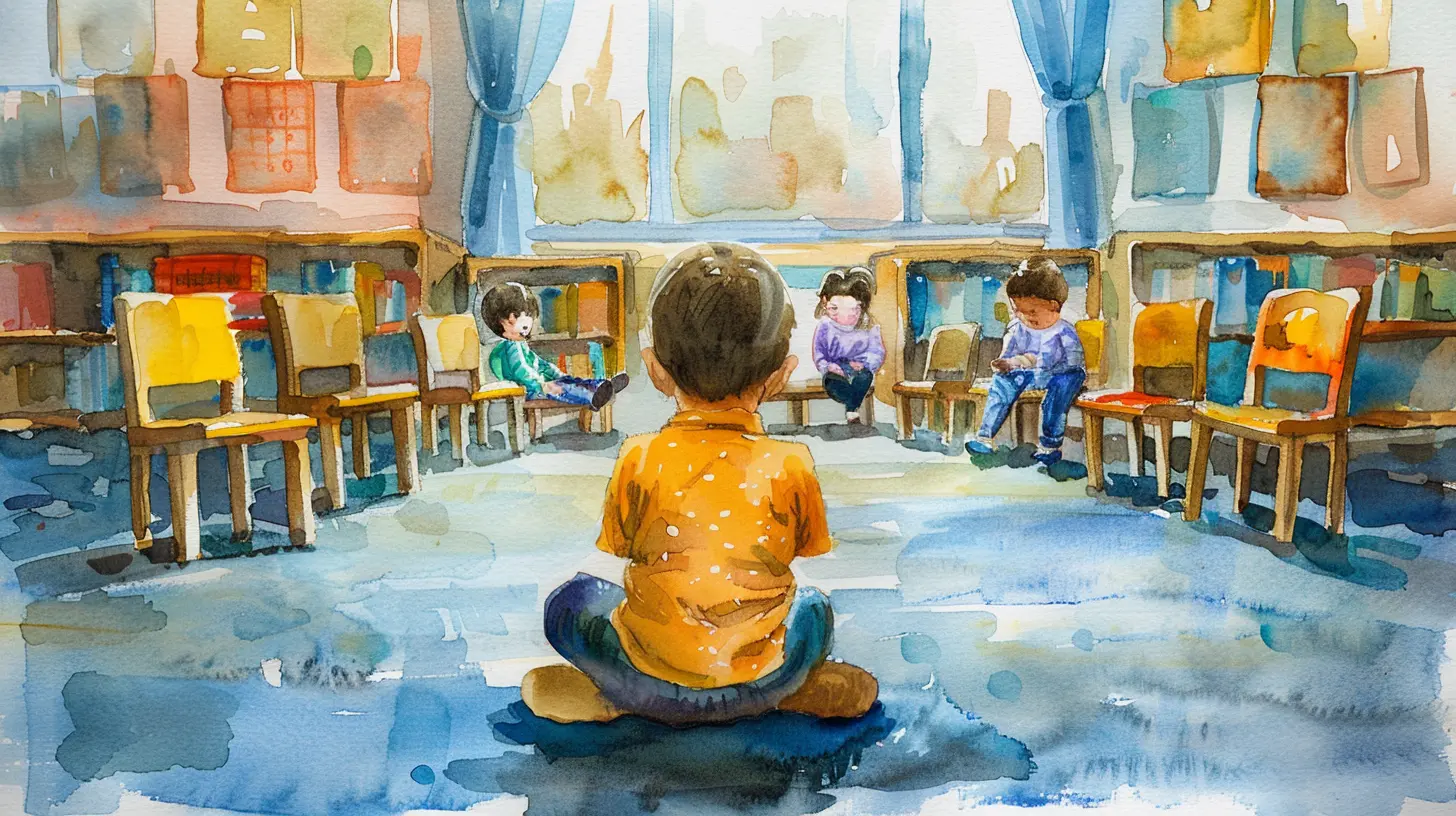
Why Early Identification Matters (Spoiler: It Really, Really Does)
Here's the thing: gifted kids can be a handful — in the best and worst ways. Without proper recognition and support, they might end up bored, frustrated, or misunderstood. And trust me, the last thing you want is a bored genius throwing algebraic tantrums in preschool.The Benefits of Identifying Giftedness Early
- 🧠 Targeted support that matches their learning pace- 💬 Social-emotional development to help them fit in… or at least, not feel like total aliens
- 🚀 Opportunities to challenge and engage them (before they set their math books on fire out of boredom)

The Top Signs of Giftedness in Young Children
Let’s get down to business. You think your child might be gifted? Here's what to look for. And no, being able to name all the dinosaurs at age three (while impressive) isn't the only marker.1. An Insatiable Curiosity
Gifted kids are like tiny detectives — always asking “why?” and never satisfied with a simple answer. If your kiddo won't take “just because” as a valid response, you've got a curious contender on your hands.2. Advanced Language Skills
We’re talking full-blown conversations before most kids can string together a complete sentence. If your preschooler is throwing around words like “hypothesis” or correcting your grammar (cue the eye roll), it’s time to take notice.3. Intense Focus (On Things They Love)
While most young kids have the attention span of goldfish, gifted children can hyper-focus on topics that fascinate them. Dinosaurs, space, insects — if they’re obsessed, they’ll dive deep. Like, National-Geographic-level deep.4. Sensitivity and Emotional Depth
This might surprise you, but many gifted kids are also emotionally in-tune. They can be incredibly empathetic or overly sensitive to criticism. Break a promise? Brace yourself for a full philosophical debate on trust.5. Quirky Humor and Creativity
Gifted kids tend to have a sense of humor well beyond their years (and sometimes, eerily on point). They may also show out-of-the-box thinking, drawing wild connections that leave you wondering, “How did they come up with that?!”6. Fast Learners With Excellent Memory
Some gifted children just soak up information like a sponge. Teach it once, and boom — it’s stored for life. They might even correct you later, flexing that steel-trap memory of theirs.
Common Myths Busted: Let’s Keep it Real
Let’s pause and call out a few myths that need to be kicked to the curb.Myth #1: Gifted Kids Excel in Everything
Nope. Some gifted kids may be mind-blowingly good at math but struggle with writing. Others might be musical geniuses but socially awkward. Giftedness doesn’t always come with a well-rounded GPA.Myth #2: Giftedness Equals Straight-A Student
Not always. In fact, some gifted kids underperform in school because they're bored out of their skulls. Or because their dreams are bigger than the worksheet in front of them.Myth #3: Gifted Kids Don’t Need Help
False. Just because they’re smart doesn’t mean they’ve got it all figured out. They still need guidance, encouragement, and sometimes therapy (yup, we said it) to navigate life.How to Evaluate Giftedness (Without Guesswork)
So how do you go about officially figuring out if your child is gifted? Hint: it involves more than just parental gut feelings (although those are pretty powerful).Get a Professional Assessment
Your best bet is to consult with an educational psychologist. They can administer intelligence and developmental tests like:- IQ Testing (e.g., WPPSI-IV) – For ages 2.5 to 7
- Achievement Tests – To measure learning and comprehension
- Behavioral Checklists and Observations
But remember: one test doesn’t define your child. It’s just one piece of the puzzle.
Teacher Observations Matter Too
Teachers – especially early childhood educators – have a sharp eye for spotting outliers. If your kid is in school, their teacher might be the first to notice that your child is miles ahead of their peers.Supporting Gifted Kiddos at Home (Without Losing Your Mind)
So, your child might be gifted? Congrats… and buckle up. Here’s how to keep up with them without pulling your hair out.1. Feed Their Interests
If your kid is obsessed with astronomy, help them build a telescope. If they’re fascinated by bugs, get them a magnifier and a bug-catching kit. Their passions are the bridge to deeper learning.2. Offer Choices and Challenges
Don’t limit them to tasks meant for their age. Let them tackle higher-level puzzles, experiments, or books. Challenge is their jam.3. Normalize “Not Knowing Everything”
Gifted kids often feel pressure to be perfect. Let them know it’s okay to make mistakes and be unsure. That’s how learning happens — even for the brilliant ones.4. Connect With Other Gifted Families
Trust us, you're not alone in this. Other parents are also juggling kids who are crafting their own role-playing games at six or obsessively coding at age four. Find your tribe.Warning Signs You Might Miss
Some signs aren’t so obvious. In fact, some gifted children fly under the radar because they “blend in” or hide their abilities to fit in.Look Out For:
- Perfectionism and fear of failure- Social isolation or “not fitting in”
- Acting out due to boredom
- Anxiety or depression, especially in older gifted kids
Giftedness isn’t just about academic performance — it’s a whole cocktail of cognitive and emotional traits. Treat it as a full package.
The Role of Schools and Educators
Spoiler alert: not all schools are built with gifted kids in mind. So if you’re lucky enough to have access to gifted programs, use them. If not, you may need to advocate (loudly and proudly) for differentiated instruction or alternative schooling options.Some schools may offer:
- Pull-out programs
- Enrichment activities
- Acceleration (e.g., grade-skipping or subject-skipping)
If your child isn’t being challenged, it’s okay to ask, push, and insist that their needs be met. Mediocre expectations are a disservice to extraordinary minds.
And Finally… Trust Your Gut
You know your child better than anyone else. If something feels different, it probably is. Whether they’re solving Rubik’s cubes as toddlers or inventing games with encyclopedic rules, those quirks might be the breadcrumbs leading to giftedness.Don't be afraid to investigate, ask questions, and most importantly — nurture the heck out of that brilliance.
Because raising a gifted child? It’s not just parenting. It’s like handling a firework. Beautiful, explosive, and utterly unforgettable.
Quick Checklist: Signs Your Child Might Be Gifted
✅ Early reading or speaking✅ Deep curiosity and never-ending "why" questions
✅ Advanced reasoning or problem-solving
✅ Emotional sensitivity and empathy
✅ Unique humor or creativity
✅ Easily bored with repetitive tasks
✅ Intense focus on favorite topics
✅ Preference for older playmates or adults
Final Thoughts
Whether your child is gifted or just exceptionally curious, the fact that you’re here means you’re doing the work. And that’s half the battle.Giftedness isn’t a golden ticket — it needs nurturing, patience, and the right support. But it's also an incredible adventure. One filled with wonder, problems to solve, questions to chase, and dreams that are just a little bit bigger than average.
So get ready. You're not just raising a kid. You might be raising the next innovator, creator, or trailblazer.
all images in this post were generated using AI tools
Category:
Gifted EducationAuthor:

Zoe McKay
Discussion
rate this article
2 comments
Zariah Price
What fascinating insights! It’s intriguing to consider how early signs of giftedness manifest in children. I wonder what specific traits or behaviors educators and parents should look for, and how these indicators can shape a child’s learning journey.
February 22, 2026 at 5:10 AM
Zoe McKay
Thanks for your interest! Key traits to look for include advanced vocabulary, intense curiosity, and strong problem-solving skills. Recognizing these early can really help tailor a child's learning experience.
Zedric Gates
Recognizing giftedness in early childhood opens doors to a world of potential. Celebrate each child's uniqueness and nurture their passions, inspiring lifelong learning and creativity!
January 23, 2026 at 4:41 AM
Zoe McKay
Thank you for your insightful comment! Celebrating each child's uniqueness is indeed crucial for fostering their potential and love for learning.