How Peer Tutoring Supports Differentiated Instruction
26 February 2026
Let’s be honest—teaching a room full of students, each with unique learning needs, is no piece of cake. Some grasp concepts like fish to water; others need a bit more time and guidance. That's where two powerful educational strategies come together like peanut butter and jelly: peer tutoring and differentiated instruction.
They’re not just buzzwords; when used right, these approaches can transform classrooms into dynamic, inclusive, and empowering spaces. But how exactly does peer tutoring support differentiated instruction? Let’s break it down step-by-step.
What Is Differentiated Instruction?
Before we dive into the peer tutoring magic, let’s clarify what differentiated instruction really means.In simple terms, it’s about recognizing that one size doesn't fit all. Differentiated instruction is a teaching philosophy that tailors learning experiences to meet individual student needs. That could mean adjusting:
- Content (what students learn)
- Process (how they learn it)
- Product (how they show what they’ve learned)
- Learning environment (where and with whom they learn)
It’s like giving each learner a personalized map instead of handing everyone the same GPS directions.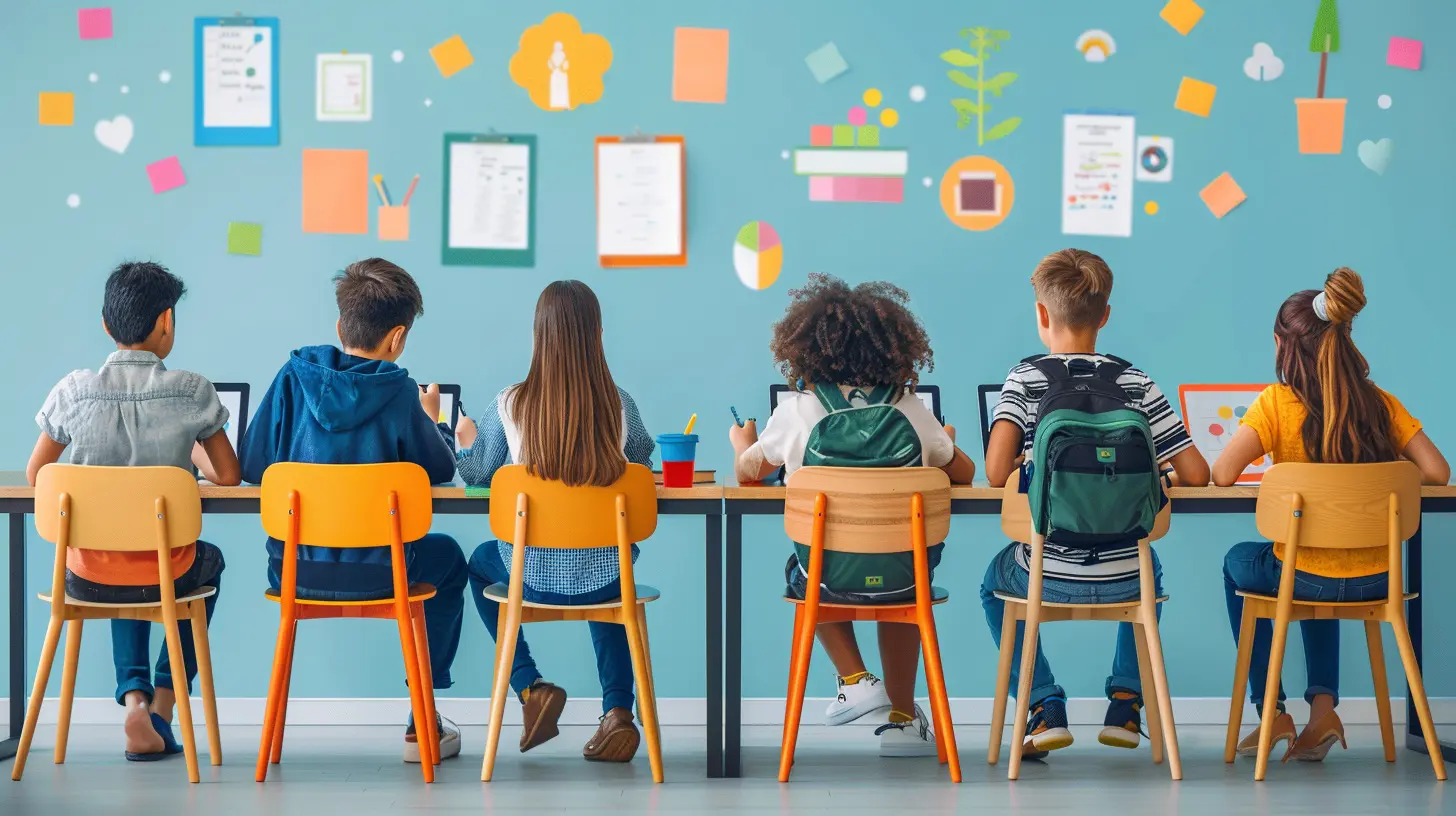
What Is Peer Tutoring?
Now, picture this: instead of the teacher doing all the talking, students help each other learn. That’s peer tutoring in action.Peer tutoring is when students teach and learn from their classmates. One student takes on the role of a tutor, guiding another student (the tutee) through a topic. It’s informal, flexible, and often works wonders for both the tutor and the tutee.
You don’t need elaborate programs or fancy tools. Just willing students, guided practice, and a supportive environment.
Bridging the Gap: How Peer Tutoring and Differentiated Instruction Connect
Here’s where the magic happens. Peer tutoring isn't just a helpful side activity—it’s a natural ally of differentiated instruction. Why?Because it allows learning to be fluid, personalized, and student-centered.
Let’s uncover exactly how peer tutoring supports differentiated instruction in practical, meaningful ways.
1. Personalized Learning Support in Real-Time
Every student learns at a different pace. Instead of racing through lessons, peer tutoring offers real-time support exactly when it's needed.When a student struggles with a math problem and a peer steps in to guide them, that’s individualized instruction in the moment. The tutee benefits from immediate clarification, while the tutor deepens their own understanding by teaching.
It’s like having a built-in GPS recalculating the route whenever there’s confusion.
2. Encourages Multiple Learning Modalities
Not all students thrive on lectures or worksheets. Some are visual learners, others learn by doing, and many need to talk things through.Peer tutoring opens up space for different learning modes:
- Verbal-learner? Explaining the concept out loud helps.
- Kinesthetic-learner? Solving a problem step-by-step with a peer reinforces learning.
- Interpersonal-learner? Collaborative dialogue makes ideas stick.
By pairing students strategically, teachers can match learning styles in a way that textbooks simply can’t.
3. Builds Confidence and Motivation
Let’s face it—asking for help can be intimidating. But talking to a peer? That feels safer and more natural.Peer tutoring nurtures a safe space for making mistakes, asking “silly” questions, and getting things wrong before getting them right. For many students, that boost in confidence is half the battle.
On top of that, being trusted to tutor a classmate can be incredibly empowering. It communicates: “You’ve got this. You’re capable.”
4. Facilitates Scaffolding and Tiered Instruction
Scaffolding is a cornerstone of differentiated teaching—breaking learning into manageable chunks with support along the way.In peer tutoring, scaffolding happens organically. The tutor simplifies ideas, adjusts explanations, and checks for understanding continuously. They’re essentially offering mini-lessons that are tiered to the learner’s level.
Even better? It often sounds more relatable coming from a peer.
5. Improves Classroom Management
Differentiated instruction can sometimes feel chaotic—students working on different tasks, at different levels, using different tools.But peer tutoring brings structure to the chaos. It creates purposeful pairings and keeps students actively engaged. When students are invested in helping or being helped, distractions fade. You're cultivating a classroom buzzing with intentional learning.
6. Helps Teachers Gather Formative Assessment Data
Teachers are always looking for ways to gauge understanding. Peer tutoring gives them one more lens.While students work together, teachers get a front-row seat to observe:
- What misconceptions keep popping up?
- Who needs more support?
- Who’s ready to move ahead?
It’s like having a built-in diagnostic tool, happening in real-time.
7. Promotes Equity in the Classroom
Not all students come to class with the same foundation. Peer tutoring helps close those gaps without labeling or isolating learners.Everyone brings something to the table, and when students teach each other, the classroom becomes a more equitable learning space.
It’s not about “smart” vs. “struggling” students—it’s about learning together, side by side.
8. Encourages Student Agency
When students take charge of teaching or asking for help, they engage in self-directed learning. That’s a key goal of differentiated instruction: making learners responsible for their own growth.Peer tutoring flips the script. Students move from passive recipients to active participants. And when learning becomes something they do, not just receive, transformation happens.
9. Strengthens Social-Emotional Skills
Academics matter, but so do relationships. Peer tutoring builds:- Empathy
- Patience
- Communication
- Teamwork
It creates community in the classroom. Students begin to see each other not just as classmates, but as partners in learning. That’s the kind of environment where differentiated instruction thrives.
Practical Tips for Implementing Peer Tutoring in a Differentiated Classroom
Okay, so you’re sold on the benefits. But how do you actually make it work?Here are some teacher-tested strategies:
🔄 Rotate Roles Regularly
Let students be both tutors and tutees over time. This ensures everyone gets a chance to teach and learn.👯 Pair Strategically
Think about academic skill, communication style, and personality. Not every pairing will be perfect, and that’s okay—just keep it flexible.🧰 Provide Clear Structure
Teach students how to ask questions, explain ideas, and give feedback. Use sentence starters or role cards to guide them.Example:
- “Can you explain that another way?”
- “Here’s how I understood it…”
📝 Use Checklists or Goals
Give pairs small learning objectives to work on. This keeps the session focused and makes it easy to track progress.🔁 Reflect Often
Have students reflect on what went well and what they’d do differently. Peer tutoring isn’t just about academics—it’s about growth, reflection, and connection.Common Concerns (And Why They’re Manageable)
Let’s clear the air. Some concerns pop up when teachers think about peer tutoring. Here’s why you shouldn’t let them stop you:❌ “What if the tutor gives the wrong information?”
Training and structure minimize that risk. Plus, it’s a chance for both students to problem-solve and revisit the content with teacher feedback.❌ “Won’t it take too much time?”
Actually, peer tutoring saves time. It keeps students engaged while you circulate and support where needed most.❌ “What about students with IEPs or ELLs?”
These students often benefit the most. With proper accommodations and pairing, peer tutoring can be a huge confidence booster and language development tool.Final Thoughts: The Power of Peer Connections
Peer tutoring isn’t a silver bullet, but it’s pretty close when it comes to supporting differentiated instruction.Think of it this way: Every student has a voice, a strength, and a struggle. Peer tutoring brings all of that into the light—helping kids see that learning is a shared journey, not a solo sprint.
By weaving peer tutoring into differentiated classrooms, we move from a one-size-fits-all model toward a learning experience that is as diverse and dynamic as the students themselves.
It’s not just good pedagogy—it’s good humanity.
all images in this post were generated using AI tools
Category:
Peer TutoringAuthor:

Zoe McKay
Discussion
rate this article
2 comments
Amelia Sullivan
This article beautifully highlights the role of peer tutoring in enhancing differentiated instruction. The practical insights provided can inspire educators to create inclusive learning environments that cater to diverse student needs. Thank you for sharing!
March 26, 2026 at 4:55 AM
Zoe McKay
Thank you for your kind words! I'm glad you found the insights helpful for fostering inclusive learning.
Vaughn Willis
Great insights on the benefits of peer tutoring! It’s empowering to see how collaboration enhances differentiated instruction, allowing students to learn from each other’s strengths. This approach not only fosters academic growth but also builds confidence and community. Keep up the fantastic work!
March 8, 2026 at 1:47 PM
Zoe McKay
Thanks for the kind words! I'm glad you found the insights valuable. Peer tutoring truly makes a difference in fostering collaboration and community among students.