Report Urges Overhaul of Federal Education Data System, Putting States in Charge
September 5, 2026 - 04:33

A new report from the American Statistical Association is calling for a major rebuild of the country's federal education data infrastructure, recommending that states take on a far more central role in how information is collected, stored, and shared. The study argues that the current system, which relies heavily on fragmented federal reporting requirements, is outdated, slow, and unable to keep pace with the needs of modern classrooms, researchers, and policymakers.
The report points out that while the federal government has historically set the standards for what data gets collected from schools, the actual quality and timeliness of that data have suffered. Schools and state education agencies often spend months filling out duplicative forms, only to have the information sit in federal databases that are difficult to access or analyze. At the same time, states already hold a wealth of detailed information on student performance, attendance, and graduation rates, but that data is rarely used to its full potential because of inconsistent formats and privacy restrictions.
The authors propose a new model where states become the primary collectors and stewards of education data, with the federal government shifting its role from micromanaging collection to setting broad privacy and interoperability standards. Under this plan, states would be responsible for maintaining their own longitudinal data systems, tracking students over time, and reporting only the most essential metrics to Washington. The federal government would then focus on building tools to help states share data with each other, while also investing in the technical staff and infrastructure needed to make the system work.
The report also highlights the need for better training and support for state-level data officers, many of whom are currently underfunded and overworked. It recommends creating a permanent federal grant program to help states modernize their systems, along with a national advisory council to keep the new framework aligned with evolving research needs.
Supporters of the plan argue that it would reduce the burden on local schools, speed up the release of national statistics, and give states the flexibility to address their own unique challenges. Critics, however, worry that shifting too much control to states could lead to uneven data quality and make it harder to compare outcomes across state lines. The report acknowledges these concerns but insists that with the right federal oversight and technical support, a state-centered system can be both more reliable and more useful than the current one.
MORE NEWS

October 20, 2026 - 00:44
Supreme Court to Review Maryland School Admissions PolicyThe Supreme Court will hear oral argument early next year in Association for Education Fairness v. Montgomery County Board of Education, a challenge to the process that a Maryland county uses to...

October 19, 2026 - 04:51
ACLU-WV files lawsuit over underfunding educationThe American Civil Liberties Union of West Virginia has filed a mandamus lawsuit on behalf of a student in Lincoln County, taking the case directly to the state`s highest court. The petition was...

October 18, 2026 - 17:20
What Voters Should Know About the Texas House District 21 RaceVoters in Texas House District 21 will choose a new representative in the upcoming election, and the candidates are drawing clear contrasts on taxes and education, two issues that dominate the race...
October 18, 2026 - 00:39
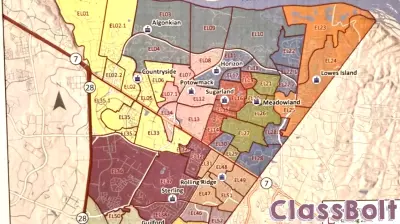
School Board considers shifting some NE Loudoun elementary attendance zonesThe School Board is reviewing two proposals for elementary school attendance zones in northeast Loudoun County, including one that would keep current boundaries unchanged. The discussion comes as...