Why Peer Feedback Improves Classroom Engagement
30 August 2026
Walk into any classroom where peer feedback is working well, and you will notice something immediately. The noise level is higher than in a traditional lecture. Students are turned toward each other, pointing at drafts, asking questions, defending choices, and rewriting sentences in real time. The teacher is not the center of attention. The learning is.
That scene does not happen by accident. It happens because peer feedback, when designed and guided properly, taps into several fundamental aspects of how people learn and how they relate to each other. It is not just a nice activity to fill time. It is a structural shift in who owns the learning process.
The common assumption is that peer feedback saves the teacher time. That is a myth. It often takes more time to set up well than it saves in grading. But the payoff is not efficiency. The payoff is engagement, depth of understanding, and a classroom culture where students stop performing for the teacher and start thinking for themselves.

The Psychology Behind Engagement
Engagement is not the same as entertainment. A student can be quietly watching a video and be completely disengaged mentally. Engagement means active cognitive processing, emotional investment, and a sense of agency. Peer feedback creates all three at once.When a student knows their work will be read by a classmate, not just graded by the teacher, something shifts. The audience becomes real. Writing for a peer feels different from writing for an authority figure. The stakes are social, not just academic. Students care about how they appear to their peers. That concern, when channeled properly, produces more careful thinking and more revision effort.
There is also a cognitive principle at work called the generation effect. People remember and understand information better when they produce it themselves rather than passively receive it. When a student has to explain why a paragraph works or why an argument falls apart, they are generating new understanding. They are not just consuming feedback. They are constructing it.
Peer feedback also reduces the emotional threat of criticism. Feedback from a teacher carries an inherent power imbalance. The teacher is the judge. A peer is a collaborator. Students often hear teacher feedback as a verdict. They hear peer feedback as a conversation. That difference matters because learning requires a willingness to be wrong, and being wrong in front of a peer is less frightening than being wrong in front of an authority.
The Shift from Passive to Active Roles
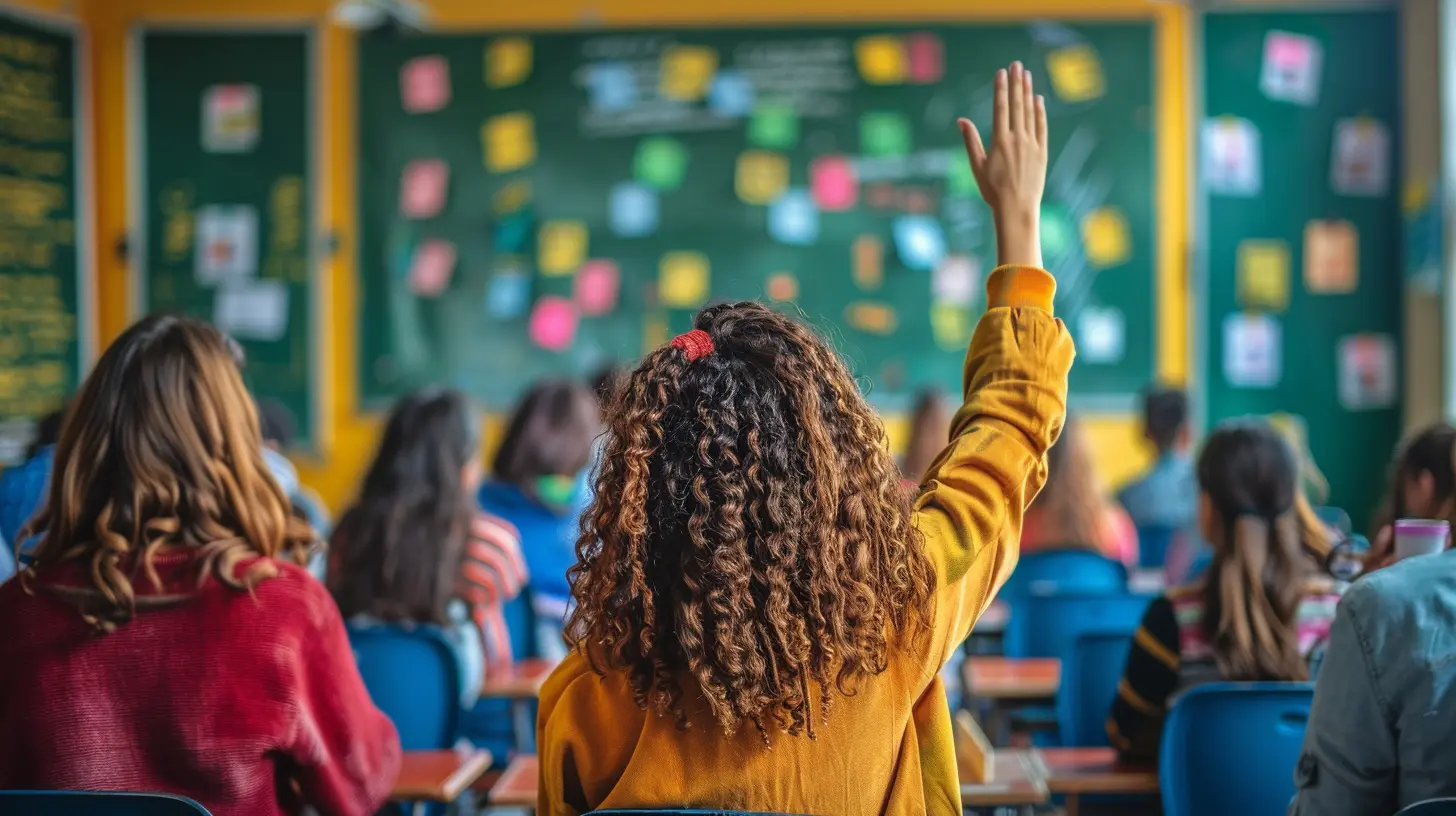
In a traditional classroom, the teacher talks and students listen. Even in a discussion-based class, the teacher usually controls the flow. Peer feedback breaks that pattern because it forces every student into an active role. There is no place to hide. You cannot fade into the background when you are expected to give a response to a classmate's work.This is especially important for students who are quiet by nature. A shy student might never speak up in a full-class discussion. But in a pair or small group, with a clear task and a specific piece of work in front of them, that same student often finds a voice. The structure gives them permission to speak. The task gives them something concrete to talk about, so they do not have to generate ideas from nothing.
The act of giving feedback is itself a form of learning. To give useful feedback, a student must understand the assignment criteria deeply enough to recognize whether someone else has met them. That requires a level of analysis that simply completing the assignment does not. When a student says, "Your thesis is too vague," they have to know what a specific thesis looks like. They may not have written one themselves, but they can recognize the difference. That recognition is the beginning of self-assessment.
Receiving feedback is also an active skill. It requires listening without defensiveness, asking clarifying questions, and deciding what to accept and what to reject. Those are not natural skills. They need practice. Peer feedback gives students that practice in a low-stakes environment, long before they face a workplace performance review or a critical client.

The Social Dimension of Learning
Learning is not just a cognitive process. It is a social one. Students learn from each other constantly, whether teachers plan for it or not. They share notes, compare answers, and explain concepts to each other in the hallway. Peer feedback simply formalizes and directs that natural tendency.When students give each other feedback, they build a shared vocabulary for talking about quality. They start to use the same terms the teacher uses, but in their own words. That shared language creates a sense of community. The classroom stops being a collection of individuals competing for a grade and becomes a group of people working toward a common standard.
There is also a motivational effect that comes from social responsibility. When a student knows that a classmate is relying on their feedback, they feel a sense of duty. They do not want to let the other person down. That feeling is a powerful motivator, often stronger than the desire to impress the teacher. It is the same reason people show up for a study group when they might skip a solo study session.
This social dimension is particularly strong in project-based learning and in classes where students work on long-term assignments. Peer feedback checkpoints keep students connected to each other and to the work. They prevent the isolation that often leads to procrastination and last-minute panic.

How Peer Feedback Builds Deeper Understanding
The deepest learning happens when students have to explain their reasoning. Peer feedback forces that explanation. When you tell a classmate that their introduction does not hook the reader, you have to say why. You have to point to specific words or phrases. You have to offer an alternative. That process of articulating your thinking clarifies it for you as much as for the other person.This is why peer feedback works so well for complex skills like argumentation, analysis, and creative writing. These are not skills that can be learned by reading a rubric. They are learned by seeing many examples, making judgments about them, and defending those judgments. Peer feedback provides exactly that kind of practice.
Consider a student who is writing an argumentative essay. In the process of reviewing a classmate's essay, they encounter a weak counterargument. They have to articulate why it is weak. Maybe the counterargument is a straw man. Maybe it is not addressed thoroughly enough. In explaining that to the classmate, the student clarifies their own understanding of what a good counterargument looks like. When they return to their own essay, they are more likely to spot the same weakness in their own work.
This is a form of transfer. The skills used to evaluate someone else's work transfer directly to self-evaluation. Students who regularly give peer feedback become better at revising their own writing because they have internalized the standards they apply to others.
Common Mistakes That Kill Peer Feedback
Peer feedback fails when it is set up without structure. The teacher says, "Exchange papers and give each other feedback," and then sits down. What follows is usually chaos or silence. Students do not know what to look for. They write "good job" on the paper and call it done. The activity produces nothing of value and everyone feels like it was a waste of time.The first mistake is lack of training. Students do not automatically know how to give useful feedback. They need to be taught. They need to see examples of good feedback and bad feedback. They need to practice on sample work before they practice on each other's work. They need sentence starters and guiding questions. Without that preparation, peer feedback is just a social hour with papers in front of them.
The second mistake is focusing only on errors. When students are told to check for spelling and grammar, they do that and stop. They miss the bigger issues of structure, argument, and clarity. Grammar feedback is easy to give because it is objective. But it is also the least valuable kind of feedback for improving thinking. The teacher needs to direct students toward higher-order concerns first.
The third mistake is making feedback anonymous. Anonymous peer feedback removes the social responsibility that makes the activity work. When students do not know whose work they are reading, they are more likely to be careless or overly harsh. They are also less likely to take the feedback seriously when they receive it. The social connection is what makes peer feedback meaningful.
The fourth mistake is not following up. If students give feedback and then the teacher collects the work and grades it, the feedback loop is broken. Students learn that their feedback does not matter. The activity becomes a meaningless exercise. The teacher must build in time for students to use the feedback, to revise, and to reflect on what they changed and why.
Designing Feedback That Actually Works
The design of a peer feedback session matters more than the activity itself. A well-designed session has clear goals, structured tasks, and a defined timeline. It also has a mechanism for accountability, so that students know their feedback will be seen and used.Start with the assignment criteria. Before students can give feedback, they need to understand what they are looking for. The teacher should walk through the criteria with the class, using examples of strong and weak work. This is not a review of the rubric. It is a conversation about what quality looks like in practice.
Then give students a specific task. Do not say, "Give feedback on this essay." Say, "Read the introduction and write one sentence about what the thesis is. Then write one sentence about whether the introduction makes you want to keep reading, and why." Specific tasks produce specific feedback. Vague tasks produce vague feedback.
Use a structured format. A simple three-part format works well: what works, what is confusing, and what could be improved. This format forces students to balance positive and negative feedback. It also prevents them from skipping the positive part, which is important because students need to know what they should keep doing, not just what they should change.
Consider using a feedback protocol. There are many established protocols, like the TAG method (Tell something you like, Ask a question, Give a suggestion) or the Praise-Question-Polish method. These protocols give students a shared language and a consistent structure. They are especially useful for younger students or for classes that are new to peer feedback.
The Role of the Teacher
The teacher does not disappear during peer feedback. The role changes from deliverer of content to designer of experiences and coach of skills. The teacher sets up the activity, monitors the groups, intervenes when necessary, and facilitates the debrief. The teacher also models what good feedback looks like, both through their own feedback on student work and through think-alouds during the activity.During the feedback session, the teacher should circulate. Not to eavesdrop, but to listen for patterns. If several students are struggling with the same issue, the teacher can address it with the whole class. If a group is stuck, the teacher can ask a probing question to get them moving again. The teacher is not a participant in every conversation, but is present and available.
The debrief is essential. After the feedback session, the class should come back together to share what they noticed. What was the most useful feedback you received? What was the hardest feedback to give? What did you learn about your own work by reviewing someone else's? These questions turn the activity from a task into a learning experience.
The teacher also needs to model how to receive feedback. That means accepting criticism without defensiveness, asking clarifying questions, and showing how to decide which feedback to act on. Students learn how to receive feedback by watching the teacher receive it. If the teacher models openness, students will be more open themselves.
When Peer Feedback Should Not Be Used
Peer feedback is not a universal tool. There are times when it is the wrong choice. For example, when students are just learning a new skill, they may not have enough understanding to give useful feedback. A beginner cannot evaluate a peer's attempt at a skill they have not yet mastered. In that case, teacher feedback or self-assessment against a checklist is more appropriate.Peer feedback is also not appropriate for high-stakes summative assessments. A final exam or a major paper that determines a grade should not be subject to peer review. The stakes are too high, and the possibility of unfair or uninformed feedback is too great. Peer feedback belongs in the formative stage, during the process of learning, not at the point of final evaluation.
There are also social dynamics to consider. In a class where there is significant bullying or exclusion, peer feedback can be harmful. A student who is socially isolated may receive harsh or dismissive feedback from peers who do not respect them. The teacher needs to be aware of the social landscape and may need to assign partners or groups carefully.
Finally, peer feedback should not be used when the teacher does not have time to set it up properly. A rushed peer feedback session is worse than none at all. It teaches students that feedback is meaningless and that the activity is just a way to fill time. If the teacher cannot invest in training, structure, and follow-up, it is better to skip the activity entirely.
The Long-Term Benefits
The benefits of peer feedback extend beyond the individual assignment. Students who regularly engage in peer feedback develop skills that serve them for life. They learn how to give constructive criticism, which is a professional skill in almost every field. They learn how to receive criticism without taking it personally, which is essential for growth. They learn how to evaluate quality, which is the foundation of self-directed learning.These skills compound over time. A student who has been giving peer feedback for a year is better at self-assessment than a student who has only received teacher feedback. They have internalized the standards of quality. They can look at their own work with a critical eye. They do not need to wait for someone else to tell them what is wrong.
Peer feedback also builds a classroom culture of mutual support. When students are used to helping each other improve, they are more likely to collaborate in other ways. They share resources. They ask each other for help. They celebrate each other's successes. That culture does not happen by chance. It is built through repeated, structured, meaningful interactions.
Practical Steps to Start Tomorrow
If you have never used peer feedback, start small. Do not redesign your entire course. Pick one assignment and build a feedback session around it. Choose an assignment where students have already done some work, so they have something to share. Give them a simple structure to follow. Model the process. Then debrief.The first session will be rough. Students will give shallow feedback. They will be uncomfortable. That is normal. Do not abandon the practice after one attempt. The second session will be better. The third will be better still. Over time, students will develop the skills and the confidence to give genuinely useful feedback.
One practical strategy is to use peer feedback for low-stakes writing first. A short response paper or a draft of a thesis statement is a good starting point. The stakes are low, so the fear is low. Students can practice giving and receiving feedback without the pressure of a major grade. Once they are comfortable with the process, you can move to higher-stakes assignments.
Another strategy is to use peer feedback for oral presentations. Students can practice their presentations in small groups and give each other feedback on delivery, structure, and content. This is less intimidating than presenting to the whole class and gives students a chance to revise before the real performance.
The Bottom Line
Peer feedback improves classroom engagement because it makes students active participants in their own learning and in each other's learning. It creates a social context for cognitive work. It gives students a real audience and a real purpose. It forces them to think critically about quality and to articulate their thinking. It builds a classroom culture where improvement is a shared goal, not a private struggle.The teacher's role is not to step back and let the students do the work. The teacher's role is to design the conditions under which peer feedback can thrive. That means training students in how to give and receive feedback, structuring the activity with clear tasks and protocols, monitoring the process, and following up with debrief and revision. When those conditions are met, peer feedback is one of the most powerful tools available for creating engaged, thoughtful, self-directed learners.
The next time you are planning a lesson, ask yourself where students could learn more from each other than from you. The answer is probably more often than you think. The engagement you are looking for is already in the room. It is sitting next to every student, waiting to be invited into the conversation.
all images in this post were generated using AI tools
Category:
Class ParticipationAuthor:

Zoe McKay
Discussion
rate this article
2 comments
Astoria Torres
Great insights! Peer feedback really fosters a lively learning environment and encourages students to connect and engage with each other.
September 2, 2026 at 3:07 AM
Zoe McKay
Thanks! I agree, peer feedback creates a vibrant space for interaction and collaboration among students.
Marley Rogers
This article highlights an essential aspect of learning. Peer feedback not only fosters collaboration but also encourages students to take ownership of their learning. It's encouraging to see educators embracing such strategies to enhance engagement and create a more dynamic classroom environment. Thank you for sharing these insights!
September 1, 2026 at 2:21 AM