The Psychology Behind Raising a Hand in Class
30 November 2026
A student knows the answer. The teacher asks a question. The student's hand stays down. This small moment, repeated across countless classrooms every day, contains more psychological complexity than most people realize. Raising a hand is not a simple physical act. It is a decision shaped by fear, motivation, social awareness, past experience, and the subtle signals a classroom sends about who is allowed to speak.
Understanding why students do or do not raise their hands matters for anyone involved in education. Teachers who grasp the psychology can adjust their practice in ways that draw out quieter voices. Parents who understand it can support a child who feels invisible in class. And students themselves benefit from recognizing the forces that keep their hands at their sides.
This article examines the psychology behind hand-raising from multiple angles. It covers the emotional and cognitive factors at play, the social dynamics of the classroom, common misconceptions, and practical approaches that work in real settings. The goal is not to summarize what others have written but to provide a working understanding that teachers and parents can apply.
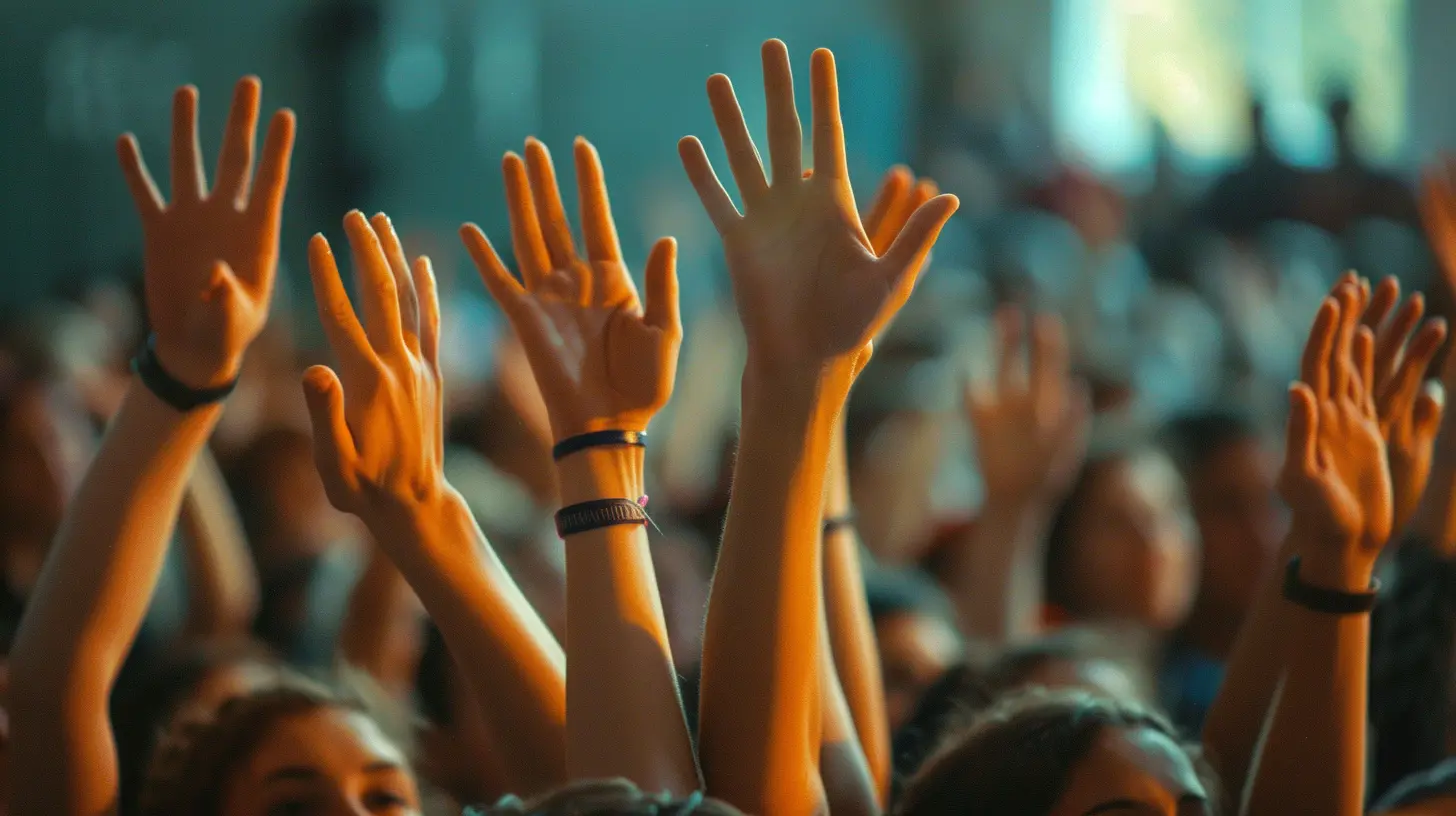
Why Hand-Raising Is Not a Neutral Act
Most classroom routines feel neutral because they are familiar. Hand-raising is one of these. Teachers often treat it as a simple management tool: students who want to speak raise a hand, the teacher calls on someone, the lesson continues. But the act of raising a hand carries psychological weight that a routine like lining up for lunch does not.The difference comes down to visibility. When a student raises a hand, they become the focus of attention. Their peers see them. The teacher sees them. And with that visibility comes the possibility of being wrong in public. For some students, this is a minor risk. For others, it feels like a genuine threat.
Research in educational psychology has long shown that classroom participation is uneven. A small number of students typically account for a large share of verbal contributions, while many others rarely speak voluntarily. This pattern is not random. It reflects differences in temperament, confidence, prior experiences with school, cultural background, and how safe students feel in a given classroom.
The hand-raise is also a social signal. It tells the teacher and the class, "I have something to offer." For students who feel secure, this is a straightforward message. For students who doubt their standing in the group, the message feels risky. They may worry about seeming like a show-off, about wasting time, or about being judged if their answer misses the mark.
The Emotional Calculation Behind the Decision
When a student considers raising a hand, several mental calculations happen quickly, often below conscious awareness. Understanding these calculations helps explain why the same student might speak up in one class and stay silent in another.Fear of Being Wrong
The most obvious factor is the fear of giving a wrong answer. But the psychology is more specific than a general fear of failure. Students weigh the cost of being wrong against the benefit of being right. In classrooms where wrong answers are treated as learning opportunities, the cost drops. In classrooms where wrong answers draw correction, laughter, or visible frustration from the teacher, the cost rises sharply.A student who has watched a classmate get corrected harshly is less likely to volunteer. This is vicarious learning, and it operates powerfully in classrooms. Students learn the rules of speaking not just from their own experience but from watching what happens to others.
Social Risk and Peer Perception
Adolescents and even younger students are highly attuned to peer perception. Raising a hand can signal several things to classmates, and not all of them are positive. In some peer groups, being eager to answer questions is associated with being a "teacher's pet" or a "try-hard." Students who value social standing may avoid hand-raising to protect their image.This dynamic intensifies in middle and high school, when peer approval carries enormous weight. A student who knows the answer perfectly well may keep quiet because speaking up would mark them as different from the group. Teachers who dismiss this as shyness miss the real mechanism. The student is not afraid of the material. They are managing a social identity.
Fear of Taking Space
Some students hesitate to raise a hand because they do not feel entitled to occupy the teacher's attention. This often shows up in students who are quiet by temperament, who come from backgrounds where children are expected to defer to adults, or who have internalized the idea that speaking up is rude or boastful.The calculation here is not about being wrong. It is about whether the student believes their contribution is worth the group's time. Students who doubt this will wait for permission in subtle ways, hoping the teacher will call on them directly rather than requiring them to volunteer.
Prior Experience With Being Ignored
Students who raise a hand and are not called on, repeatedly, learn to stop raising it. This is straightforward reinforcement. If the effort produces no result, the behavior fades. Teachers who rely on hand-raising but consistently call on the same few students create a self-reinforcing pattern: the vocal students get called on, the quiet students stop trying, and the gap widens.
Temperament, Culture, and the Quiet Student
Not every student who avoids hand-raising is struggling. Some are simply quiet by nature, and this is not a problem to be fixed. Temperament research consistently shows that people differ in how much stimulation they seek and how comfortable they are with attention. Introverted students often prefer to process ideas internally before speaking.The mistake many teachers make is treating quietness as a deficit. A student who rarely raises a hand may be fully engaged, taking in the lesson, and thinking carefully. Calling on them without warning, in an attempt to "draw them out," can backfire by putting them on the spot in a way that feels punitive.
Culture also plays a significant role. In some cultural contexts, students are taught that speaking up in class is disrespectful or that it is inappropriate to draw attention to oneself. These students may be highly capable and deeply engaged while remaining silent. Teachers who interpret silence as disengagement may misread the situation entirely.
The practical implication is that hand-raising should not be the only path to participation. A teacher who uses multiple methods, including small group discussion, written responses, and pair work, gives quiet students a way to contribute without the pressure of public volunteering.
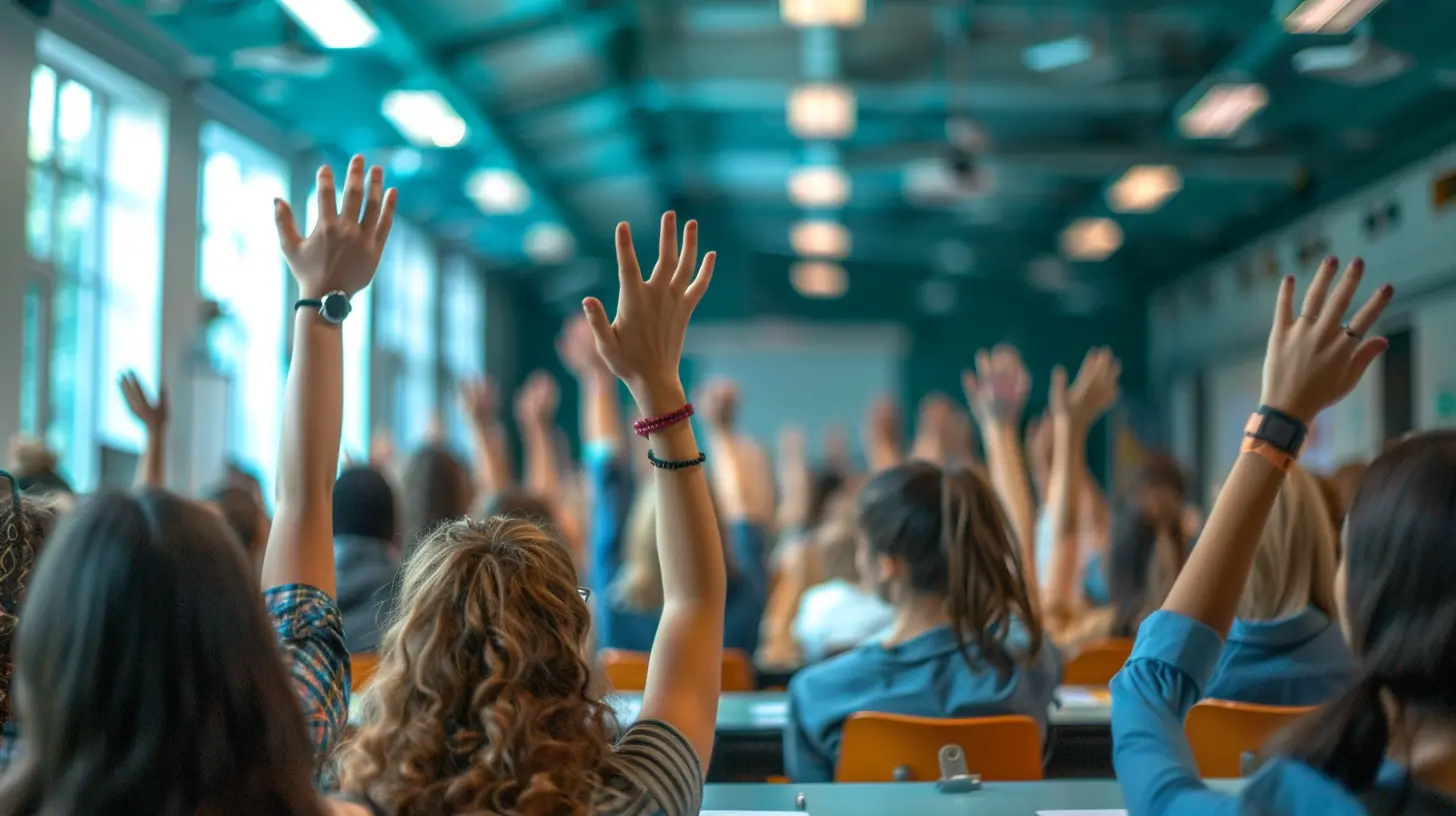
What Hand-Raising Signals to the Teacher
From the teacher's side, hand-raising serves as a quick read on the room. A sea of hands suggests understanding. Few hands suggest confusion. But this signal is unreliable for the reasons already discussed. The absence of hands does not necessarily mean the class is lost. It may mean the class is uncomfortable, or that the students who understand are the same students who always raise their hands.Teachers who rely too heavily on hand-raising as a comprehension check can develop a false sense of how well the lesson is landing. The students who raise hands are often the ones who already grasp the material. The students who need help are the ones staying quiet. This creates a feedback problem: the teacher gets confirmation from the confident students and misses the confusion among the rest.
A more reliable approach is to use varied checks: quick written responses, anonymous polls, or targeted questions to specific students. These methods surface understanding without depending on who feels comfortable volunteering.
Common Mistakes Teachers Make
Several common practices undermine the psychological safety that hand-raising requires. Recognizing these mistakes is the first step toward correcting them.Calling Only on Raised Hands
The default practice in many classrooms is to ask a question and wait for volunteers. This feels fair, but it systematically favors confident and vocal students. Over time, the quiet students learn that their silence is acceptable and that participation is optional for them. The gap between the vocal and the silent becomes a stable pattern.Pouncing on Wrong Answers
When a student volunteers and gives a wrong answer, how the teacher responds shapes whether that student and their peers will volunteer again. A sharp correction, a sigh, or visible disappointment teaches the whole class that volunteering is risky. A calm, curious response teaches the opposite.Forcing Participation Without Warning
Calling on a quiet student without warning is sometimes presented as a way to keep everyone engaged. It can work in small doses, but it can also create anxiety and resentment, especially for students who need time to process. The student may freeze, not because they do not know the answer, but because the sudden attention disrupts their thinking.Ignoring the Hand
When a student raises a hand and is not called on, the teacher is sending a message, whether intentional or not. Repeatedly ignoring the same student teaches them that their contribution is not valued. Teachers who cannot call on everyone should acknowledge the hand and return to the student later, or explain why they are moving on.
Practical Strategies That Work
The psychology points toward specific practices. These are not gimmicks but adjustments grounded in how students actually think and feel.Build a Culture Where Wrong Answers Are Safe
The single most powerful lever is how the teacher responds to mistakes. When a student gives a wrong answer and the teacher responds with genuine curiosity, asking how they arrived at that answer, the class learns that thinking is valued more than being correct. This reduces the perceived cost of volunteering and increases participation over time.Use Wait Time
Many teachers call on the first hand that goes up. This rewards speed over thought and discourages students who need a moment to process. Waiting several seconds after asking a question gives more students time to formulate an answer and raises the quality of responses. It also signals that the teacher values thoughtfulness over quickness.Offer Multiple Ways to Participate
Hand-raising is one channel. Written responses, small group discussion, and digital polls are others. Giving students options allows those who are uncomfortable with public speaking to contribute in ways that feel safer. Over time, some of these students may become more comfortable raising a hand, but the goal is not to convert everyone. The goal is to make participation accessible.Call on Students Strategically
Random calling, done thoughtfully, can keep students engaged and reduce the dominance of a few voices. But it works best when the classroom culture is safe and when the teacher gives adequate wait time. The key is to avoid using random calling as a gotcha mechanism. Students should feel that the teacher is inviting their thinking, not testing them.Acknowledge Hands That Are Not Called On
When a student raises a hand and the teacher cannot call on them, a brief acknowledgment matters. "I see your hand, and I want to come back to you" preserves the student's willingness to volunteer. Ignoring the hand teaches them not to bother next time.Watch for Patterns
Teachers should track who is speaking and who is not. A simple mental note or a quick tally can reveal patterns that are invisible in the moment. If the same few students dominate, the teacher can adjust by directing questions to others or by using small group structures that give quieter students a chance to speak first.When Hand-Raising Should Not Be the Default
Hand-raising is a useful tool, but it is not the right tool for every situation. In discussions where the goal is free-flowing exchange, strict hand-raising can stifle the conversation and make it feel mechanical. In these moments, teachers may allow students to speak without raising hands, provided the culture is respectful and turn-taking is managed.Similarly, in large classes, hand-raising is often the only practical way to manage who speaks. In small classes, more flexible formats may work better. The choice depends on the goal of the activity, the size of the group, and the comfort level of the students.
There is also a case for reducing hand-raising in favor of structures that distribute participation more evenly. Think-pair-share, for example, gives every student a chance to think, discuss with a partner, and then share with the group. This format lowers the psychological barrier because students have already tested their ideas in a low-stakes setting before speaking to the whole class.
What Parents Can Do
Parents who notice their child rarely raises a hand may worry. The first step is to understand why. Is the child afraid of being wrong? Worried about peer perception? Simply quiet by nature? The answer shapes the response.For a child who fears being wrong, the most helpful thing a parent can do is normalize mistakes at home. Talk about times you were wrong and what you learned. Praise effort and thinking rather than correct answers. This builds a mindset that makes volunteering less threatening.
For a child who is quiet by temperament, pressure to speak up can backfire. Instead, support participation in settings where the child feels comfortable, and communicate with the teacher about ways to include the child without forcing public performance.
For a child who feels ignored, a conversation with the teacher may help. Teachers are often unaware that a particular student feels overlooked. A calm, collaborative conversation can lead to small adjustments that make a difference.
The Bigger Picture
The psychology behind raising a hand reflects broader questions about how classrooms distribute voice and attention. Every time a student decides whether to raise a hand, they are answering a question about whether their contribution matters and whether it is safe to offer it. Teachers shape that answer through their responses, their routines, and the culture they build.The goal is not to make every student raise a hand. It is to make sure that every student who has something to say feels able to say it, and that every student who needs more time or a different format has a path to participation. That is a more realistic and more humane standard than a room full of hands.
Understanding the psychology does not require complex theory. It requires attention to the small signals that shape student behavior: the response to a wrong answer, the acknowledgment of a raised hand, the wait time after a question, and the consistency of who gets called on. These small signals accumulate into a classroom climate, and that climate determines whether students feel safe enough to raise a hand.
all images in this post were generated using AI tools
Category:
Class ParticipationAuthor:

Zoe McKay