Preparing Students for a Future of Ethical Historical Inquiry
9 October 2026
History classrooms have always carried a dual burden. They teach content, and they teach method. But the conditions under which students now encounter the past have changed so dramatically that the method side of that burden deserves fresh scrutiny. A student in 2024 can pull up a digitized letter from a Civil War soldier, a deepfake video of a president, and an AI-generated summary of a historical event within the same minute. The skills required to tell these apart, to weigh them, and to use them responsibly are not optional extras. They are the core of what it means to think historically in the present moment.
This article is not about adding a unit on plagiarism or a lecture on bias. It is about building a coherent, developmental approach to ethical historical inquiry across grade levels and disciplines. That means giving students practice with evidence, perspective, uncertainty, and consequence. It means being honest about the limits of our own knowledge. And it means preparing them for a future in which the tools of historical production will be more powerful, more accessible, and more easily misused than at any previous point.

What Ethical Historical Inquiry Actually Means
The phrase can sound abstract, so it is worth defining with some precision. Ethical historical inquiry is the disciplined practice of constructing claims about the past using evidence, while acknowledging the limits of that evidence, the perspectives that shaped it, and the consequences of how those claims are used. It has four interlocking components.The first is evidentiary responsibility. Students must learn to distinguish between primary and secondary sources not as a labeling exercise but as a way of understanding how knowledge is produced. A diary entry and a textbook paragraph are not just different formats. They carry different kinds of authority, different purposes, and different blind spots.
The second is interpretive humility. Any claim about the past is provisional. New evidence can revise it. New questions can reframe it. Students who internalize this are less likely to treat history as a fixed set of facts and more likely to treat it as an ongoing argument.
The third is representational ethics. How we describe people from the past matters. Whether we use the terms they used for themselves, how we handle violence and suffering, and whose stories we choose to center are all ethical decisions. These are not merely stylistic choices.
The fourth is civic consequence. Historical claims are used to justify policy, shape identity, and assign blame. Students need to understand that historical arguments have effects beyond the classroom. This is not about indoctrination. It is about recognizing that history is always used by someone for something.
Each of these components can be taught. None of them can be taught once. They require repeated, varied practice across years.
Why the Current Moment Demands More Than Traditional Source Analysis
Traditional source analysis, often taught through frameworks like origin, purpose, value, and limitation, remains useful. But it was designed for a world where sources were relatively stable and their provenance was usually traceable. That world is gone.Consider three shifts that have changed the terrain.
First, the volume and accessibility of primary sources has exploded. Students can access millions of digitized documents, photographs, and oral histories. This is a gift, but it also means they need stronger filters. The skill is no longer finding a source. It is deciding which sources deserve attention and why.
Second, synthetic media has made it possible to fabricate convincing historical artifacts. A student can now generate a fake photograph of a historical event or a fabricated quote from a founding figure with minimal effort. The old advice to "look for a primary source" is insufficient when primary sources can be manufactured.
Third, AI language models can produce fluent, confident historical narratives that contain subtle errors, anachronisms, and fabricated citations. Students who use these tools without strong verification habits will produce work that looks polished and is wrong in ways that are hard to detect.
These shifts do not make ethical inquiry impossible. They make it more necessary. The response is not to ban technology or retreat to textbooks. It is to teach students how to work with evidence in conditions of abundance and uncertainty.

Building a Developmental Progression
Ethical inquiry is not a single skill. It is a set of skills that develop over time. A useful progression moves through four stages, roughly aligned with grade bands but adaptable to any context.Stage One: Noticing and Questioning
Young students can learn that history is made from traces. A photograph, a letter, a building, or a family story are all traces of the past. The key question at this stage is simple: how do we know what we know? Students can practice asking who made a source, when, and for whom. They can compare two accounts of the same event and notice differences without assuming one is lying.A common mistake at this stage is overloading students with terminology. Terms like bias, perspective, and reliability are useful, but they mean little without concrete experience. Better to have students sort a set of sources by who might have created them and why, then discuss what each source can and cannot tell us.
Stage Two: Contextualizing and Corroborating
Middle-grade students can begin to place sources in context. They can ask what was happening when a source was created, what the creator likely knew, and what they might have wanted. They can practice corroboration by comparing multiple sources and identifying points of agreement and disagreement.This is also the stage where students can begin to understand that silence is evidence. What a source does not mention can be as revealing as what it does. A plantation ledger that records purchases but not family relationships tells us something about what the record keeper valued.
A trade-off here is depth versus coverage. Teachers often feel pressure to cover content, which leaves little time for slow, repeated practice with sources. One practical solution is to choose a small number of case studies and return to them across the year, adding complexity each time. Depth builds transferable skill. Coverage often does not.
Stage Three: Interpreting and Arguing
High school students can construct their own historical arguments using evidence. This means moving beyond summarizing sources to using them as support for a claim. It also means learning to address counterevidence, which is one of the most difficult and most important habits in historical thinking.At this stage, students can also begin to examine historiography, the study of how historical interpretations change over time. Comparing how historians have written about the same event across decades reveals that history is not a static body of knowledge but a living conversation.
A common misconception among students is that historians simply find facts and arrange them. In reality, historians ask questions, select evidence, and make interpretive choices. Making this process visible to students is one of the most powerful things a teacher can do.
Stage Four: Producing and Evaluating
Advanced students can produce original historical work, whether a research paper, a digital exhibit, or a documentary. They can also evaluate the work of others, including AI-generated content, with a critical eye. This is where ethical inquiry becomes most concrete, because students are now participants in the production of historical knowledge, not just consumers.At this stage, students should be introduced to the ethical dimensions of their own work. Whose voices are they including and excluding? How are they representing people from the past? What are the potential consequences of their claims? These questions are not peripheral. They are central to what it means to do history responsibly.

Practical Strategies for the Classroom
The following strategies are not a curriculum. They are routines that can be adapted across grade levels and subject areas.The Source Set Routine
Rather than analyzing one source at a time, give students a set of three to five sources that speak to the same event or theme. Ask them to identify what each source can and cannot tell us, where the sources agree, and where they conflict. The goal is not to reach a single correct answer but to practice weighing evidence.This routine works because it mirrors how historians actually work. It also prevents students from treating any single source as definitive.
The Unanswerable Question
Periodically present students with a question that cannot be fully answered with available evidence. For example, what did enslaved children in a particular region experience in their daily lives? Then ask students to identify what evidence would be needed to answer the question and why it might not exist.This practice builds interpretive humility. It also helps students understand that gaps in the archive are often the result of power, not accident. People who were enslaved, displaced, or marginalized often had no opportunity to leave records.
The AI Verification Exercise
Have students generate a historical claim or summary using an AI tool, then verify it against primary and secondary sources. Ask them to document what the AI got right, what it got wrong, and what it fabricated. This exercise is not about demonizing AI. It is about teaching students to treat any tool as a source that requires scrutiny.A useful variation is to have students compare AI output with a human-written account of the same event. The differences often reveal assumptions and gaps that neither source makes explicit.
The Perspective Swap
Ask students to rewrite a historical account from a different perspective. For example, rewrite a battle narrative from the point of view of a civilian, a medic, or an enemy soldier. Then discuss what changes and what stays the same.This exercise builds empathy and helps students see that historical narratives are constructed, not given. It also surfaces the ethical question of whose experiences are centered in any account.
The Consequence Map
After students construct a historical argument, ask them to map the potential consequences of that argument. Who might use it? For what purposes? What might be the effects on different groups?This routine connects historical inquiry to civic life. It helps students understand that historical claims are not just academic. They are used in courts, legislatures, museums, and schools.
Common Mistakes and Misconceptions
Several pitfalls recur in efforts to teach ethical historical inquiry.The first is treating ethics as an add-on. When ethics is relegated to a single lesson on plagiarism or bias, students do not internalize it. Ethics must be woven into every stage of inquiry, from selecting sources to presenting findings.
The second is conflating ethics with relativism. Teaching students to question sources does not mean teaching them that all accounts are equally valid. It means teaching them to evaluate evidence and reasoning. The goal is not to abandon truth but to pursue it more carefully.
The third is assuming that students will develop these skills on their own. They will not. Ethical inquiry requires explicit instruction, modeling, and feedback. It also requires time.
The fourth is underestimating the emotional dimension. Studying the past often involves confronting violence, injustice, and trauma. Students need support to process these encounters, and teachers need strategies for creating a classroom climate where difficult conversations are possible.
The fifth is ignoring the digital context. Students live in a media environment that rewards speed and certainty. Teaching them to slow down, verify, and tolerate ambiguity is countercultural. It requires patience and repetition.
The Role of Assessment
If ethical inquiry matters, it must be assessed. But traditional assessments, such as multiple-choice tests, are poorly suited to measuring it. Better options include:- Source analysis tasks that ask students to evaluate evidence and justify their reasoning.
- Argumentative essays that require students to address counterevidence.
- Reflective writing in which students describe their process and the choices they made.
- Portfolio assessments that show growth over time.
Each of these approaches has trade-offs. They take longer to grade. They are harder to standardize. But they provide richer information about what students can actually do.
A useful principle is to assess process as well as product. A polished essay that ignores counterevidence is less valuable than a rougher essay that engages with complexity. Rubrics should reflect this.
Preparing Teachers for This Work
None of this is possible without teachers who are themselves practiced in ethical inquiry. Teacher preparation programs often emphasize content knowledge and pedagogy but give less attention to the philosophical and ethical dimensions of historical work. This is a gap that needs to be addressed.Professional development can help. But the most powerful preparation is ongoing engagement with historical practice. Teachers who read historians, analyze sources, and grapple with interpretive debates are better equipped to model these habits for students.
Teachers also need support to navigate the political pressures that surround history education. Debates about what should be taught and how are not new, but they have intensified in recent years. Teachers who understand the ethical foundations of their work are better positioned to make thoughtful decisions and to explain them to others.
A Note on Uncertainty
It is tempting to present ethical inquiry as a set of techniques that, once mastered, yield clear answers. This is misleading. The past is not fully recoverable. Evidence is incomplete. Interpretations conflict. The work of history is not to eliminate uncertainty but to manage it responsibly.Students who understand this are better prepared not only for history classes but for citizenship. They are less likely to be swayed by confident claims that lack evidence. They are more likely to ask who benefits from a particular narrative. They are more likely to hold their own conclusions with appropriate humility.
This is not a small thing. In a world where historical claims are used to justify violence, exclusion, and erasure, the ability to interrogate those claims is a form of protection. It is also a form of respect, for the people of the past and for the people of the future.
Conclusion
Preparing students for a future of ethical historical inquiry is not about predicting what tools they will use or what events they will study. It is about cultivating habits of mind that will serve them regardless of the specific content. Those habits include asking who made a source and why, weighing evidence rather than accepting it, acknowledging uncertainty, and considering the consequences of historical claims.This work is slow. It does not lend itself to quick wins or easy metrics. But it is among the most important things we can do in a history classroom. Students who leave school with these habits are not just better historians. They are better citizens, better neighbors, and better people.
The future will bring new tools, new sources, and new challenges. The principles of ethical inquiry will remain. Teaching them well is our responsibility.
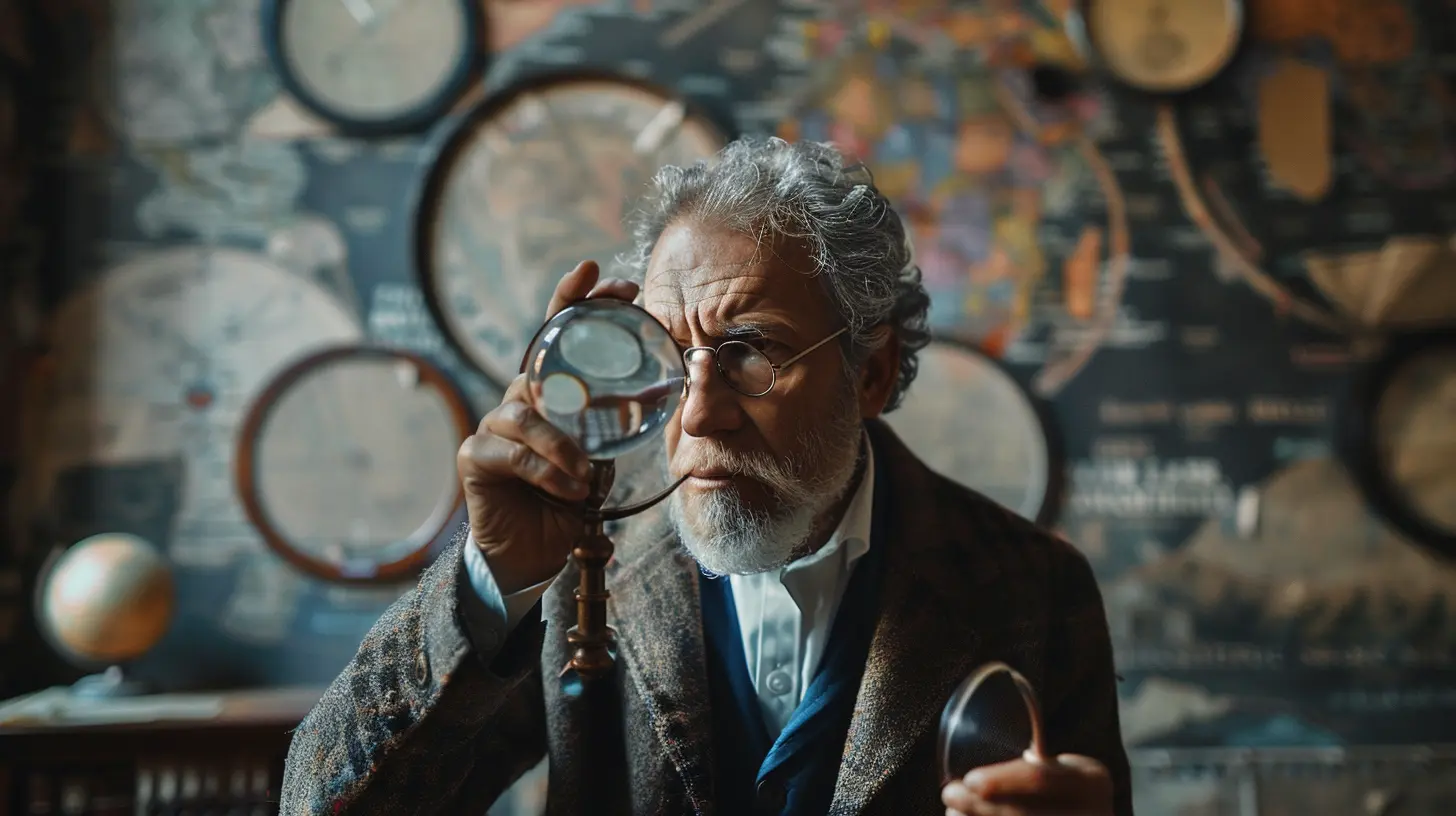
all images in this post were generated using AI tools
Category:
History LearningAuthor:

Zoe McKay