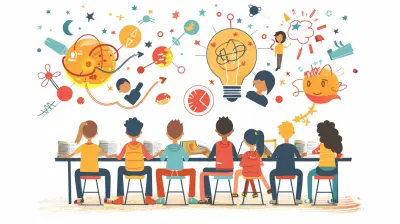
Parent-Led Learning Activities that Boost Engagement
29 December 2025
Let’s be honest—keeping kids engaged in learning is no easy feat. Between short attention spans, screen distractions, and the endless energy bursts (usually when you need them the least), helping your child learn at home can feel like herding cats. But here’s the good news: it doesn’t have to be that hard. In fact, when you lead the learning as a parent—and make it fun—it becomes not just effective, but actually enjoyable for both of you.
Welcome to the world of parent-led learning activities. These aren’t your run-of-the-mill worksheets or rigid lesson plans. We’re talking about creative, hands-on, and heart-centered ways to get your child excited about learning. Whether your little one is in preschool or middle school, these activities are designed to boost attention, build brains, and bring you closer together.
In this guide, we’ll walk through powerful ways you can lead the learning journey right from your kitchen table (or living room floor). Let’s dive in!
Why Parent-Led Learning Works Like Magic
Before we get into the how, let’s talk about the why.You might be wondering: “Do I really need to be the one leading learning at home? Isn’t that what teachers are for?” Totally fair question. But here's the thing—parents are actually a child’s first and most influential teachers. Your involvement doesn’t just help your child succeed academically—it helps them love learning.
When parents are actively involved, studies show consistent bumps in grades, motivation, and overall development. But more importantly? It builds confidence. Kids start to see learning as something fun and safe instead of stressful and scary.
Think about it. When you’re present, engaged, and learning with your child, it sends an unspoken message: “This matters. And you matter.”
1. Turn Reading Into an Adventure
Reading doesn’t have to feel like a chore—especially when you breathe life into the pages.Try This:
- Change your voice for each character. Use accents. Get goofy.- Ask open-ended questions like, “What do you think happens next?” or “Why do you think they made that choice?”
- Act it out! Make it a mini play right in your living room.
- For older kids, try book club nights where you discuss ideas over snacks.
You’re not just reading—you're taking them on a journey. And here's a secret: it’s in those moments of giggles and curiosity that real learning sinks in.
2. Make Math Make Sense (and Fun)
Let’s face it, math gets a bad rap. It’s often taught in a way that feels abstract or dull. That’s where parent-led, hands-on learning flips the game.Try This:
- Cooking = Fractions. Doubling a recipe? That’s multiplying fractions. Boom, you're teaching math in the kitchen.- Grocery budgets. Give them a specific budget and grocery list. Let them do the price comparisons and calculations.
- Board games like Monopoly or Yahtzee. These are sneaky math lessons in disguise.
Math should feel like a puzzle to solve—not torture to survive. When your child sees math in everyday life, it stops being scary and starts making sense.
3. Science Experiments = Controlled Mess That Teaches
Kids love messes. And when those messes also teach chemistry, physics, or biology? That’s a win-win.You don’t need a lab coat to ignite scientific thinking. Just a few household items and an open mind.
Try This:
- Baking soda + vinegar volcanoes. Classic for a reason. Teaches reactions and cause-effect.- Grow a bean in a ziplock bag. Teaches biology and patience.
- Floating paperclips or DIY lava lamps. Teaches density, polarity, and critical thinking.
More than anything, it teaches your child how to ask questions, experiment, and wonder. That’s the heart of science.
4. Writing That Doesn’t Bore Them to Tears
Let’s be honest, “write an essay” isn’t the most thrilling instruction.But writing can be storytelling, joke-telling, or even debating. And that’s a whole lot more fun.
Try This:
- Story cubes or cards. Roll dice with pictures and build a story around them.- Comic strip creation. If your kid loves drawing, this is a great combo.
- Write a letter to their future self—or to a grandparent. Emotive writing builds empathy and reflection.
- Blogging for kids. Create a simple online (safe) blog where they post reviews on books, games, or recipes.
The key? Make it feel like self-expression, not schoolwork.
5. Use Nature as Your Classroom
Sometimes, the best way to learn is to just…go outside.Nature has this magical way of slowing us down and sparking big wonder in little minds.
Try This:
- Scavenger hunts for leaves, rocks, or insects. Turn it into a science unit.- Nature journaling. Sketch what they see, label parts of a plant, or describe animal behavior.
- Cloud-watching and stargazing. Teaches weather or astronomy with zero screens needed.
Plus, outdoor learning boosts attention spans and reduces stress. (Yep, for you too.)
6. Gamify the Learning (Let the Games Begin!)
Who says learning can’t be a game? When you layer in competition, rewards, or silly challenges, you create a learning environment that doesn’t even feel like one.Try This:
- Spelling bees with prizes.- Memory card games with vocab.
- Treasure hunts with math clues.
- “Jeopardy-style” quizzes using a whiteboard or sticky notes.
Gamification works because it taps into motivation. And when kids feel like they're playing, they forget they’re learning.
7. Life Skills = Real Education
A lot of what kids need to know to thrive isn’t in textbooks. It’s in the life stuff.Try This:
- Teach chores as responsibilities, not punishments. Hey, folding laundry includes sorting. That’s cognitive development.- Teach them to cook. Measuring, reading recipes, and following steps all hit educational touchpoints.
- Budgeting and planning a family outing. Real-world decision-making exercises.
These moments build independence, responsibility, and confidence. Isn’t that the ultimate goal of education anyway?
8. Let Their Passions Drive the Curriculum
Here’s where the magic often happens: when you let their interests guide the learning.Is your child obsessed with dinosaurs? Space? Minecraft? Use that.
Try This:
- Research projects on their favorite topic.- Build something based on it. (A cardboard rocket! A model T-Rex!)
- Write a story starring their favorite character or animal.
- Integrate subjects. If they love Minecraft, you can tie in geometry, architecture, even writing.
When kids learn through something they love, they engage more, remember more, and honestly, you’ll have a lot more fun too.
9. Daily "Mini Lessons" That Add Up
You don’t need to block off hours every day. Sometimes learning happens in the little consistent moments.Ideas for Mini Lessons:
- Daily journal prompts.- Word of the day. Talk about its meaning and use it in a sentence.
- Quick math puzzles at breakfast.
- Evening “Did You Know?” fact sharing.
These mini moments sprinkle learning into their day—without resistance.
10. Celebrate the Process, Not Just the Result
Here's a slice of truth: it’s not always about getting the answer right. It’s about effort. Creativity. Progress.Be the kind of teacher who celebrates trying, thinking outside the box, and figuring things out.
- Praise their curiosity: “Great question!”
- Uplift their process: “I saw how hard you worked on that.”
- Encourage mistakes: “That’s how we learn!”
Learning isn’t linear. And neither is parenting. Give yourself (and your child) some grace and enjoy the ride.
Final Thoughts: You’ve Got This
Look, no one hands us a manual when we become parents. And yet, day after day, we guide, teach, and model the very skills our kids need to thrive.Parent-led learning isn't about perfection. It’s about connection.
It’s about showing up, being curious together, laughing through the hiccups, and building habits that last a lifetime.
So next time you're wondering if you’re doing enough—stop. You already are. Now, just add some fun, sprinkle in a little mess, and watch your child’s love for learning bloom right before your eyes.
all images in this post were generated using AI tools
Category:
Parent InvolvementAuthor:

Zoe McKay
Discussion
rate this article
2 comments
Carla McCartney
Who knew learning could be this much fun?
February 9, 2026 at 1:59 PM
Zoe McKay
I'm glad you enjoyed it! Engaging activities can make learning a joyful experience for both parents and kids.
Faith Pace
What a fantastic article! These parent-led activities are such a wonderful way to foster engagement and creativity in learning. Thank you for sharing these valuable ideas!
January 7, 2026 at 1:23 PM
Zoe McKay
Thank you for your kind words! I'm glad you found the activities helpful for fostering engagement and creativity.