Integrating Social Media to Connect with Students in 2027
10 September 2026
The classroom has not disappeared. It has simply leaked into every corner of a student's life. By 2027, the average teenager will spend over seven hours a day on social platforms, not counting schoolwork. The question for educators is no longer whether to allow social media near the learning process, but how to integrate it in ways that build genuine connection without sacrificing rigor, privacy, or mental health. This article is not about posting homework reminders on Instagram. It is about rethinking the architecture of student engagement in a world where attention is the scarcest resource.
Why Traditional Communication Channels Are Failing
Let us be honest about the current state of student outreach. Email open rates for students under 20 have been declining for years. By 2025, most institutional emails went unread or were filtered into promotional tabs. Learning management system (LMS) notifications suffer the same fate. Students do not ignore these channels out of laziness. They ignore them because those channels do not match their communication instincts.Consider the psychology of a 16-year-old in 2027. They check TikTok, Instagram, and Snapchat dozens of times per day. Each platform is optimized for immediacy, visual clarity, and social validation. An email from a teacher feels like a letter from a different century. It requires opening a separate app, logging in, scanning a subject line, and deciding whether to act. That is too many cognitive steps. Social media, by contrast, delivers content in the flow of existing behavior.
The mistake many institutions make is treating social media as a broadcast tool rather than a relationship tool. Posting announcements to a school account is not connection. It is a billboard. Connection requires two-way interaction, responsiveness, and a level of authenticity that institutional voices often lack. Teachers who succeed with social media do not sound like press releases. They sound like humans who happen to teach.
The 2027 Platform Landscape: What Actually Matters
Predicting specific platforms is a fool's game. What matters more is understanding the underlying dynamics that make a platform suitable for education. In 2027, we can observe several distinct categories.Short-form video remains dominant. TikTok, Instagram Reels, and YouTube Shorts are the primary discovery engines for young people. These platforms reward brevity, humor, and relatability. For educators, they are excellent for micro-lessons, concept teasers, and behind-the-scenes glimpses of classroom life. A 45-second video explaining a difficult physics concept with a real-world example can reach students who would never watch a 10-minute lecture.
Private messaging spaces are equally important. Group chats on WhatsApp, Telegram, or Discord have become the de facto study halls. Students already form unofficial class groups without teacher involvement. The question is whether educators can participate constructively without stifling the organic nature of these spaces. Some teachers have found success with moderated Discord servers where students can ask questions anonymously, share resources, and get help outside school hours.
Visual platforms like Instagram and Pinterest continue to serve specific subjects. Art, design, history, and geography benefit enormously from image-heavy content. A well-curated Instagram account for a history class can turn primary source photographs into discussion prompts. The key is curation with a point of view, not just reposting random content.
Finally, there is the rise of niche educational platforms that blend social features with learning tools. These are not replacements for mainstream social media but bridges between the structure of an LMS and the social dynamics of public platforms. Some allow teachers to create interactive polls, quizzes, and discussion threads that feel native to the social experience.
The Pedagogy of Connection: Why Social Presence Matters
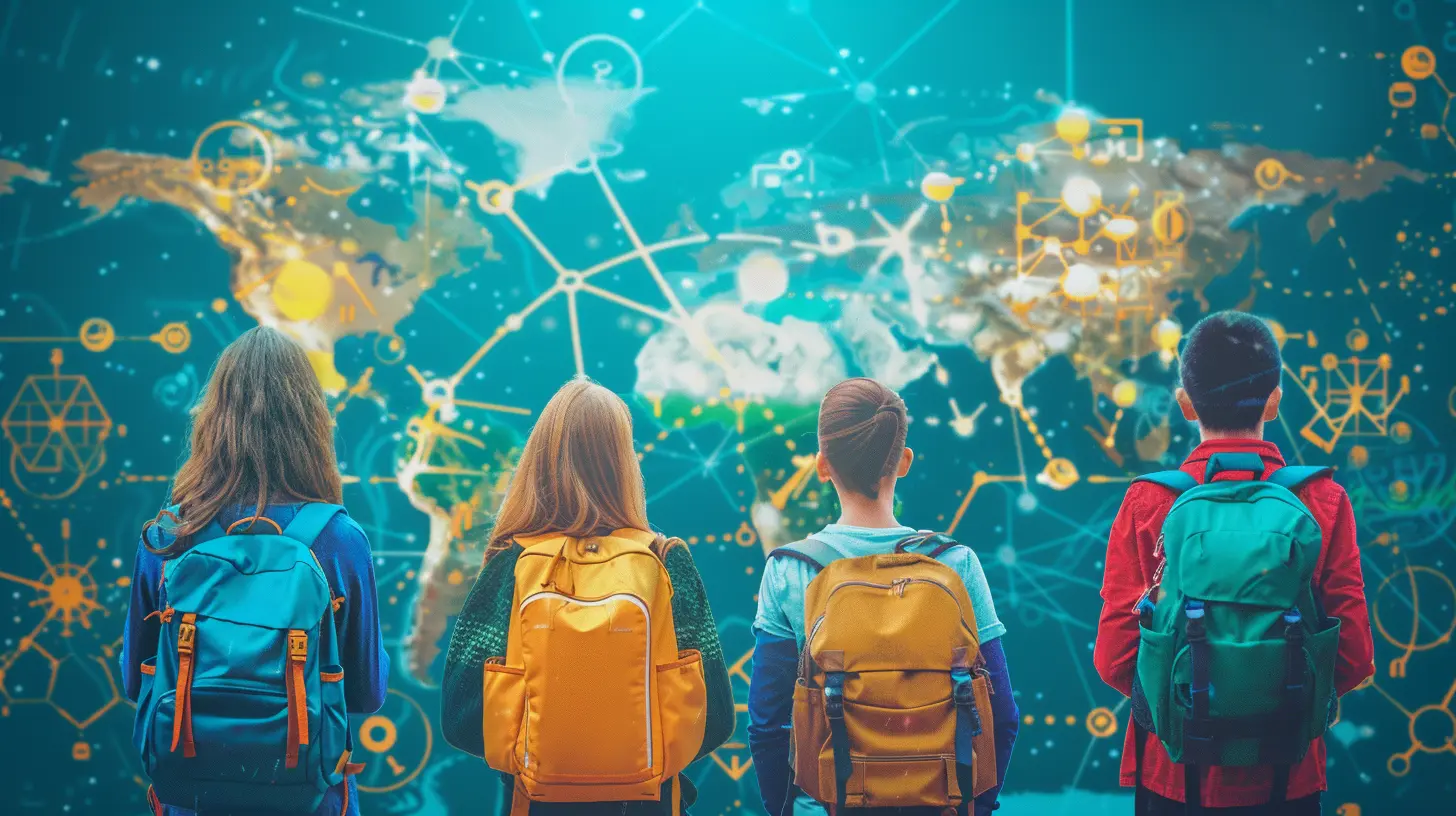
Research in educational psychology has consistently shown that perceived instructor presence correlates with student motivation and satisfaction. Presence means students feel that their teacher is real, accessible, and invested in their progress. Social media offers an unprecedented opportunity to amplify presence, but only if used deliberately.Consider the difference between a teacher who posts a weekly summary of class topics and a teacher who posts a short video explaining why a particular concept is personally meaningful. The second approach creates emotional resonance. It signals that learning is not just a transaction but a shared journey. Students respond to vulnerability when it is appropriate and professional. A teacher who admits that they also found calculus difficult at first, and then shows how they overcame it, humanizes the struggle.
Presence also means being available for questions in the spaces where students already gather. A teacher who monitors a class Discord server during evening homework hours is not required to respond instantly to every message. But seeing that the teacher is active, that they care enough to check in, reduces the psychological distance between school and home. This is particularly valuable for first-generation college students or those who lack academic support at home.
However, presence has a dark side. Teachers who are always on are always tired. The boundary between professional and personal life dissolves. By 2027, many districts have implemented clear policies about response times and digital availability. The best approach is scheduled presence. Announce that you will be online for questions between 7 PM and 8 PM on weekdays. Stick to that schedule. Students appreciate predictability more than constant availability.

Practical Integration Models That Work
There is no single correct way to integrate social media. What works depends on grade level, subject matter, and institutional constraints. Here are several models that have proven effective in real educational settings.The Flipped Notification System
Instead of posting announcements on the LMS and hoping students see them, create a private class account on a platform students actually use. Post reminders, deadlines, and quick clarifications there. Keep the tone conversational. Use polls to let students choose review session times or vote on which topics to cover next. This shifts the dynamic from top-down communication to collaborative scheduling.The Micro-Lecture Series
Take a complex topic from your curriculum and break it into a series of short videos, each under 60 seconds. Post one per day leading up to a unit test. Each video should cover one core concept, with a visual aid and a memorable example. Do not try to be entertaining at the expense of accuracy. The goal is not to replace full instruction but to reinforce it through repetition in a format that students will actually watch multiple times.The Student Ambassador Program
Rather than having teachers run social media accounts alone, recruit student volunteers to co-manage content. Students know the culture of their peers better than any adult does. They can suggest formats, hashtags, and angles that will resonate. In exchange, they gain portfolio experience in digital communication and social media management. This model also reduces teacher workload and increases student ownership of the class community.The Anonymous Question Box
Many students hesitate to ask questions in class because they fear judgment. Tools like anonymous question boxes on Instagram or dedicated channels in Discord allow students to submit questions without revealing their identity. The teacher can then answer these questions publicly, which benefits everyone. This approach surfaces misunderstandings that would otherwise remain hidden.The Project Showcase
Social media provides a global audience for student work. Instead of only grading assignments for the teacher, students can publish their projects to a class account, receive comments from peers, and even engage with professionals in the field. This raises the stakes and the quality of work. A student who knows their video essay might be seen by an actual historian will put in more effort than if it were only viewed by one teacher.The Hidden Costs and Risks You Cannot Ignore
Social media integration is not a frictionless good. There are real costs that educators and administrators must weigh carefully.Data Privacy and FERPA Compliance
In the United States, the Family Educational Rights and Privacy Act (FERPA) restricts what student information can be shared without parental consent. Posting a photo of a classroom activity may seem harmless, but if a student is identifiable and the context suggests they attend a particular school, that could be a violation. By 2027, many schools have moved to closed groups or private accounts specifically to avoid this issue. Even then, screenshots can be taken and shared beyond the intended audience. The safest approach is to obtain written permission from parents and students at the start of the year, and to review those permissions regularly.Equity and Access
Not every student has unlimited data plans or access to a smartphone after school. Assuming that all students can participate in a class Discord server creates a disadvantage for those who cannot. Always provide alternative ways to access information and participate in discussions. Social media should be additive, not essential. A teacher who posts homework reminders on Instagram must also post them on the official LMS.Mental Health and Comparison Culture
Social media is not neutral. It is designed to maximize engagement, which often means amplifying social comparison and anxiety. A class account that showcases only the best student work can demoralize students who are struggling. Be intentional about celebrating progress and effort, not just final products. Show drafts, highlight productive struggle, and normalize imperfection.The Time Sink
Teachers are already overworked. Maintaining a vibrant social media presence takes hours each week. Without clear limits, it becomes an unofficial second job. Set boundaries from the beginning. Decide how many posts you will make per week, how long you will spend monitoring comments, and what times of day you will engage. Communicate these boundaries to students and parents so they know what to expect.
Common Mistakes and How to Avoid Them
Even well-intentioned educators often stumble in predictable ways.Mistake One: Treating Social Media as a One-Way Megaphone
Posting announcements without responding to comments or messages is not connection. It is just another bulletin board. If you are not prepared to engage with responses, do not create the account. A dead account with old posts is worse than no account at all.Mistake Two: Over-Sharing Personal Life
Students do not need to see your vacation photos or your political opinions. The professional boundary exists for a reason. Share personal anecdotes only when they directly serve a pedagogical purpose, such as illustrating a concept or modeling resilience. Keep the focus on learning.Mistake Three: Ignoring Platform Culture
Each platform has its own norms. What works on LinkedIn feels stiff on TikTok. What is acceptable in a private Discord server might be inappropriate on a public Instagram account. Take time to observe how students use each platform before you start posting. Mimic the tone, not the slang. You do not need to sound like a teenager. You need to sound like a teacher who respects teenage culture.Mistake Four: Measuring Success by Vanity Metrics
Likes, followers, and views are not indicators of learning. A video that goes viral is not necessarily educational. Instead, track meaningful engagement: the number of students who submit questions, the quality of comments on discussion threads, the attendance at optional review sessions. These are the metrics that matter.Mistake Five: Assuming All Students Want This
Some students prefer strict separation between school and social life. They do not want their teachers in their digital spaces. Respect that. Make participation optional, never mandatory. The goal is to offer an additional channel, not to invade every space a student occupies.Comparing Approaches: Centralized School Accounts vs. Individual Teacher Accounts
Schools often ask whether social media should be managed centrally or by individual teachers. Both approaches have merit.A centralized school account provides consistent branding, ensures compliance with privacy policies, and allows for professional management. It is excellent for major announcements, school events, and crisis communication. However, it is impersonal. Students do not feel connected to an institution. They feel connected to a person.
Individual teacher accounts, on the other hand, create authentic relationships. A chemistry teacher who posts lab experiments from her own classroom has a voice that students trust. The downside is inconsistency. Some teachers will be brilliant at social media, others will be absent. This creates inequity between classes.
The best approach is hybrid. The school maintains an official presence for administrative matters. Teachers maintain their own professional accounts for pedagogical connection. The school provides training, guidelines, and support, but does not mandate a single style. This respects teacher autonomy while protecting institutional reputation.
The Role of Artificial Intelligence in 2027
By 2027, AI tools are embedded in nearly every social platform. Content creation, curation, and moderation are increasingly automated. Educators can use AI to draft posts, generate discussion questions, or summarize student feedback. However, AI should be a tool, not a replacement for human judgment.A teacher might use AI to generate several versions of a post explaining a complex concept, then choose the one that best suits their voice. They might use AI to moderate comments for inappropriate language, freeing time for substantive engagement. But the core connection between teacher and student cannot be automated. Students can tell when a response is generic or generated. Authenticity remains the most valuable currency.
The danger is over-reliance on AI for content creation. If every teacher uses the same AI prompts, the resulting posts will sound identical. The algorithm may optimize for engagement, but it will not optimize for educational depth. Always review, edit, and personalize AI-generated content before publishing.
Measuring What Matters: Assessment and Feedback Loops
Integrating social media is not a one-time decision. It requires continuous evaluation. At the end of each term, ask yourself and your students what worked and what did not.Collect anonymous feedback. Ask students whether they felt more connected to the class because of social media, whether they found the content useful, and what they would change. Use this feedback to adjust your approach. Do not be afraid to abandon a platform that is not serving its purpose.
Also consider the alignment between social media activity and learning outcomes. If you post review videos before an exam, compare performance on that exam to previous terms without the videos. If you facilitate a discussion on Discord, assess whether participation in class discussions improved. These correlations are not proof of causation, but they provide useful signals.
A Realistic Roadmap for the Next Twelve Months
If you are starting from zero, do not try to implement everything at once. Begin with a single platform and a single purpose.For the first month, simply observe. Create a personal account on the platform your students use most. Follow educational accounts and note the style of posts that get the most engagement. Do not post anything yet.
In the second month, introduce yourself. Post a short video or message explaining that you are experimenting with social media to better support student learning. Set expectations about when you will be available and what type of content you will share.
In the third month, start sharing genuinely useful content. This could be exam review tips, links to supplementary resources, or short explanations of topics that students frequently find difficult. Pay attention to which posts generate questions or comments.
By the fourth month, you will have enough data to refine your strategy. Ask students for input. Adjust your schedule and content style accordingly. Then scale slowly to a second platform only if the first is working well.
The Deeper Purpose: Connection as a Foundation for Learning
At its core, integrating social media is not about technology. It is about meeting students where they are, both physically and psychologically. The medium is secondary to the message of care. When a student sees that their teacher has taken the time to explain a concept in a format that fits their life, they feel valued. That feeling opens the door to learning.But connection without boundaries becomes intrusion. Care without professionalism becomes enabling. The educators who succeed in 2027 will be those who balance warmth with structure, availability with limits, and innovation with evidence. They will use social media not as a crutch but as a bridge, one that leads students back to the classroom, ready to engage, question, and grow.
The future of education is not about abandoning traditional methods for digital ones. It is about weaving the best of both worlds together, creating a tapestry of learning that extends beyond bells and schedules. Social media is one thread in that tapestry. Used wisely, it can make the entire picture stronger.
all images in this post were generated using AI tools
Category:
Student EngagementAuthor:

Zoe McKay
Discussion
rate this article
2 comments
Uzi Snow
In 2027, social media isn't just a tool; it's the classroom. Engage students where they are or risk losing them.
September 20, 2026 at 2:30 AM
Yvonne McKnight
As we move towards 2027, integrating social media in education can bridge the gap between teachers and students. However, it's essential to prioritize genuine connections and meaningful interactions over mere likes and shares. Authentic engagement will foster a deeper understanding and create a supportive learning environment for all.
September 12, 2026 at 12:47 AM
Zoe McKay
I completely agree. Focusing on authentic engagement will make social media a powerful tool in education. It's all about building those meaningful connections.