How AI Tutors Could Personalize Education by 2026
13 May 2026
Let me ask you something. Remember sitting in a classroom, staring at the clock, while the teacher explained something you either already knew or couldn't grasp at all? That one-size-fits-all model has been the backbone of education for centuries. But by 2026, that might feel as outdated as a chalkboard in a coding bootcamp.
We are standing at the edge of a real shift. AI tutors aren't just fancy chatbots or glorified search engines anymore. They are getting smart enough to actually understand you as a learner. Not your grade level, not your test scores, but your specific struggles, your pace, your moments of confusion, and your bursts of insight. By 2026, this technology could turn the dream of personalized education into a daily reality for millions.

Why "One Size Fits All" Never Really Fit
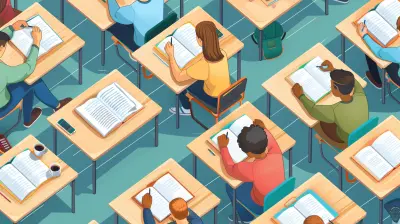
Think about a typical school day. A teacher stands in front of thirty kids. Some are bored because they got it five minutes ago. Some are lost because they missed a key step. The teacher can only move at one speed. That is not a failure of the teacher. It is a failure of the system.Personalized education has always been the holy grail. But until now, we just did not have the tools. A human tutor can adapt, but there are not enough tutors. A parent can help, but they might not remember algebra. AI changes this math. It scales the ability to adapt to each student, without needing a million individual humans.
By 2026, an AI tutor could watch how you solve a problem, see exactly where you hesitate, and offer help right at that moment. Not the next day when the homework is graded. Right then, when your brain is ready to learn.
The Core of AI Personalization: It's Not Just About Answers
Here is the thing people get wrong. Good AI tutoring is not about giving the right answer. It is about understanding the wrong answer. A human tutor does not just say "you got it wrong." They ask "how did you get there?" That is what makes them effective.By 2026, AI tutors will do this at scale. They will analyze your thought process. If you keep making the same type of error in math, the AI will notice the pattern. It will not just correct the one problem. It will create a mini-lesson on that specific concept. It will find a different way to explain it, maybe using a visual or a real-world example that clicks with you.
This is the difference between a teacher who hands back a test and says "study harder" and a coach who says "let me show you a different way to throw the ball." The AI becomes a personal coach, not a grading machine.
Real-Time Adaptation: The 2026 Classroom
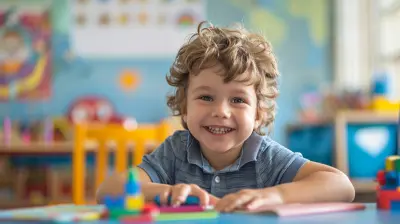
Imagine a student named Maria in 2026. She is learning about the water cycle. She reads the textbook section, but something about evaporation does not stick. Her AI tutor notices she spent extra time on a diagram and then answered a question incorrectly.Instead of moving on, the AI pauses. It asks Maria a simple question: "What do you think happens to water when the sun heats a puddle?" Maria types a guess. The AI sees the gap in her understanding. It then shows a short, animated simulation of water molecules heating up and escaping into the air. Maria watches, and the penny drops. The AI notes this and moves on.
Meanwhile, across the room, another student named James already knows the water cycle. He is bored. His AI tutor senses this too. It does not make him sit through the same simulation. Instead, it offers a challenge: "Design a way to collect fresh water from ocean evaporation." James is now engaged, solving a problem instead of repeating information.
This is the promise. Not a smarter textbook, but a system that treats each student like an individual with a unique brain. By 2026, this kind of split-second adaptation will be normal.

Breaking the "One Teacher, Thirty Students" Bottleneck
Let us be honest. Teachers are superheroes, but they are not superhuman. They cannot give thirty different lessons at the same time. AI tutors can.Think of the AI as an assistant that handles the heavy lifting of differentiation. The teacher designs the big picture, the goals, the projects. The AI handles the moment-to-moment adjustments. It answers the repetitive questions. It offers extra practice to the student who needs it. It throws a harder challenge to the student who is ready.
This frees up the teacher to do what only a human can do: inspire, mentor, connect. By 2026, the best classrooms will not be replaced by AI. They will be enhanced by it. The teacher becomes the conductor of an orchestra, not a one-person band.
Emotional Intelligence: Can an AI Tutor Care?
This is the big question. Can a machine really understand how a student feels? Frustration, anxiety, boredom, excitement. These are huge parts of learning.By 2026, AI tutors will get better at reading these cues. Not with perfect emotional intelligence, but with practical detection. If a student takes too long on a problem, the AI might offer encouragement. If a student starts typing angrily, the AI might suggest a short break. If a student clicks through answers too quickly, the AI knows they are guessing and will slow them down.
It will not replace a hug from a parent or a kind word from a teacher. But it can prevent that spiral of frustration that makes a kid give up. It can say "you are almost there, try this hint" at exactly the right moment. That is a form of care. It is algorithmic patience, and for a struggling student, it can be a lifeline.
The Data Behind the Personalization
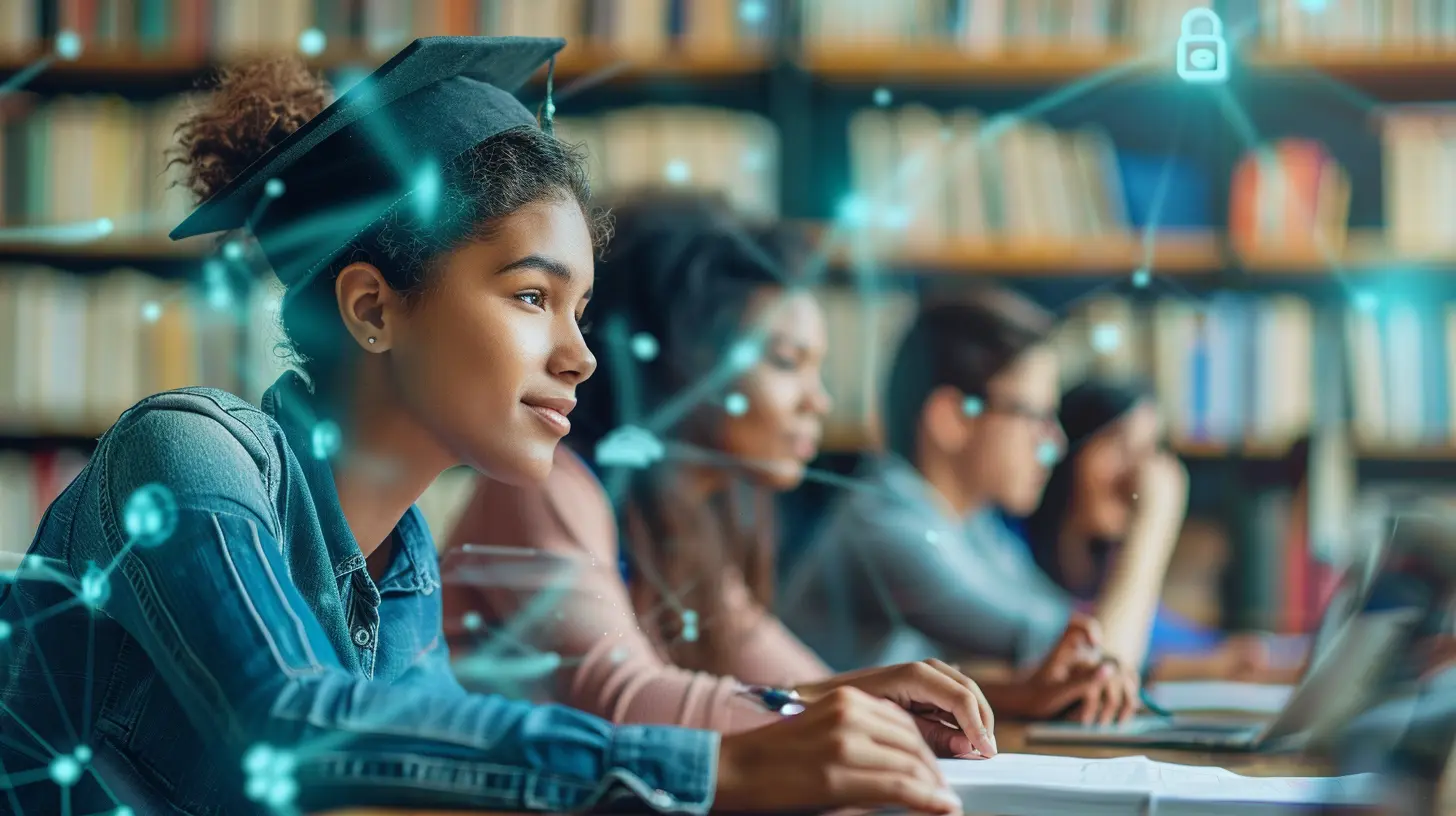
Let us get a little technical, but not too much. How does this magic work? Data. Lots of it.Every click, every wrong answer, every pause, every word a student types becomes a data point. The AI uses this to build a model of the student's knowledge. It is like a heat map of your brain. It knows what you know cold, what you sort of know, and what is a complete blank.
By 2026, these models will be incredibly detailed. They will not just track math skills. They will track reading comprehension, problem-solving strategies, even how you prefer to learn. Do you learn better by reading, by watching, or by doing? The AI will figure it out and adjust.
This is powerful, but it also comes with a responsibility. Privacy is a huge concern. Who owns this data? How is it protected? For AI tutors to work by 2026, schools and companies must build trust. Students and parents need to know that this data is used to help, not to sell or to judge.
The "Feynman Technique" on Autopilot
There is a famous learning method called the Feynman Technique. It says: if you cannot explain something simply, you do not understand it well enough. A human tutor uses this all the time. They ask you to teach the concept back to them.AI tutors by 2026 will do this too. They will ask you to explain the water cycle in your own words. They will listen (or read) and find the gaps. "You said the water goes up, but where does it go after that?" They will probe until your understanding is solid.
This is not just about memorization. It is about true comprehension. An AI that can do this for every student, on every topic, is a game changer. It turns passive learning into active teaching. And we all know that the best way to learn something is to teach it.
What About Subjects That Are Hard to Code?
You might be thinking, "Okay, this works for math and science. What about art, music, or creative writing?"Good point. And by 2026, AI tutors will be making inroads there too. Not by replacing creativity, but by providing structured feedback. An AI writing tutor could analyze your essay's structure, your word choice, your argument flow. It can say "your introduction is strong, but your conclusion does not tie back to your main point." It can suggest different vocabulary.
It cannot feel the emotion in your poem. But it can help you shape it. It can give you a framework so that your creativity has a place to land. In music, an AI tutor could listen to you play a scale and tell you which finger is off. It can give you exercises tailored to your weak spots. The art is still yours. The AI just helps you practice better.
The Danger of "Spoon-Feeding"
I have to be honest. There is a dark side. If done poorly, an AI tutor could make students lazy. If it always gives the answer, always provides the hint, always makes it easy, then students never learn to struggle.Struggle is how we grow. A good tutor knows when to step back and let you wrestle with a problem. By 2026, the best AI tutors will be designed with this in mind. They will not be help bots. They will be coaches who say "try again" before they say "here is the answer."
This is a hard balance. The AI has to be smart enough to know when you are stuck and when you are just not trying. Getting that balance right will be the difference between a tool that empowers and a tool that weakens.
The Role of Parents and Guardians
By 2026, AI tutors will not just be for the classroom. They will be at home too. Imagine a parent who does not remember calculus. Their kid comes home with a problem. The parent just opens an app, points the phone at the problem, and the AI tutor starts a conversation with the student."Let me see how you think about this. What is the first step you would take?"
The parent becomes a facilitator, not a teacher. They do not need to know the answer. They just need to help the kid engage with the AI. This takes pressure off families who cannot afford private tutors. It democratizes access to high-quality, personalized help.
Will AI Tutors Replace Teachers?
No. And if anyone tells you that, they are selling something. Teachers do more than transmit information. They build relationships. They create community. They inspire curiosity. They notice when a student is having a bad day.AI cannot do that. Not by 2026. Probably not ever.
What AI can do is handle the repetitive, the administrative, the one-to-one drilling. It can free up teachers to do the human work. A teacher in 2026 might spend less time grading worksheets and more time leading discussions, designing projects, and having real conversations with students. That is a future I want to live in.
The Cost Question
Let us talk money. Will this be for rich kids only? It is a real fear.By 2026, the cost of AI tutoring will likely drop dramatically. Cloud computing is getting cheaper. Open-source AI models are getting better. The same way smartphones put a camera in every pocket, AI tutors could put a personal tutor in every backpack.
But it will not happen automatically. Policymakers, schools, and companies need to make it a priority. We need to ensure that AI tutors are not just another tool for the wealthy. They should be a basic resource, like textbooks or internet access. The potential to close the achievement gap is huge, but only if we are intentional about it.
A Practical Example: Learning a Language
Let me give you a concrete picture. By 2026, imagine learning Spanish with an AI tutor. You are not just memorizing flash cards. You are having conversations.The AI speaks to you in Spanish. You respond. It corrects your pronunciation in real time. If you keep messing up the past tense, it gives you a mini-lesson right there. It remembers your mistakes from last week and brings them back for review.
It adapts to your interests. If you love soccer, it talks about soccer. If you love cooking, it talks about recipes. The learning is personal, relevant, and sticky. This is not a language lab. It is a language partner.
The 2026 Timeline: Realistic or Hype?
Is 2026 too soon? Maybe. Technology always takes longer than we think. But the pieces are already here. Large language models can already hold conversations. Adaptive learning platforms already exist. What is missing is the integration and the polish.By 2026, I believe we will see the first wave of truly personal AI tutors in mainstream schools. They will not be perfect. They will have bugs. They will make mistakes. But they will be good enough to make a real difference for millions of students.
Think of it like the early internet. It was slow, ugly, and frustrating. But it was clearly the future. AI tutors in 2026 will feel the same way. Clunky in some ways, but undeniably powerful.
The Bottom Line
Personalized education has always been the goal. Every teacher wants to reach every student. Every parent wants their child to get the help they need. We just never had the tools to do it at scale.By 2026, AI tutors could change that. They will not replace teachers. They will not replace hard work. They will not replace the human connection that makes learning meaningful. But they will fill the gaps. They will offer a hand when a student is stuck. They will push when a student is coasting. They will adapt to the unique, beautiful, messy way that each person learns.
And that is a future worth building.
all images in this post were generated using AI tools
Category:
Education BlogsAuthor:

Zoe McKay
Discussion
rate this article
2 comments
Lorelei McMillen
AI tutors have the potential to revolutionize education by tailoring learning experiences to individual needs. By 2026, we can expect significant advancements that will enhance student engagement and academic success.
August 17, 2026 at 1:43 AM
Zoe McKay
Absolutely! The potential for AI tutors to customize learning is exciting. By 2026, we're likely to see breakthroughs that truly transform student experiences and outcomes.
Fallon Matthews
This article offers valuable insights into the potential of AI tutors to reshape personalized education. It's exciting to think about the possibilities for students' learning experiences.
May 19, 2026 at 12:38 PM
Zoe McKay
I'm glad you found the insights valuable! The potential for AI to enhance personalized education really is exciting. Let's see how it unfolds by 2026!