Helping Shy Students Find Their Voice in Class
7 October 2026
Every classroom has them. The student who knows the answer but keeps their hand down. The one who writes brilliant ideas in a journal but says nothing during discussion. The one who looks away when you scan the room for volunteers. These students are not disengaged. They are not unprepared. They are often the deepest thinkers in the room, and they have simply learned that staying quiet is safer than speaking up.
Teachers feel this tension acutely. We want to hear from everyone, but we also know that forcing a shy student to speak can backfire badly. The stakes feel high because oral participation is baked into most grading rubrics, discussion-based pedagogies, and even standardized assessments. If a student never speaks, we worry about their learning, their confidence, and their future.
The good news is that shyness is not a fixed trait. It is a pattern of behavior shaped by environment, past experiences, and the specific social dynamics of a room. That means it can shift. Not overnight, and not through pressure, but through deliberate, patient design. This article lays out what actually works, what tends to fail, and how to think through the trade-offs so you can make informed choices for your own students.

Understanding Shyness Before Trying to Fix It
Before you reach for strategies, it helps to understand what you are actually dealing with. Shyness is not the same as introversion, though the two overlap. Introversion is about where a person draws energy. Shyness is about fear of social judgment. An introverted student might be perfectly comfortable speaking when they have something to say. A shy student might want to speak constantly but freeze when attention lands on them.There is also a meaningful difference between situational shyness and temperamental shyness. A student who is quiet on the first day of class but warms up by week three is experiencing situational shyness. A student who has been quiet in every class since kindergarten likely has a more stable temperamental pattern. Both students can grow, but the timeline and approach differ.
Signs That Go Beyond Ordinary Quietness
Watch for patterns rather than isolated moments. A shy student often:- Avoids eye contact specifically when you are about to call on them
- Speaks fluently in small groups but shuts down in whole-class settings
- Gives one-word answers even when they clearly know more
- Physically tenses, blushes, or fidgets when put on the spot
- Participates actively in written work but not verbally
These signals matter because they tell you whether the barrier is cognitive, social, or emotional. A student who does not know the answer needs instruction. A student who knows it but cannot say it needs a different kind of support.
Why the Usual Advice Falls Short
"Just raise your hand" and "Don't be nervous" are not strategies. They are commands dressed up as encouragement. They place the burden entirely on the student and ignore the environmental factors that make speaking feel risky. If a student could simply decide to stop being shy, they would have done it already.The more useful question is: what specifically makes speaking feel unsafe, and how can I reduce that risk without lowering expectations?

Creating a Classroom Culture Where Quiet Students Thrive
Culture is the foundation. No individual strategy will work for long if the room itself feels hostile to tentative voices. Here is what that looks like in practice.Normalize Wait Time
Most teachers wait about one second after asking a question before calling on someone. Research on classroom discourse has consistently shown that extending wait time to three to five seconds dramatically increases the length and quality of student responses, and it gives shy students time to formulate rather than react. This is one of the simplest, highest-leverage changes you can make.Why it works: shyness often triggers a freeze response. The brain interprets sudden attention as a threat, and the prefrontal cortex, which handles complex language, temporarily goes offline. Extra seconds allow the nervous system to settle.
Take the Spotlight Off Individual Performance
When every answer feels like a performance, shy students avoid the stage. When answers feel like contributions to a shared investigation, the pressure drops. You can shift this by:- Responding to ideas with curiosity rather than evaluation ("Say more about that" instead of "Exactly right")
- Using "we" language ("We are trying to figure out...")
- Treating wrong answers as useful data rather than failures
This reframe does not lower rigor. It changes what is at risk. A student is no longer risking their identity as a smart person. They are simply offering a thought.
Protect Quiet Students From Being "Voluntold"
Well-meaning teachers sometimes call on shy students to "help them grow." This can work, but only when the student has some control over the moment. Surprise cold-calling tends to produce panic, not growth. If you want to call on a shy student, tell them in advance. "I am going to ask you about number three in a few minutes. Want to take a look at it now?" This preserves accountability while removing the ambush.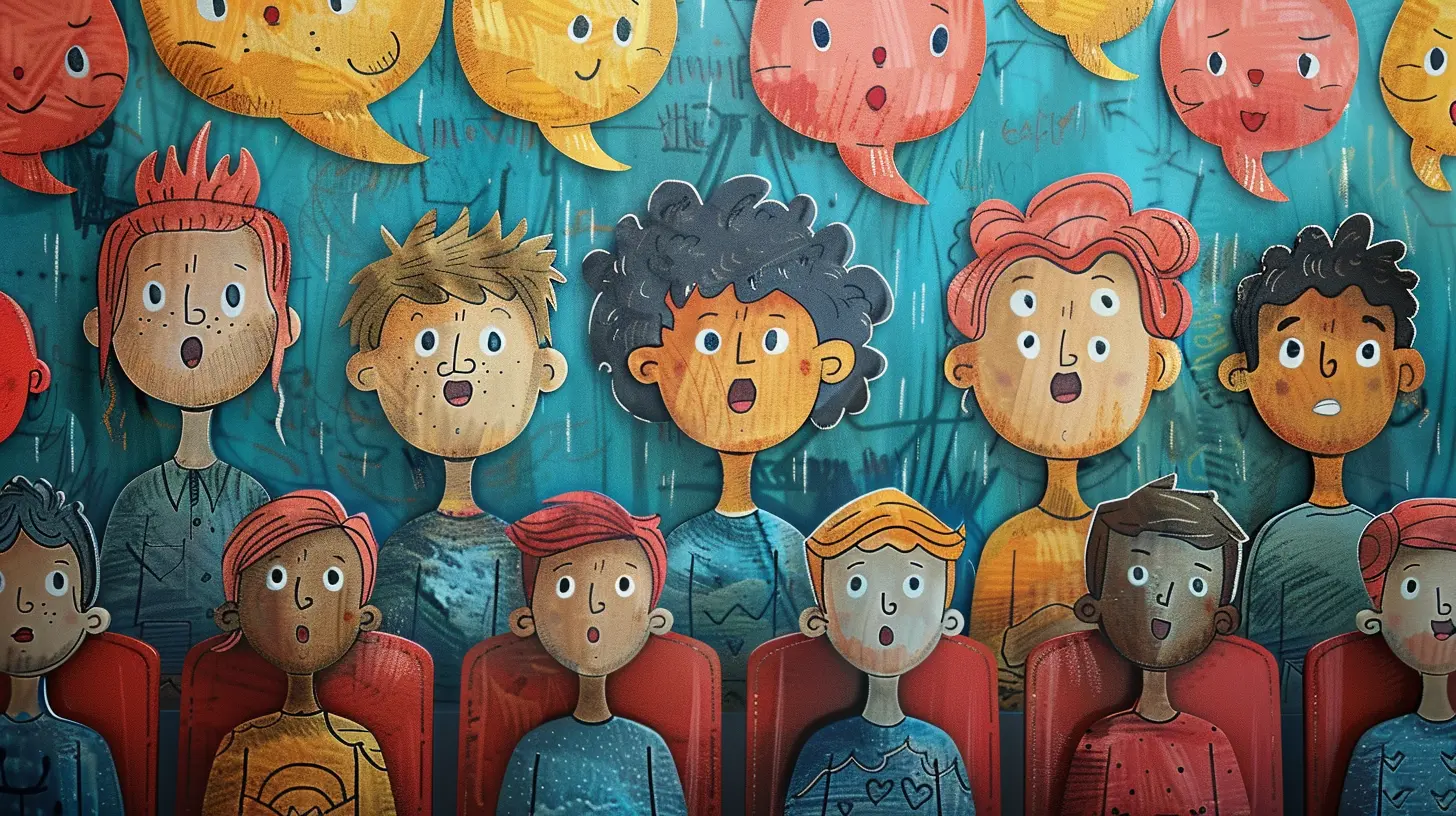
Practical Strategies That Actually Work
Below are approaches that consistently help shy students participate more, roughly ordered from lowest risk to highest.1. Written Pre-Reflection Before Discussion
Ask students to jot down their thoughts for two minutes before opening a discussion. Then let them read from their notes if they want. This removes the cognitive load of composing on the spot and gives shy students a script. It also improves the quality of everyone's contributions.Considerations: This adds time. It works best when the question is genuinely worth thinking about, not when it is a quick factual check. Do not use it every single discussion or students will tire of it.
2. Think-Pair-Share, Done Properly
Think-pair-share is common, but it is often rushed. The "pair" step gets thirty seconds, and shy students never get past small talk. Give pairs a full two to three minutes with a specific task. Then when you bring the class back together, ask students to share what their partner said, not their own idea. This shifts the social risk. "My partner pointed out that..." feels less exposed than "I think..."Trade-off: Some students will use this to hide behind their partner. Rotate who reports. Over time, the shy student becomes the reporter and gains confidence.
3. Small Group First, Whole Class Later
Structured small groups of three or four are often the sweet spot for shy students. The audience is small, the turn-taking is more natural, and there is less pressure to perform. After a rich small-group conversation, whole-class sharing becomes a report rather than a debut.When to avoid: If small groups are unstructured, dominant voices take over and shy students disappear. Assign roles (facilitator, note-taker, reporter, timekeeper) so everyone has a function.
4. Nonverbal and Low-Stakes Entry Points
Not every form of participation needs to be verbal. Consider:- Thumbs up, thumbs down, or a scale of one to five
- Holding up a card with A, B, C, or D
- Adding a thought to a shared digital document or sticky note wall
- Responding in a class chat or backchannel
These count as participation and build momentum. A student who has signaled an opinion ten times is far more likely to voice it the eleventh time.
5. Rehearsal Opportunities
Give shy students a chance to practice before the real moment. This might mean:- Letting them preview discussion questions the night before
- Running through a presentation with you or a peer during lunch
- Recording a video response instead of delivering it live, then sharing it with the class
Why it works: Familiarity reduces perceived threat. The brain treats a rehearsed situation as known territory rather than unknown risk.
6. Graduated Public Speaking
If your goal is genuine public speaking growth, build a ladder. Start with a partner, then a small group, then a half-class, then the full class. Each rung should feel slightly uncomfortable but not terrifying. Skip rungs and you risk a setback that erases months of progress.Considerations: This takes weeks or months, not days. Do not rush it because a rubric says students should present in front of the class by October.

What Not to Do
Some common practices feel helpful but tend to make things worse.Do Not Publicly Diagnose
Avoid saying things like "I know you are shy, so I will not call on you." This labels the student, often in a way they did not choose, and can become a self-fulfilling identity. Instead, offer options privately: "Would you like me to call on you today, or would you prefer to share in writing first?"Do Not Grade Participation as a Single Number
A participation grade that only counts verbal contributions punishes shy students for a temperament they did not choose. Instead, broaden what counts: written reflections, small-group contributions, preparation, listening quality, and one-on-one check-ins. This is not lowering the bar. It is measuring the same learning through multiple windows.Do Not Confuse Silence With Disengagement
Some of the most engaged students in your room are silent. They are tracking the argument, noticing contradictions, and building their own view. If you assume silence means apathy, you will misread them and possibly damage the relationship.Working With Parents and Support Staff
Shyness rarely lives only at school. A conversation with parents can reveal whether the pattern is new or lifelong, whether it shows up at home, and whether there are underlying factors like anxiety that warrant professional support.When to refer: If a student's shyness is causing significant distress, affecting their ability to make friends, or limiting them across multiple settings over a long period, it may be worth involving a school counselor or psychologist. This is not a failure of your teaching. It is appropriate triage.
When to wait: If the shyness is situational and the student is otherwise functioning well, giving them time and support within your classroom is usually the right first move. Over-referring can stigmatize normal developmental variation.
Measuring Progress Without Fixating on It
Progress with shy students is often invisible in the moment. A student who speaks once in a semester may have made enormous internal strides. Track small signals:- Did they make eye contact today?
- Did they nod along to a peer's point?
- Did they write a longer response than last week?
- Did they speak to a partner without prompting?
Keep a simple private log. Over a term, patterns emerge that a single class period cannot show.
A Realistic Timeline
Do not expect transformation in a week. Realistic progress looks like this:- Weeks 1 to 3: Building safety. Little visible change.
- Weeks 4 to 8: Small group participation increases.
- Weeks 9 to 16: Occasional whole-class contributions, often brief.
- Semester 2: More consistent participation, sometimes spontaneous.
This is not a linear path. There will be setbacks, especially after a bad day or a social conflict. Patience is not a soft skill here. It is the strategy.
Final Thoughts
Helping shy students find their voice is not about forcing them to become different people. It is about removing the unnecessary barriers between who they are and what they have to offer. Most shy students are not waiting to be rescued. They are waiting for a room that feels safe enough to risk something.Your job is not to fix them. Your job is to build the conditions where their voice becomes possible, then step back and let it emerge. That takes time, humility, and a willingness to measure growth in millimeters rather than miles. But when a quiet student finally speaks, and the room receives their idea with genuine interest, you will remember why you chose this work.
all images in this post were generated using AI tools
Category:
Class ParticipationAuthor:

Zoe McKay