Debating the Future of National Narratives in History Education
3 October 2026
History classrooms have always been quiet battlegrounds. Not because teachers are fighting students, but because the stories we choose to tell about a nation's past shape how young people understand their present and imagine their future. A curriculum is never just a list of dates and names. It is a statement about identity, belonging, and values.
Right now, that statement is being rewritten in many places at once. Debates over national narratives in history education are intensifying across democracies and non-democracies alike. Politicians argue about patriotism. Teachers argue about honesty. Parents argue about what their children should feel when they study the past. Students, often left out of the conversation, absorb whatever version reaches them.
This article does not pretend the debate has a single winner. Instead, it offers a working framework for anyone who cares about history education: teachers, curriculum designers, school leaders, parents, and citizens who understand that how we teach the past matters more than most people admit.

What We Mean by a National Narrative
A national narrative is the story a country tells about itself. It usually includes an origin story, a set of heroes, a list of struggles, and a sense of direction. It answers questions like: Who are we? Where did we come from? What do we stand for? What have we survived?These narratives are not inherently bad. They provide coherence. They give citizens a shared reference point. They help a diverse population feel like a single community, which is no small achievement in countries held together by geography, law, and little else.
The problem begins when a narrative hardens into a single authorized version. When complexity is treated as disloyalty, and when facts that complicate the story are quietly removed. At that point, history education stops being education and becomes promotion.
The Difference Between Patriotism and Propaganda
Patriotism says: this country has done remarkable things, and also some terrible things, and I love it enough to want the truth.Propaganda says: this country has done remarkable things, and anyone who mentions the terrible things is attacking it.
The line between the two is not always obvious. Teachers feel it constantly. So do textbook authors and examiners. The healthiest systems build in room for discomfort. The unhealthiest systems punish it.

Why This Debate Is Heating Up Now
Several forces are pushing national narratives back into the spotlight.First, demographic change. Many countries are more diverse than they were when their school history curricula were written. Students whose families arrived recently, or whose ancestors were colonized rather than colonizers, often find themselves invisible in the standard story. That invisibility is not neutral. It teaches them something about whose history counts.
Second, digital access. Students can now find alternative accounts in seconds. When the classroom version and the online version conflict, trust in the classroom suffers. Schools can no longer rely on being the only source of historical information.
Third, political polarization. In many places, history has become a proxy for broader cultural fights. Arguments about what to teach are often arguments about what kind of country people want. That makes compromise harder, because the stakes feel existential.
Fourth, global comparisons. International assessments and rankings encourage countries to look at each other's curricula. Sometimes this leads to useful borrowing. Sometimes it leads to defensive reactions, where a country doubles down on its own story precisely because it feels threatened.
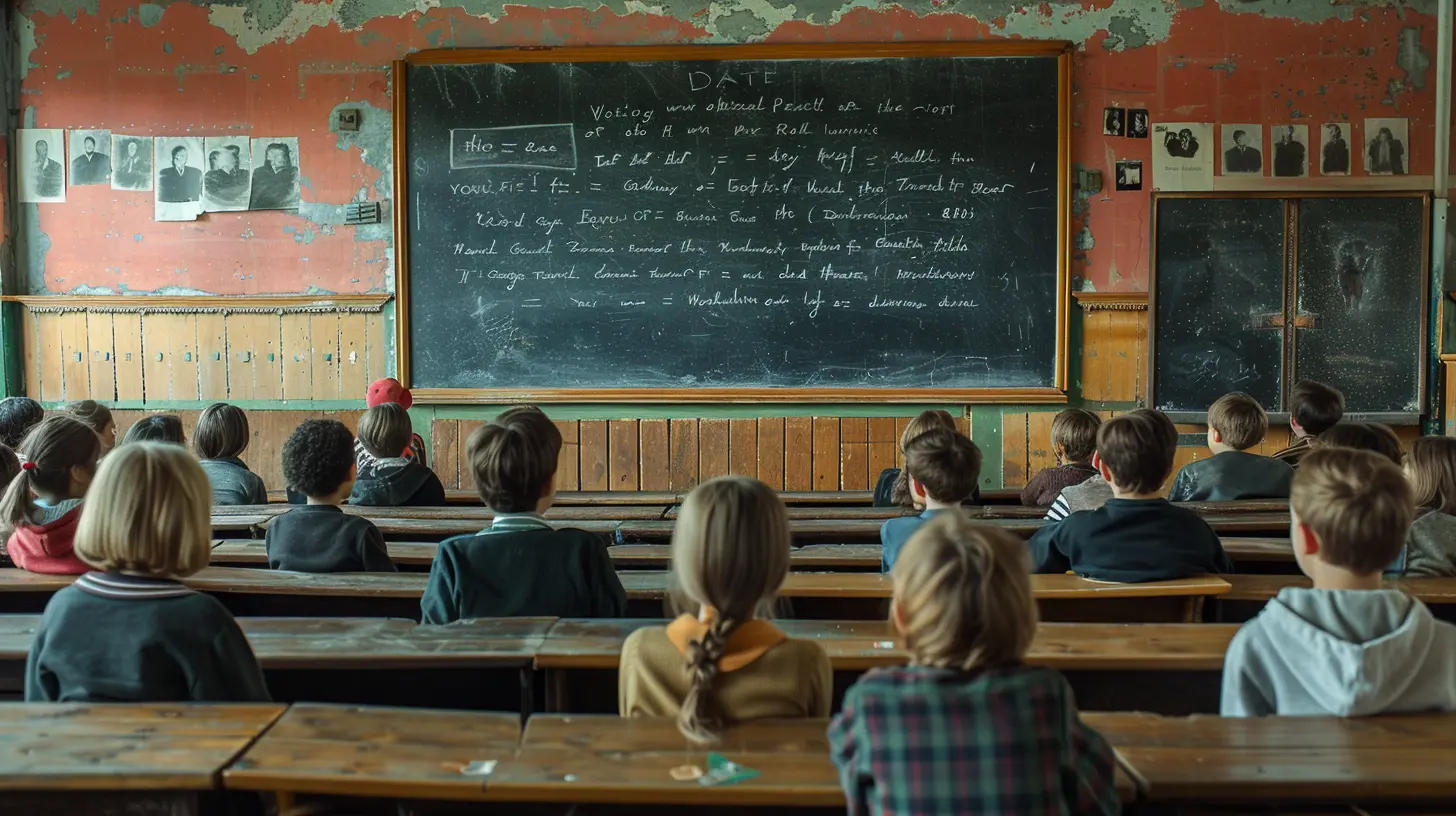
The Case for a Shared National Narrative
Let us take the strongest version of this argument seriously, because dismissing it is lazy.A shared narrative can build social cohesion. In countries with deep regional, ethnic, or linguistic divisions, a common historical story can function as social glue. It gives strangers something to talk about, a set of references they share.
It can also support civic participation. People who understand how their institutions developed are better equipped to defend or reform them. A citizen who knows why a particular right exists is harder to manipulate than one who simply assumes it always has.
And it can provide meaning. Young people want to belong to something larger than themselves. A well-told national story, honestly told, can offer that without requiring anyone to lie.
The key phrase is "honestly told." The case for a shared narrative collapses the moment the narrative requires suppression of evidence. Cohesion built on concealment is fragile. When the concealment is exposed, as it eventually is, the resulting disillusionment is far worse than the original complexity would have been.

The Case for Critical and Plural Narratives
Critics of the single-story approach raise several points worth weighing.They argue that a monolithic narrative erases people. Women, minorities, laborers, dissidents, and ordinary people who never held power tend to disappear from triumphalist accounts. That erasure has consequences. It tells students that only certain lives are historically significant.
They argue that it weakens critical thinking. If students are only ever presented with a flattering version of the past, they never practice the essential historical skill of evaluating competing claims. They learn to recite, not to reason.
They argue that it produces brittle patriotism. A citizen whose national pride depends on never hearing criticism is easily shaken. A citizen who knows the full record, including failures, has a sturdier foundation.
And they argue that plural narratives better reflect reality. Most nations are not single stories. They are arguments, conversations, and unresolved tensions. Teaching history as a settled monologue misrepresents how the past actually worked.
Where Both Sides Are Right
The honest position is that both camps have legitimate concerns.Shared narratives matter for cohesion. Critical narratives matter for truth and for democratic resilience.
The mistake is treating these as opposites. They are not. A national narrative can be shared and critical at the same time. It simply has to be honest about what it includes and what it leaves out, and it has to be open to revision when new evidence or new voices arrive.
What Actually Works in Practice
Curriculum debates often stay abstract. Here is where they touch the ground.Teach Historiography, Not Just History
The most powerful move a history teacher can make is to show students how history is written. Not just what happened, but how we know, who recorded it, who did not, and why interpretations change.This approach has a practical benefit. It reduces the pressure on any single narrative, because students understand that all narratives are constructed. They learn to ask better questions: Whose perspective is this? What is missing? What would this look like from the other side?
It also protects teachers. When a student challenges a lesson, the teacher can respond with method rather than defensiveness. The question becomes "how do we know?" rather than "why are you questioning this?"
Use Primary Sources Deliberately
Primary sources are not automatically more truthful than textbooks. They are partial, biased, and often written by people with power. But that is exactly why they are useful.A letter from a soldier, a newspaper editorial from 1890, a government report, a protest song, a census record. When students compare these, they see history as a puzzle rather than a sermon. The teacher's job is to help them notice what each source can and cannot tell them.
Include Multiple Perspectives Without False Balance
There is a difference between showing multiple perspectives and pretending all perspectives are equally valid.A classroom should include the voices of colonizers and colonized, enslavers and enslaved, rulers and ruled. But including a perspective does not mean endorsing it. A well-designed lesson can present a defender of slavery alongside an abolitionist without suggesting the moral question is open.
The distinction is between understanding why people believed something and agreeing that they were right. Good history teaching does the first without doing the second.
Make Room for Unresolved Questions
Not every historical debate can be settled in a classroom, and it should not be. Some questions remain genuinely contested among historians. Pretending otherwise is dishonest.Teachers can name those debates explicitly. "Historians disagree about this. Here are the main interpretations. Here is why the disagreement persists." That honesty builds trust and models intellectual humility.
Common Mistakes and Misconceptions
Several errors show up repeatedly in these debates.Mistake one: assuming there is one correct narrative. There is not. There are more and less accurate accounts, and there are more and less honest ones. But even accurate accounts differ in emphasis, framing, and interpretation.
Mistake two: treating criticism as betrayal. This is the most common error in politically charged environments. It shuts down inquiry and drives the most thoughtful teachers out of the profession.
Mistake three: replacing one myth with another. Some reform efforts simply swap a heroic national story for a villainous one. That is not progress. It is the same intellectual move in a different costume.
Mistake four: ignoring age appropriateness. What a seven-year-old can handle and what a seventeen-year-old can handle are different. Complexity should be introduced gradually, not dumped on students before they have the tools to process it.
Mistake five: outsourcing the debate to politicians. When legislatures write curriculum in detail, they often produce documents designed for headlines rather than classrooms. Teachers should be at the table, not just at the receiving end.
Trade-Offs Worth Naming Honestly
Every approach carries costs.A strong shared narrative offers cohesion but risks erasure.
A thoroughly critical approach offers honesty but can leave students without any sense of shared meaning, which some will fill with cynicism or with alternative narratives found online.
A locally designed curriculum respects teacher judgment but can produce inconsistency between schools and regions.
A nationally standardized curriculum ensures coverage but can become rigid and politically captured.
There is no cost-free option. The question is which costs a society is willing to bear, and whether it is honest about them.
What Teachers Can Do Tomorrow
Large debates can feel paralyzing. Practical steps matter more.Start by auditing your own materials. Whose voices are present? Whose are missing? Where does the narrative smooth over genuine conflict?
Then build in at least one lesson per unit that asks students to compare two accounts of the same event. Keep it simple. Two short sources, a few guiding questions, a discussion.
Invite students to notice what each account emphasizes and what it avoids. This single practice, repeated over a year, does more for historical thinking than any textbook revision.
Finally, be transparent with students about the choices you are making. "I chose this source because it shows X. I left out Y because of time. Here is where you can find it if you want more." That kind of honesty is rare and memorable.
What Parents and Citizens Can Do
Ask questions rather than issue verdicts. "What did you study today? What did the teacher say about why it matters?" Curiosity opens more doors than accusation.Support teachers who handle difficult topics thoughtfully. They are often under pressure from multiple directions, and public support matters more than most people realize.
Resist the urge to demand a single correct version. The impulse is understandable, but it leads to curricula that are brittle, defensive, and ultimately less trusted by the students they are meant to serve.
A Way Forward Without Pretending It Is Easy
The future of national narratives in history education will not be settled by one reform or one election. It will be shaped by thousands of small decisions: which sources to include, which questions to ask, which silences to break, which traditions to keep.The most durable approach is neither uncritical celebration nor relentless debunking. It is a disciplined commitment to truth, paired with an equally disciplined commitment to belonging. Students need both. They need to know that their country's story is complex, and they need to feel that they have a place in it.
That balance is hard to hold. It requires teachers who are well trained and well supported, curricula that are honest and flexible, and a public conversation that values nuance over slogans.
It is worth the effort. Because the alternative, a generation taught either to worship a myth or to dismiss their own inheritance, serves no one well. History education at its best does something quieter and more valuable. It teaches young people how to think about where they come from, so they can decide, with clear eyes, where they want to go.
all images in this post were generated using AI tools
Category:
History LearningAuthor:

Zoe McKay