Breaking Down Barriers: The Social Benefits of Peer Tutoring
25 July 2026
Alright, let’s have a little chat about something that’s been hiding in plain sight in schools, colleges, and pretty much anywhere learning happens — peer tutoring.
Now, before you roll your eyes and think "Oh great, another academic lecture," hold up. This isn't some snooze-fest report with pie charts and overly complicated educational jargon. Nope! We’re diving into something way more real: how peer tutoring isn't just a lifeline for your grades but also a secret social weapon — like Batman's utility belt but with flashcards and empathy.
Ready? Cool. Let’s break it down.
What is Peer Tutoring Anyway?
Let’s start simple. Peer tutoring is when students help other students learn. That’s it. No degrees, no fancy titles — just folks sitting together, one explaining while the other goes, “Wait... what?”It’s like when your friend finally explains a math problem in a way that your brain actually gets. Suddenly, the numbers start looking less like evil little gremlins and more like something you can handle.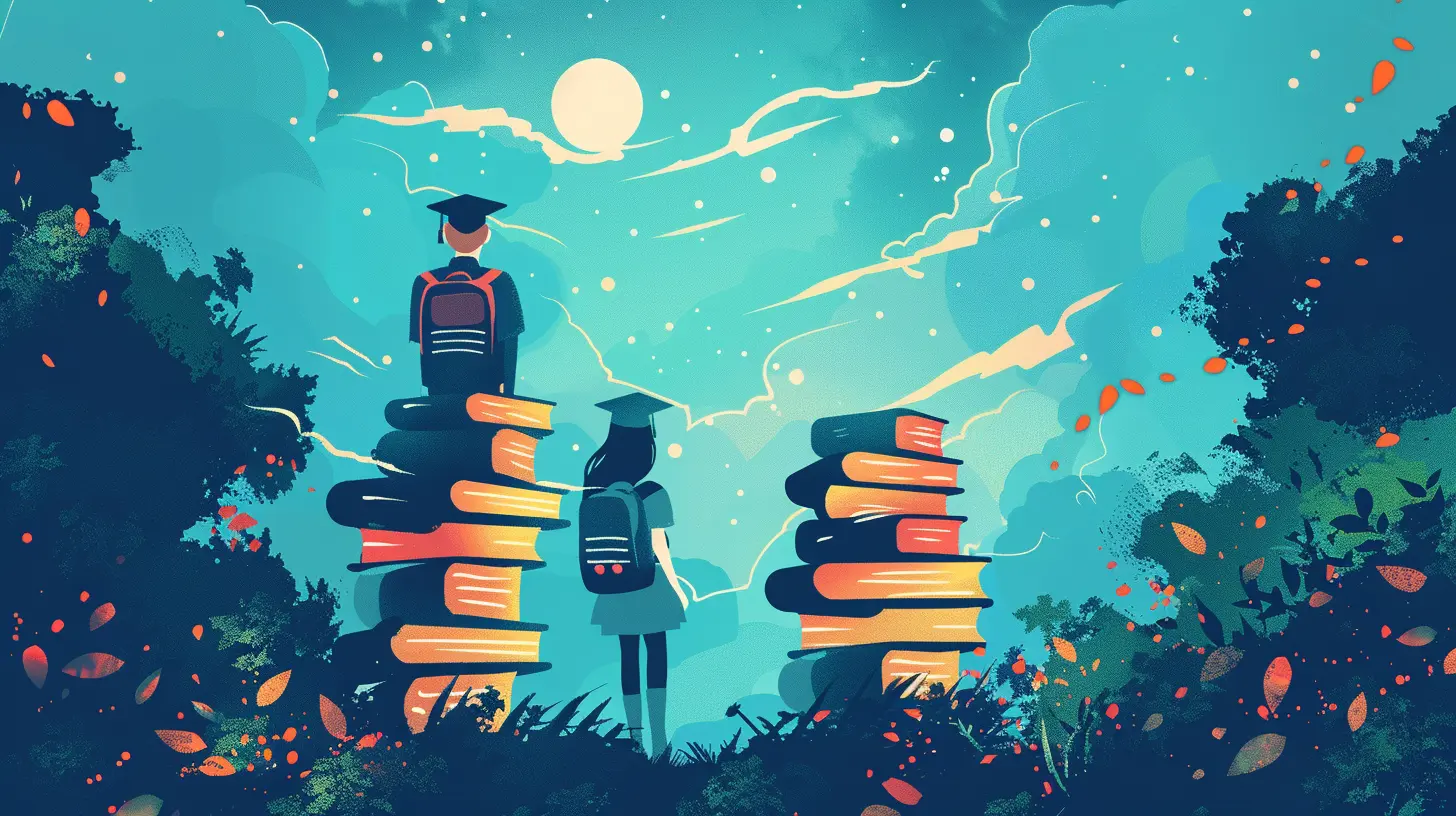
Why It’s Not Just About the Grades ?
Sure, peer tutoring helps students academically. That's the whole point, right? But here’s the plot twist: the real transformation isn’t just found in test scores or completed homework. It’s in the people.Let’s break down all the surprisingly awesome social magic that happens when students start teaching each other.
1. Crashing the Awkward Walls Between People
Ever sat in a classroom and realized you don’t even know half the people in there? It’s wild. You’ve got 30 people breathing the same recycled air, all pretending like they’re on their own deserted island.Peer tutoring throws a sledgehammer through those invisible walls.
Suddenly students who might’ve never said two words to each other are deep in conversation about algebraic equations, history facts, and why the mitochondria is the powerhouse of the cell (admit it, that one lives rent-free in your head too).
You don’t stay strangers when you’re working through struggles together. It’s a weirdly beautiful bond. Like study-induced Stockholm Syndrome — but in a good way.
2. Building Confidence on Both Sides
For the tutor, there’s something empowering about being the go-to person for help. It's a confidence boost that says, “Hey, I actually know stuff!” And trust me, for students who spend most of their academic lives being graded and judged, that feeling is gold.Now, on the flip side, the student receiving help often feels way less intimidated asking a peer for guidance than they would asking a teacher or professor. There’s no academic pressure, no fear of looking “dumb.” It’s just, “Hey, can you help me out?” And that’s refreshing.
What you end up with is a friendly dynamic that helps both students walk a little taller.
3. The Birthplace of Unexpected Friendships
Cue the cheesy music. Because truthfully? Peer tutoring is where odd-couple friendships are born.The jock and the science nerd. The art kid and the math whiz. The quiet introvert and the class clown. Find them all around a table sharing notes and snacks.
Turns out, struggling over equations is a lot like bonding over a Netflix series — it brings people together. And those tutoring sessions spill into giggles, shared memes, and “did you see that TikTok?” moments. Suddenly you’re not just classmates; you’re friends.
4. It's a Lesson in Empathy (Without You Even Realizing It)
Let’s face it. You never really understand how hard something is until you try explaining it to someone else.For tutors, this unlocks a treasure chest of empathy. You learn to be patient (which, admit it, doesn’t always come naturally), to communicate clearly, and to actually listen. You start seeing learning from someone else’s perspective, and that shift? It sticks with you.
And for the students being tutored? They often start feeling seen and heard in a way the classroom doesn’t always allow. That kind of emotional support is priceless.
5. Soft Skills, Supercharged
You know those “soft skills” every job ad seems to require? Communication, teamwork, leadership, emotional intelligence — basically everything they don’t explicitly teach in a textbook?Peer tutoring is a crash course in all of them.
Tutors learn how to lead without bossing, explain without condescending, and adjust to different learning styles on the fly. Students being tutored improve at asking for help, giving feedback, and collaborating.
It’s like career training hiding in plain sight. Sneaky, right?
6. It Shifts the Whole Classroom Culture
One peer tutoring session might seem like a drop in the bucket. But do enough of them? And the ripple effect is real.Classrooms start becoming more supportive, less cutthroat. Students help each other more freely. Group projects stop being total nightmares (well, maybe less of a nightmare, let’s not get carried away). People feel more connected, even if they’re not besties.
You create a culture where learning isn’t a competition — it’s a group effort. And honestly, isn’t that kind of awesome?
7. It Breaks Down Barriers of All Kinds
Where do we even start?- Language: Multilingual students often connect better with peer tutors who understand their native language or cultural background.
- Age: Older students mentoring younger ones builds bridges between grade levels.
- Background: Students from different social circles, neighborhoods, even socioeconomic backgrounds find common ground in learning.
Peer tutoring proves that brains don’t come with a label or stereotype. The classroom becomes less about where you're from and more about how we can help each other move forward.
8. It Makes Education Feel Personal (Because It Is)
Let’s be real — school can feel super robotic. Bells ring, students shuffle, lectures happen, rinse and repeat. It’s easy to feel like just another name on the attendance sheet.But with peer tutoring, it suddenly becomes personal.
You’ve got someone explaining things at your pace, using your words, and maybe even your inside jokes. You’re not just another confused face — you're part of a dynamic, supportive duo. It's like being in a two-person study sitcom, minus the laugh track.
How Schools Can Lean Into the Wonder of Peer Tutoring
Alright, by now we’re all aboard the peer tutoring train. But how can schools encourage it without turning it into another chore?Here’s the secret sauce:
✅ Make it voluntary (because no one brings positive vibes when they’re forced into it)
✅ Provide training — nothing too intense, just basic tips on listening, explaining, and not turning tutoring into a power trip
✅ Recognize it! A simple certificate or pizza party (hello, motivation?) goes a long way
✅ Create safe spaces for tutoring sessions — library corners, virtual chat rooms, even underused classrooms
When the environment feels right, peer tutoring doesn't just happen — it thrives.
Quick Real Talk: What About The Awkward Stuff?
Good point. Let’s address it.- What if the tutor doesn’t actually get the material themselves?
Then it becomes a duet of learning — and sometimes that’s even more powerful. Growth isn’t linear.
- What if personalities clash?
That’s life, baby. Not everyone is gonna vibe, and that’s okay. Rotate partners if needed.
- Is it weird asking for help from a peer?
Only for the first two minutes. After that, it just feels like a chill study session.
The Long-Term Payoff
Here's the kicker. All these social benefits don't just vanish after the final exam.Students who’ve participated in peer tutoring often carry those skills — empathy, communication, leadership — into college, careers, and everyday life. We're talking about humans who know how to support each other, ask for help, and navigate different personalities.
If that’s not the kind of graduate we need more of, I don’t know what is.
Final Brain Nugget
So yeah, peer tutoring might start with flashcards and quiz sheets, but don’t let that fool you. What you’re really building is connection. And in a world where social walls seem taller than ever, that's nothing short of revolutionary.Peer tutoring breaks down barriers — and what’s left is a stronger, kinder, smarter group of students.
And who knows? Maybe one study session away is your new best friend, biggest cheerleader, or future business partner.
Go on, grab a classmate, and make those flashcards magical.
all images in this post were generated using AI tools
Category:
Peer TutoringAuthor:

Zoe McKay
Discussion
rate this article
1 comments
Reina McMillen
Peer tutoring is like mixing peanut butter and jelly-deliciously rewarding! Learning together breaks barriers and builds friendships all around.
July 29, 2026 at 4:38 AM
Zoe McKay
Absolutely! Peer tutoring not only enhances learning but also fosters connections that last. It's a win-win for everyone involved.