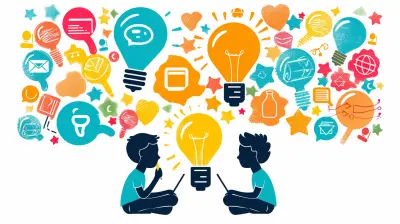
Why Student Voice Will Lead Educational Innovation
2 September 2026
For decades, the conversation about school improvement has been dominated by adults. Policymakers design standards, administrators craft schedules, and teachers develop lesson plans. Students, the very people these systems exist for, are treated as passive recipients. They are told what to learn, when to learn it, and how to prove they learned it. Their opinions are rarely solicited, and when they are, the feedback is often filtered through adult assumptions about what young people actually need.
That model is breaking down. Not because adults have suddenly become more empathetic, but because the conditions that made top-down schooling workable no longer exist. Information is no longer scarce. Skills become obsolete in years, not decades. The pace of technological and social change means that the curriculum written five years ago is already outdated. In this environment, the people closest to the learning experience, the students, hold the most accurate and current data about what works and what does not. Ignoring that data is not just a missed opportunity. It is a strategic error.
Student voice is not about letting kids run the school or turning classrooms into popularity contests. It is about treating students as legitimate stakeholders in their own education. When done right, it produces innovations that no amount of adult brainstorming could generate. This article will explain why student voice is the most underutilized asset in education, how it drives genuine innovation, and what schools need to do to harness it effectively.

The Information Asymmetry Problem
Teachers and administrators operate with a fundamental disadvantage. They observe students from the outside. They see engagement levels, test scores, and behavioral patterns. But they cannot see inside a student's head. They do not know which part of a lesson caused confusion, which explanation finally made a concept click, or why a particular assignment felt meaningless.Students have this information. They experience the learning process from the inside. They know when a lesson drags, when an example is relatable, and when a teaching strategy completely misses the mark. This is not subjective opinion. It is observational data collected in real time, across every subject, every day.
The problem is that this data is rarely collected systematically. Schools conduct annual surveys, but those are often generic and administered too late to influence anything. By the time the results are analyzed, the school year is over. The student who struggled with quadratic equations in October has moved on to geometry. The feedback is stale.
Innovation requires accurate, timely information about what is failing. Without student input, schools are essentially flying blind. They implement new programs based on best guesses and vendor promises, then wonder why the results are disappointing. A direct line to student experience would eliminate much of this guesswork.
Consider a common scenario. A school adopts a new reading intervention program. The program is research-based and has strong evidence from other districts. But the students in this particular school find the materials boring. They disengage. The program fails. An adult committee might spend months analyzing the failure, blaming implementation fidelity or teacher training. A simple conversation with students would have revealed the problem in the first week.

Why Students See What Adults Miss
Adults have a blind spot. They remember their own schooling, and that memory shapes their expectations. A teacher who loved lectures tends to defend lectures. An administrator who thrived on standardized tests may see them as the gold standard of assessment. This is not stubbornness. It is cognitive bias.Students do not carry this baggage. They do not compare current practices to the way things were done in 1995. They only know what is in front of them. This gives them a unique perspective on relevance and engagement. They can immediately identify when a lesson feels disconnected from their lives, not because they are lazy, but because they are honest.
This honesty is invaluable for innovation. Innovation is not about doing the same thing slightly better. It is about questioning fundamental assumptions. Adults rarely question the assumptions that shaped their own success. Students have no such loyalty. They will ask why they need to memorize dates when they can look them up in seconds. They will ask why they cannot choose their own research topics. They will ask why group projects always end up with one person doing all the work.
These questions are uncomfortable. They challenge established practice. But they are also the starting points for meaningful change. The schools that embrace these questions, rather than suppressing them, are the ones that will develop truly innovative approaches.

The Difference Between Voice and Choice
A common mistake is conflating student voice with student choice. Choice is a component, but it is not the whole picture. Voice means students have a say in the design and evaluation of their education. Choice means they pick from options that adults have already created.Both are valuable, but they serve different purposes. Choice is easier to implement. A teacher can offer three different book options or two different project formats. This increases engagement without requiring a fundamental shift in power. Choice is a good first step, but it is limited. The options are still constrained by adult assumptions about what is possible.
Voice is deeper. It involves students in the decision-making process itself. When students help design the curriculum, they are not just picking from a menu. They are writing the menu. This is where real innovation happens, because students can propose options that adults never considered.
For example, a high school science teacher might ask students to design their own lab experiments. The teacher provides safety guidelines and learning objectives, but the students choose the questions, the methods, and the metrics. The resulting projects are often more creative and more rigorous than anything the teacher would have assigned. The students are invested because they own the work.
The trade-off is that voice requires more time and more trust. It is messier than choice. Students need guidance to make good decisions. They need to learn how to give constructive feedback, how to negotiate with peers, and how to take responsibility for outcomes. This is not a reason to avoid voice. It is a reason to teach it deliberately.

Real-World Examples of Student-Led Innovation
Several schools have demonstrated the power of student voice in practice. These examples are not hypothetical. They are working models that show what is possible.The Independent Project at Monument Mountain Regional High School in Massachusetts is one well-documented case. A group of students designed their own school within a school. They created their own curriculum, managed their own schedule, and assessed their own learning. The results were striking. Students who had been disengaged in traditional classes became deeply invested in their self-designed projects. They produced work that was more complex and more thoughtful than typical high school assignments.
The key insight from this project is not that students should run everything. It is that students are capable of far more than adults typically expect. When given real responsibility, they rise to meet it. The project also revealed that students are often harder on themselves than teachers are. They set high standards and hold each other accountable.
Another example comes from schools that use student-led conferences. Instead of the traditional parent-teacher meeting, where adults discuss the student, the student presents their own work and progress. This shifts the dynamic. The student must articulate what they learned, what they struggled with, and what they plan to do next. This practice forces students to develop metacognitive skills and gives them a genuine stake in their own assessment.
Student-led conferences are not just a nice ritual. They produce better outcomes because they make the student the primary agent in their own education. The teacher becomes a coach rather than a judge. The parent becomes a listener rather than a critic. This simple structural change has ripple effects throughout the school culture.
There are also examples of student voice driving technology decisions. Some districts have created student technology advisory boards. These boards test new software, provide feedback on digital tools, and help train teachers. Students often have more experience with technology than adults do, and their insights can save districts from purchasing expensive tools that students will refuse to use.
These examples share a common thread. In each case, adults did not simply ask for student opinions. They created structures that gave students real decision-making power. That distinction is critical. Asking for feedback is not the same as sharing authority.
The Risks and How to Manage Them
Student voice is not a silver bullet. It comes with real risks, and pretending otherwise would be dishonest. The most common risk is that student input becomes a rubber stamp for adult decisions. Schools create student councils and advisory groups, but then ignore their recommendations. This is worse than not asking at all. It teaches students that their voices do not matter, which is the opposite of the intended lesson.Another risk is that a vocal minority dominates the conversation. Outgoing students are more likely to speak up, while quieter students may be overlooked. This can lead to decisions that reflect the preferences of the most confident students, not the needs of the whole student body. Schools need to use anonymous surveys and structured feedback tools to ensure that all voices are heard, not just the loudest ones.
There is also the risk of students making poor decisions. This is inevitable, especially when students are new to the process. A student might propose a grading system that is too lenient or a curriculum that avoids challenging topics. Adults should not accept these proposals blindly. The goal is not to abdicate responsibility. It is to create a partnership where adults provide expertise and students provide perspective.
The best approach is to treat student voice as a form of apprenticeship. Students learn how to make good decisions by making decisions and seeing the consequences. Adults guide the process, set boundaries, and help students understand the trade-offs. This is how real-world decision-making works. It is not about giving students everything they want. It is about giving them a meaningful seat at the table.
Practical Steps for Implementing Student Voice
Moving from theory to practice requires concrete action. Here are steps that schools can take to genuinely integrate student voice into their innovation processes.First, start small. Do not try to redesign the entire school at once. Pick one area, such as homework policy or assessment methods, and create a student advisory group focused on that issue. Give the group a clear mandate and a timeline. Let them research the topic, gather input from their peers, and present recommendations to the administration. Commit to responding to those recommendations publicly, explaining what will be adopted, what will not, and why.
Second, make feedback a regular part of the instructional cycle. Instead of a single end-of-year survey, use quick check-ins after major units. Ask students three questions. What helped you learn? What got in the way? What should we do differently next time? This feedback should be anonymous and low-stakes. The goal is to get honest data, not to make students feel like they are complaining.
Third, train teachers in how to receive and use student feedback. Many teachers are not used to being evaluated by their students. They may feel defensive or threatened. Professional development should help teachers see student feedback as a gift, not a threat. It is data that can make their jobs easier and their teaching more effective.
Fourth, create formal roles for students in school governance. Student representatives should sit on curriculum committees, hiring panels, and budget review boards. These roles should have real responsibilities and real influence. A student who sits on a hiring panel should have their questions taken seriously and their feedback considered in the final decision.
Fifth, be transparent about limitations. Students are not experts in pedagogy or school finance. They should not be making decisions about things they do not understand. But they should be informed about those things. Schools should take time to explain why certain constraints exist, such as budget limitations or state testing requirements. When students understand the constraints, their suggestions become more realistic and more useful.
The Role of Technology in Amplifying Student Voice
Technology can be a powerful amplifier for student voice, but it is not a substitute for genuine engagement. Online forums, anonymous suggestion boxes, and digital polling tools can make it easier for students to share their thoughts. These tools are especially useful for reaching students who are reluctant to speak in public.However, technology can also create a false sense of participation. A school that sets up an online forum but never acts on the suggestions is not amplifying student voice. It is just collecting complaints. The technology is only useful if it is connected to a clear process for action.
One effective approach is to use digital portfolios where students document their learning and reflect on their progress. These portfolios give students a platform to articulate their own educational journey. Teachers and parents can use them as a basis for conversation. This shifts the focus from grades to growth, and it gives students a sense of ownership over their learning narrative.
Another approach is to use student-created content as a form of assessment. Instead of traditional tests, students can create videos, podcasts, or written guides that explain concepts to other students. This requires a deep understanding of the material, and it gives students a voice in how knowledge is communicated. The best student-created content often explains concepts more clearly than the textbook, because it uses language that peers actually understand.
Common Misconceptions About Student Voice
Several misconceptions prevent schools from embracing student voice. The first is that students are too immature to have meaningful opinions. This is simply not supported by experience. Even young children can articulate what helps them learn and what confuses them. The issue is not capability. It is practice. Students have not been asked, so they have not developed the skills to articulate their thoughts.The second misconception is that student voice means giving up adult authority. This is a false dichotomy. Adults can maintain high standards and clear boundaries while still valuing student input. The best classrooms are not either teacher-directed or student-directed. They are both. The teacher sets the framework, and the students have agency within that framework.
The third misconception is that student voice is only relevant for older students. Elementary school students have valuable perspectives too. They can tell you when a lesson is too fast or too slow, when an activity is confusing, and when they feel supported. The methods for collecting their input may be different, such as drawing pictures or using simple thumbs up and thumbs down, but the principle is the same.
The fourth misconception is that student voice is a distraction from the real work of teaching content. In reality, student voice is a tool for teaching content more effectively. When students feel heard, they are more engaged. When they are more engaged, they learn more. The time spent on gathering and responding to student input is not wasted. It is an investment in motivation.
The Long-Term Impact on Educational Innovation
The most significant impact of student voice will not be on individual classrooms. It will be on the entire education system. When students are trained to think critically about their own learning, they become better consumers of education. They know what works for them, and they can advocate for their own needs. This is a skill that will serve them for the rest of their lives, whether they are in college, in the workforce, or in any other learning environment.This shift will also change the relationship between schools and the communities they serve. Schools that listen to students are more responsive to the needs of their local community. They are more likely to produce graduates who are self-aware, articulate, and capable of solving problems. These are exactly the skills that the modern economy demands.
Educational innovation has been slow for decades because the incentives are misaligned. Schools are rewarded for compliance, not creativity. Standardized tests measure how well students follow instructions, not how well they think for themselves. Student voice challenges this paradigm by placing value on individual perspective and self-direction.
The schools that will lead the next wave of innovation are not the ones with the most technology or the most funding. They are the ones that have figured out how to genuinely listen to their students. This is not a soft skill. It is a competitive advantage.
A Call for Humility
Adults need to accept a difficult truth. We do not have all the answers. The education system we built was designed for a different era, and it is showing its age. The people who can help us fix it are sitting in our classrooms right now. They are not waiting for us to give them the answers. They are waiting for us to ask them what they need.The path forward is not complicated, but it is uncomfortable. It requires giving up some control. It requires trusting that students have valuable insights even when they are critical of our methods. It requires creating systems that make it safe for students to be honest.
The reward for this discomfort is enormous. Schools that embrace student voice will be more innovative, more responsive, and more effective. They will produce graduates who are not just knowledgeable, but also self-directed and capable of navigating a rapidly changing world. That is the ultimate goal of education, and student voice is the most direct path to achieving it.
The question is not whether schools can afford to listen to students. The question is whether they can afford not to.
all images in this post were generated using AI tools
Category:
Education BlogsAuthor:

Zoe McKay
Discussion
rate this article
2 comments
Noora McCaw
Empowering student voice is crucial for driving educational innovation. Their perspectives can reshape learning experiences and promote meaningful change.
September 14, 2026 at 11:02 AM
Zoe McKay
I completely agree. When students share their insights, it opens doors to new ideas and improvements in education. Their voices are essential for real change.
Zayden Pace
Let students' voices shape tomorrow's classrooms!
September 9, 2026 at 4:17 AM
Zoe McKay
Absolutely! When students contribute their ideas, it fosters engagement and drives real change in education. Their insights are invaluable for creating innovative classroom experiences.