What Makes Some Students Speak Up While Others Stay Silent?
17 October 2026
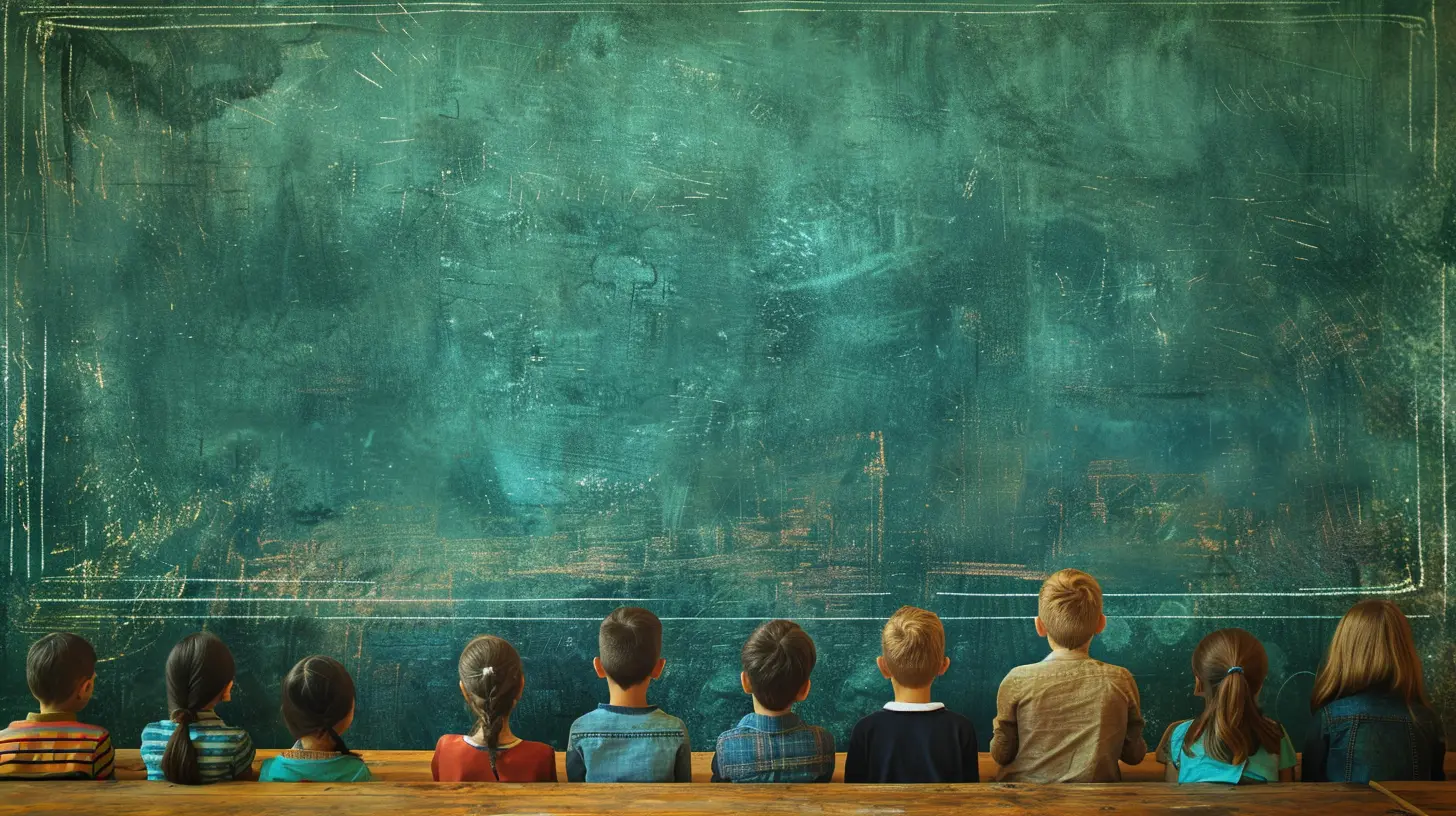
Every classroom has them. The student whose hand shoots up before the question is fully formed, and the student who seems to be conducting an invisible orchestra under the desk, hoping to remain unseen. Same room, same teacher, same lesson. Two completely different responses.
The easy explanation is personality. Some kids are outgoing, some are shy, and that's just how it is. But that explanation collapses the moment you notice the same quiet student who never speaks in math class holding court at lunch, or the bold participant who freezes during group work. If it were purely temperament, the behavior would stay consistent across settings. It doesn't.
What actually drives classroom participation is a tangled mix of psychological safety, perceived risk, prior experience, cultural conditioning, and the small signals teachers send without realizing it. Understanding that mix matters, because a classroom where only five voices dominate is a classroom where learning is quietly leaking out the back door.

The Real Question Isn't Why Students Are Quiet
Most discussions about participation start from the wrong premise. They frame silence as a problem to fix and speaking as the default healthy state. That framing misses something important: silence can be strategic, respectful, anxious, bored, or deeply engaged. A student who never raises a hand may be thinking harder than the one who talks constantly.So the better question is not "why won't they speak?" It's "what conditions make speaking feel worth the risk, and what conditions make silence feel safer?"
That reframe changes everything. It moves the conversation away from blaming students and toward examining the environment. And the environment, unlike personality, is something teachers and schools can actually influence.
The Psychology of Speaking Up
When a student raises a hand, a lot happens in a few seconds. They have to decide the idea is worth sharing, judge whether they can phrase it without stumbling, estimate how their peers will react, and weigh the cost of being wrong. That's a lot of mental computation for something that looks simple from the front of the room.Why the Brain Treats a Wrong Answer Like a Real Threat
Social rejection activates some of the same neural pathways as physical pain. This isn't a metaphor. Being laughed at, corrected harshly, or dismissed in front of peers registers as genuine harm, not just embarrassment. For a teenager whose social standing feels like oxygen, the calculus is obvious: the reward for a correct answer is small, and the cost of a humiliating one is enormous.This is why you can't simply tell a quiet student to "just speak up more." You're asking them to override a threat response with willpower. It rarely works, and when it fails, it confirms the fear.
The Confidence Loop Nobody Talks About
Participation is self-reinforcing in both directions. A student who speaks once, gets a neutral or positive response, and speaks again builds a track record of safety. A student who stays silent accumulates no evidence that speaking is safe, so the fear never gets tested. Over a school year, these two students drift further apart, not because of ability, but because of exposure.This is the single most important insight for anyone trying to increase participation: you are not trying to change personality. You are trying to break a feedback loop that gets stronger every week it goes unchallenged.

Six Forces That Separate the Talkers From the Quiet Ones
Let's get concrete. Here are the forces that most reliably predict who speaks and who doesn't.1. Perceived Psychological Safety
This is the big one. Students speak when they believe the cost of a mistake is low. That belief comes from evidence: what happened to the last person who got something wrong? Did the teacher say "good try, let's build on that," or did they wince? Did classmates snicker, or did they move on?Teachers often underestimate how closely students watch these moments. One sarcastic remark in October can silence a student until spring.
2. Wait Time (Or the Lack of It)
Research on classroom questioning has consistently found that most teachers wait only a second or two after asking a question before calling on someone or answering it themselves. That's not enough time for a hesitant student to formulate a thought, let alone decide to share it.Extending wait time to three to five seconds sounds trivial. It isn't. It gives reflective thinkers, English language learners, and anxious students a genuine window to enter the conversation. The trade-off is pace: longer waits mean fewer questions per lesson. That's usually a good deal, but it requires teachers to accept that coverage and understanding are not the same thing.
3. Cultural and Family Norms
In some cultures and families, children are expected to listen and defer to adults. Speaking up unprompted can read as disrespect, not engagement. In others, verbal sparring around the dinner table is normal and even affectionate.A teacher who interprets cultural reserve as disinterest will misread a large share of their class. Worse, they may push participation in ways that feel intrusive rather than inviting.
4. Language Confidence
For multilingual students, the gap between understanding and producing is real and exhausting. A student may follow the entire discussion and still not trust themselves to construct a sentence fast enough to jump in. That's not a knowledge gap. It's a processing load problem, and it deserves patience rather than pressure.5. Prior Experience With School
By middle school, students have years of data about how classrooms treat them. A student who was corrected mockingly in third grade carries that memory. A student who was labeled "the quiet one" may have quietly accepted the role. Past experiences shape present behavior far more than most teachers realize.6. The Teacher's Own Signals
Teachers communicate expectations through tiny behaviors: where they look when they ask a question, whose name they call first, how they respond to half-formed answers. Students read these signals with astonishing accuracy. If a teacher's gaze habitually lands on the same four students, everyone else learns that the conversation isn't really for them.
Why "Just Call on Everyone" Backfires
A common fix is to randomly call on students so no one can hide. It sounds fair. Sometimes it works. Often it doesn't.For a confident but lazy student, random calling is a useful nudge. For an anxious student, it can be a public ambush. The difference lies in whether the student has a safe way to pass, and whether the class culture supports imperfect answers.
A better version of this practice: call on students, but let them "phone a friend," ask for more time, or pass without penalty once per class. Structure reduces panic while still widening participation. The goal is not to force speech. It's to make speech less frightening.
Practical Strategies That Actually Move the Needle
Here's what tends to work, along with the reasoning behind each move and the situations where it fits.Build Low-Stakes Talk First
Before expecting whole-class discussion, use pair shares, quick written reflections, or small group chats. These let students rehearse an idea before it goes public. Rehearsal lowers the cost of speaking because the thought is already formed.Best for: anxious classes, new topics, multilingual learners.
Trade-off: takes time, and some students will still coast in groups. Pair shares with a required report-back reduce that.
Normalize Wrong Answers Explicitly
When a student gives an incorrect answer, treat it as useful data. "That's a common mistake, let's see why" does more for participation than any pep talk. Over weeks, students learn that being wrong is a normal step, not a social event.Best for: any class, especially ones with a perfectionist streak.
Trade-off: none, really, though it requires the teacher to stay calm in the moment.
Use Structured Discussion Formats
Protocols like think-pair-share, Socratic seminars with assigned roles, or round-robin check-ins give everyone a predictable turn. Predictability reduces anxiety because students know when their moment is coming.Best for: classes where a few voices dominate.
Trade-off: can feel mechanical if overused. Mix formats rather than relying on one.
Track Who Speaks, Honestly
A simple seating chart with tally marks reveals patterns fast. Teachers are often surprised to find that three students account for most of the talk. Data beats memory here.Best for: self-aware teachers willing to confront their own habits.
Trade-off: tallying during discussion is hard. Consider doing it for one lesson a week rather than constantly.
Offer Multiple Ways to Participate
Not every contribution needs to be verbal. Written responses, digital polls, exit tickets, and small-group roles all count. A student who never raises a hand may be fully engaged through other channels.Best for: inclusive classrooms.
Trade-off: verbal fluency still matters in life. Use alternatives as on-ramps, not permanent substitutes.
What Doesn't Work (And Why People Keep Doing It)
Cold Calling as Punishment
Calling on a quiet student to "wake them up" rarely produces anything but resentment. The student learns that silence attracts negative attention, which makes them want to disappear more, not less.Grading Participation
Participation grades sound objective but usually reward the already confident. They also invite performative talking, where students speak to earn points rather than to think. If you must grade participation, grade preparation and contribution to group work instead.Waiting for Students to "Come Out of Their Shell"
Some students genuinely prefer listening. That's not a defect. The goal isn't to turn every introvert into a debater. It's to make sure no student is silenced by fear rather than by choice.A Quick Comparison: Three Classroom Approaches
| Approach | What it looks like | Strengths | Limits ||---|---|---|---|
| Pressure-based | Random calling, participation grades | Fast, forces engagement | Raises anxiety, rewards talkers |
| Permission-based | Voluntary only, no structure | Low stress | Leaves quiet students behind |
| Structured invitation | Protocols, wait time, multiple formats | Broad, sustainable | Requires planning and patience |
Most effective classrooms blend the third approach with occasional doses of the first, applied carefully.
Common Misconceptions Worth Retiring
"Quiet students aren't engaged." Often false. Many are processing deeply and simply don't externalize it."Speaking up is a life skill, so we should force it." Partly true, but force produces avoidance, not skill. Skill grows through graded exposure with support.
"If the class is fun, everyone will talk." Fun helps, but it doesn't override cultural norms or past humiliation.
"Boys speak more than girls." Patterns vary by subject, age, and classroom. Assuming a fixed rule blinds you to what's actually happening in your room.
What Teachers Should Consider Before Changing Anything
Before adopting a new participation strategy, ask a few honest questions.What is the goal? If it's genuine thinking, written and small-group formats may serve better than whole-class talk. If it's oral fluency, you'll need more live practice.
Who is currently silent, and why? A five-minute observation with a tally sheet will tell you more than a week of guessing.
What is the cost of your current approach? If the same four students speak every day, the rest of the class is receiving a quieter, thinner education.
What will you stop doing? Adding a new strategy without removing an old one usually just adds clutter.
The Long Game
Participation isn't a switch. It's a culture that builds slowly, through hundreds of small moments where students test whether it's safe to speak and find that it is. The student who finally raises a hand in March after months of silence isn't a late bloomer. They're the product of a classroom that kept the door open long enough for them to walk through.That's the real answer to the question in the title. Some students speak up because the room has convinced them it's worth the risk. Others stay silent because nothing has yet made the risk feel smaller than the reward. Change the math, and you change the room.
all images in this post were generated using AI tools
Category:
Class ParticipationAuthor:

Zoe McKay