The Truth About Legacy Admissions in Modern Colleges
20 October 2026
Legacy admissions is one of the most misunderstood practices in American higher education. It sits at the intersection of money, tradition, fairness, and institutional self-interest, and almost everyone who argues about it gets at least part of the story wrong. Some defenders treat it as a harmless nod to school spirit. Some critics treat it as a rigged game that steals seats from deserving students. The reality is messier than either camp admits, and it matters more now than it did a decade ago because the legal and political ground beneath admissions has shifted.
This article cuts through the noise. It explains how legacy preferences actually work, why colleges keep them, when they cause real harm, where the critiques overreach, and what families and institutions should realistically do about them. No slogans. Just the mechanics and the trade-offs.

What Legacy Admissions Actually Means
A legacy preference is an admissions advantage given to applicants whose relatives attended the institution. The most common form favors children of alumni. Some schools extend it to grandchildren, siblings, or step-relatives. A smaller number give weight to descendants of donors, though donor preferences are usually a separate and quieter category.The critical point: legacy status is rarely a standalone ticket. At highly selective colleges, legacy applicants still need to clear the academic bar. What legacy status typically does is shift an applicant from one pile to another, or add a modest boost within a competitive pool. A legacy applicant with a weak file does not get in at a school with a single-digit acceptance rate. A legacy applicant who is already strong gets a thumb on the scale.
That distinction matters because most public arguments assume legacy status overrides merit entirely. In practice, it operates as a tiebreaker or a marginal advantage, and the size of that advantage varies enormously from school to school. Some institutions barely use it. Others lean on it heavily. There is no national standard, and colleges are not required to disclose how much weight they assign.
How the preference shows up in practice
Admissions offices describe legacy status in different ways. Some track it as a formal category with a defined boost. Some consider it informally as part of "demonstrated interest" or "fit." Some deny using it at all while still asking applicants whether relatives attended, which tells you something.The mechanics usually look like this:
- The applicant flags legacy status on the application.
- The admissions office verifies it against alumni records.
- Readers may apply a preference during committee review, especially in the final rounds when deciding among comparable candidates.
- At some schools, legacy status matters most in early decision, where yield concerns and alumni goodwill converge.
That last point is where the practice gets its real power. Early decision pools are smaller, more committed, and easier to manage. A legacy applicant applying early decision at a school that values alumni relations is in a meaningfully different position than the same applicant applying regular decision.

Why Colleges Keep Legacy Admissions
The easy answer is money. The accurate answer is money plus institutional incentives that are harder to see.Fundraising and alumni giving
Alumni donate. They volunteer. They mentor students. They serve on boards. They hire graduates. Colleges know that families with a multi-generational connection give more consistently than families without one. Legacy preferences are, in part, a retention strategy for that relationship. The logic is not that a specific child's admission buys a specific gift. The logic is that the expectation of continued family involvement keeps alumni engaged over decades.Is that transactional? Yes. Is it illegal? No. Is it fair? That depends on what you think a college is for.
Yield and enrollment management
Colleges care deeply about yield, the percentage of admitted students who enroll. Legacy admits tend to enroll at high rates. They know the school, they have family pressure and family pride behind them, and they are less likely to treat the offer as one option among many. For an enrollment manager trying to predict class size and protect rankings, that predictability is valuable.Institutional continuity and culture
Defenders argue that legacy families transmit institutional memory, traditions, and loyalty that shape campus culture. There is something to this. Schools with strong alumni networks, especially smaller liberal arts colleges and certain private universities, build real community around multi-generational ties. Whether that justifies an admissions advantage is a values question, not an empirical one.The uncomfortable truth
The honest version is that legacy admissions serve the institution's interests, not the applicant's. Colleges are not charities for alumni children. They are organizations managing money, reputation, and community. Legacy preferences are one tool in that management, and pretending otherwise makes the debate stupider than it needs to be.
The Case Against Legacy Admissions
The critique is strongest where it is most specific. Generic outrage helps no one. Here is what actually holds up.It compounds existing advantage
Legacy applicants are disproportionately wealthy, white, and already advantaged by better schools, tutoring, and networks. A legacy boost does not create inequality from nothing. It layers onto advantages that already exist. At selective schools, where every seat is contested, a marginal preference for already-advantaged applicants has a real distributive effect.It is inherited, not earned
Every other preference in admissions, whatever you think of it, attaches to something the applicant did or is. Athletic recruitment reflects demonstrated ability. Socioeconomic preferences address hardship the applicant experienced. Legacy status reflects who your parents are. That is a different category, and it is why the practice draws criticism from across the political spectrum.It corrodes trust
When people believe the game is rigged, they disengage. Public confidence in higher education has been falling, and legacy admissions is one of the visible symbols of a system that seems to reward connection over effort. Even if the actual effect is modest, the perception cost is real. Institutions that ignore perception eventually pay for it in political pressure and donor fatigue.The empirical picture is mixed but suggestive
Research on legacy admissions has generally found that legacy applicants are admitted at higher rates than similarly qualified non-legacy applicants at many selective schools, though the size of the effect varies widely and the research base has limits. Be careful with any single statistic you see online. The honest summary is that the advantage exists at many schools, its magnitude is disputed and school-specific, and precise national numbers are hard to pin down because colleges disclose little.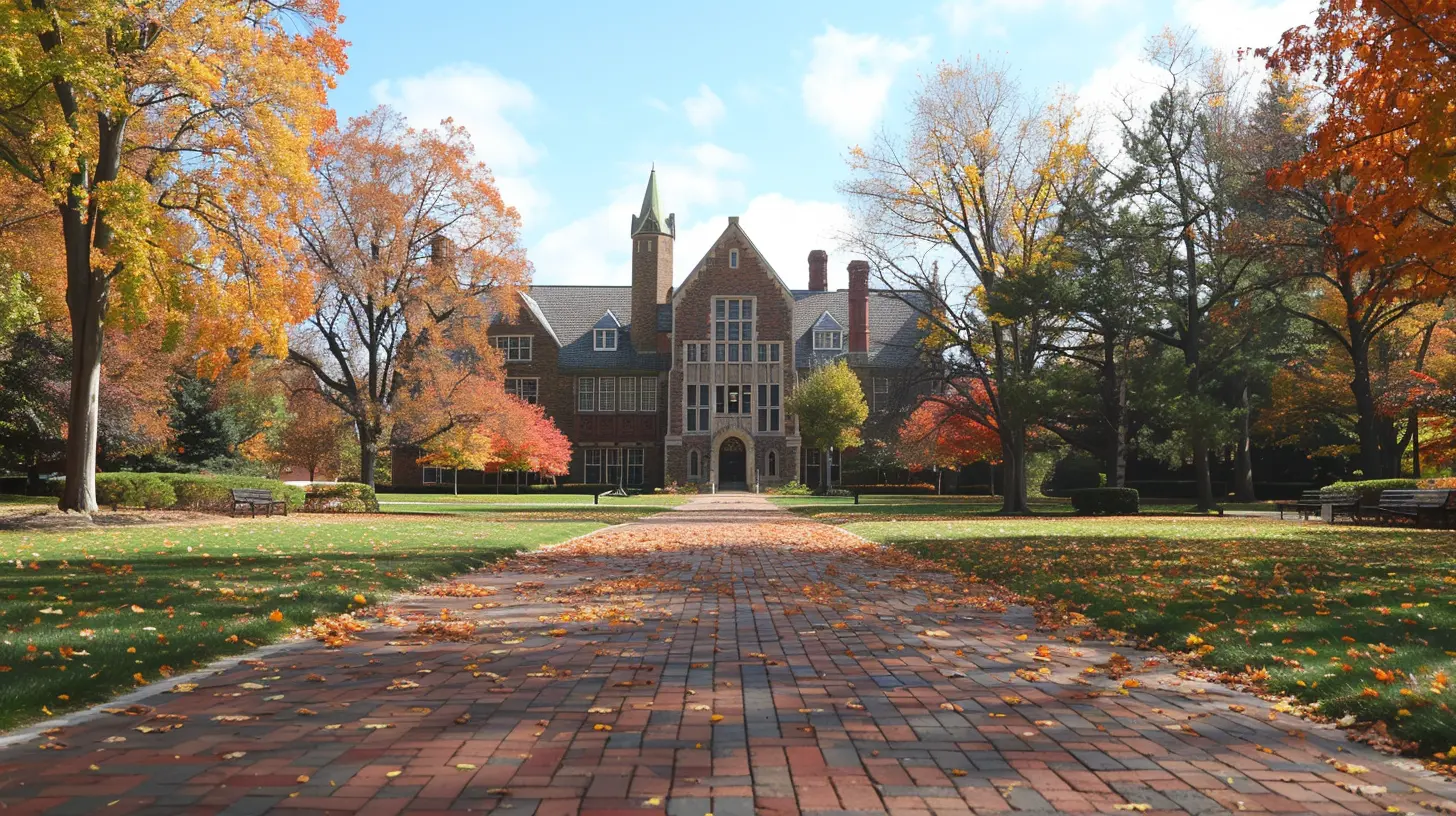
The Case for Keeping It, Steelmanned
If you want to understand this debate, you have to argue the strongest version of the other side.Community has value
A college is not just a sorting machine for individual merit. It is a community with history. Multi-generational families invest in that community in ways that benefit everyone: donations that fund financial aid, alumni mentoring, internship pipelines, and local engagement. A school that severs those ties may find that the community thins out over time.The boost is smaller than critics assume
At the most selective schools, legacy status is not a free pass. Legacy applicants are often strong applicants precisely because they grew up in households that valued education and knew how to navigate the process. Some of the observed advantage reflects that preparation, not a thumb on the scale. Separating the two is genuinely hard, and critics who assume the entire gap is preference are overstating their case.Financial aid depends on it
This is the argument that deserves the most serious attention. Many private colleges fund generous financial aid partly through alumni giving and endowment growth. If legacy preferences were eliminated overnight, would giving collapse? Probably not collapse, but possibly decline at some schools, and the effects would fall hardest on the aid-dependent students those donations support. That is a real trade-off, not a talking point.The counterargument: schools that have ended legacy preferences, including several prominent ones in recent years, have not reported catastrophic fundraising consequences. The evidence so far suggests the feared collapse is overstated, but the long-run picture is still developing.
What Changed and Why It Matters Now
Two developments have reshaped this debate.First, the Supreme Court's 2023 decision restricting race-conscious admissions changed the legal landscape. In its aftermath, attention turned to other preferences, and legacy admissions became a target. Several states have moved to restrict legacy preferences at public institutions, and a number of private colleges have voluntarily ended the practice. The direction of travel is clear even if the pace varies.
Second, public opinion has hardened. Legacy preferences are unpopular across demographic and political lines. Institutions that depend on public goodwill, state funding, or political cooperation have to weigh that.
The practical result: legacy admissions is not disappearing everywhere, but it is contracting. Families should plan accordingly, and institutions should stop assuming the practice is safe by default.
Common Mistakes Families Make
This is where practical advice matters more than ideology.Mistake 1: Assuming legacy status is a strategy
Legacy status is a marginal factor. If your child's academic profile is not competitive for the school, legacy status will not rescue the application. Build the profile first. Treat legacy status as a possible tiebreaker, never as a plan.Mistake 2: Ignoring early decision dynamics
At schools that still weigh legacy status, the advantage is often largest in early decision. If the school is a genuine first choice and the finances work, early decision can matter more than the legacy flag alone. If the finances do not work, do not apply early decision just for the boost. Run the net price calculator first.Mistake 3: Misreading which schools still use it
Policies differ wildly and change often. A school that used legacy preferences five years ago may have dropped them. Check the current common data set and the admissions office's published policies. Do not rely on alumni lore or forum posts.Mistake 4: Overlooking the alternatives
If the goal is a strong outcome, legacy status at one school is a narrow bet. A balanced list with realistic targets, strong essays, and demonstrated interest at schools that value it will do more than any single hook.Mistake 5: Letting legacy status distort the list
Some families fixate on the alma mater and neglect better-fit schools. The legacy connection is worth something, but not worth an unbalanced application strategy.What Colleges Should Consider
For administrators, the question is not whether legacy preferences are defensible in the abstract. It is whether they are worth the cost in trust, legal exposure, and political risk.Audit the actual effect
Most schools do not know precisely how much legacy status moves outcomes in their own pools. Run the analysis. If the effect is tiny, the practice buys little goodwill and carries real reputational cost. If the effect is large, the school should be prepared to defend it publicly with data, not sentiment.Consider the aid trade-off honestly
If a school claims legacy preferences fund financial aid, it should show the linkage. Alumni giving is driven by many factors, and schools that have ended the practice have mostly been fine. The burden of proof is on the institution.Replace preferences with relationship programs
Schools can cultivate alumni loyalty through family programming, legacy scholarships that are need-based, and engagement that does not require an admissions thumb on the scale. Relationship building and admissions preference are separable. Treating them as inseparable is a choice, not a necessity.Be transparent
Whatever a school decides, it should say so clearly and publish the reasoning. Secrecy feeds suspicion. Transparency, even when the answer is uncomfortable, builds credibility.
What This Means for Applicants and Families
Here is the practical bottom line.If you have legacy status at a school you genuinely want to attend, use it. Flag it on the application. Consider early decision if the fit and finances are right. Write essays that show real knowledge of the school, because legacy status plus genuine demonstrated interest is stronger than legacy status alone.
But do not build your strategy around it. Do not assume it guarantees anything. Do not let it crowd out schools where you are a stronger fit. And do not treat a rejection as a verdict on your family's worth. Admissions at selective schools is noisy, and legacy status is one small variable in a large equation.
If you do not have legacy status, the honest advice is that the game is not perfectly fair, but it is also not closed. Strong grades, rigorous coursework, compelling essays, and a well-built list still work. The students who succeed are usually the ones who focus on what they control instead of what they resent.
The Bottom Line
Legacy admissions is neither the scandal its loudest critics describe nor the harmless tradition its defenders claim. It is a real preference that confers a real but usually modest advantage, concentrated at selective private institutions, sustained by fundraising and enrollment logic, and increasingly difficult to defend in public. It is contracting, and that contraction is likely to continue.The most useful posture for families is clear-eyed: use the advantage if you have it, do not depend on it, and build an application that stands on its own. The most useful posture for institutions is equally clear: measure what you are doing, justify it with evidence rather than nostalgia, and be honest about the trade-offs. That is the truth about legacy admissions, and it is more useful than either side's talking points.
all images in this post were generated using AI tools
Category:
College AdmissionsAuthor:

Zoe McKay