The Neuroscience of Engagement: How Brains Participate
30 September 2026
Engagement is one of those words that gets used so often in education that it starts to lose meaning. Teachers are told to boost it. Administrators measure it. Parents worry when their child seems to lack it. But what actually happens inside a student's brain when they are genuinely engaged, and why does it matter so much for learning?
The answer sits at the intersection of neuroscience, psychology, and classroom practice. Understanding it changes how you design lessons, respond to disinterest, and think about attention itself.
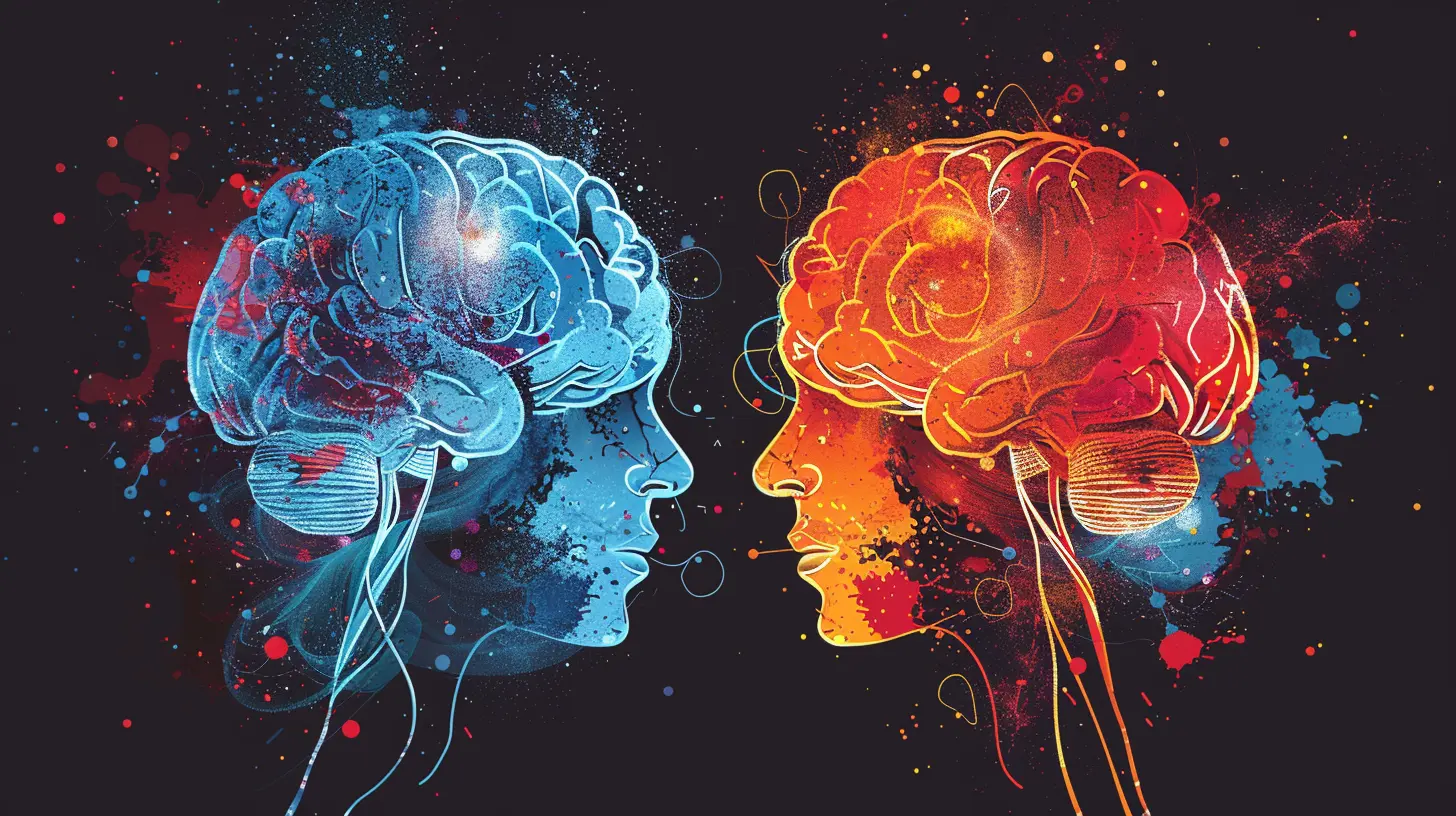
What Engagement Actually Means in the Brain
Engagement is not a single mental state. It is a cluster of overlapping processes that include attention, motivation, emotional investment, and active cognitive effort. Neuroscientists often describe these as separate systems that must coordinate for deep learning to occur.Attention acts as the gatekeeper. Without it, information never reaches the networks that consolidate memory. Motivation provides the fuel, determining whether a student persists when material gets difficult. Emotional relevance tags experiences as important, which influences how strongly memories form. And active processing, the mental work of connecting new ideas to existing knowledge, determines whether information sticks or fades.
When all four align, the brain shifts into a mode that supports durable learning. When any one of them breaks down, engagement collapses, even if the other three are intact.

The Attention System and Why It Is Fragile
The brain's attention networks evolved to detect change, threat, and novelty. Sustained focus on a single task is comparatively recent in human history and requires deliberate effort.Two broad systems matter here. The first is bottom-up attention, which is automatic and triggered by salient stimuli like movement, loud sounds, or emotional faces. The second is top-down attention, which is voluntary and controlled by prefrontal regions. Top-down attention is what students use to follow a lecture or solve a math problem.
The problem is that top-down attention is metabolically expensive. It fatigues. It also develops slowly, which is why young children struggle to sustain focus for long periods. A typical elementary student can manage focused attention for roughly their age in minutes before needing a break, though this varies widely by task and individual.
This has direct implications. A 45-minute lecture with no variation is not a measure of student willpower. It is a mismatch with how attention works. Breaking content into segments, introducing purposeful shifts, and giving the brain small recovery moments are not gimmicks. They are aligned with the biology.

Motivation, Reward, and the Role of Dopamine
Dopamine is often called the reward chemical, but that label is misleading. It is more accurately described as a signal for prediction and anticipation. Dopamine rises when an outcome is better than expected, and it drives the pursuit of goals rather than the pleasure of reaching them.For engagement, this matters enormously. Students are more likely to invest effort when they can anticipate that effort will lead somewhere meaningful. This is why clear goals, visible progress, and timely feedback keep people going. The brain is constantly asking a quiet question: is this worth my energy?
When the answer is unclear or consistently negative, motivation drops. When the answer is yes, effort feels more sustainable.
Intrinsic and Extrinsic Motivation Are Not Enemies
A common misconception is that extrinsic rewards like grades or praise destroy intrinsic motivation. The research is more nuanced. External rewards can undermine intrinsic interest when they feel controlling or when they replace genuine curiosity. But they can also support engagement when they provide information, acknowledge competence, or scaffold a student toward a point where the activity becomes interesting on its own.The key variable is how the reward is framed. A sticker that says "you finished" is different from one that says "you solved a hard problem." The second supports a sense of competence. The first is just a transaction.

Emotional Relevance and Memory Formation
The brain prioritizes information that carries emotional weight. This is not sentimentality. It is an efficiency mechanism. Emotional arousal signals that something matters for survival or social standing, so the brain allocates more resources to encoding it.In classrooms, emotional relevance can come from several sources. Personal connection to the material, social context like working with peers, a sense of challenge, or the satisfaction of curiosity being satisfied all qualify. When content feels abstract and disconnected, the brain treats it as low priority.
This does not mean every lesson must be dramatic. It means students need a reason to care, even a small one. A brief story, a real-world problem, or a question that creates mild uncertainty can be enough to flip the switch.
Cognitive Load and the Limits of Participation
Engagement is not the same as busyness. A student can appear active while learning very little, and a student can appear passive while thinking deeply. The brain has a limited working memory capacity, and engagement strategies that overload it backfire.Cognitive load theory distinguishes between intrinsic load, which comes from the material itself, and extraneous load, which comes from how the material is presented. Good engagement design reduces extraneous load so students can spend their mental energy on the intrinsic load.
This is why flashy presentations and constant activity can actually reduce learning. They add processing demands without adding meaning. The goal is not to keep students entertained. It is to keep their cognitive resources pointed at the right target.
Why Active Processing Beats Passive Reception
The brain does not record information like a camera. It constructs understanding by connecting new input to existing networks. This construction requires effort. Passive listening rarely produces it.Active processing can take many forms. Retrieval practice, where students try to recall information without looking at it, strengthens memory more than rereading. Elaboration, where students explain ideas in their own words, deepens understanding. Spacing practice over time signals to the brain that information is worth keeping.
These strategies work because they force the brain to do the work of reconstruction. That effort is what builds durable pathways.
The Social Brain and Engagement
Humans are intensely social, and the brain treats social information as highly relevant. This is why discussion, collaboration, and even a sense of being known by a teacher can boost engagement.Social engagement works through several mechanisms. It provides accountability, since students are more likely to prepare when they know they will contribute. It offers multiple perspectives, which supports deeper processing. It also meets a basic need for belonging, which influences motivation.
That said, group work is not automatically engaging. It fails when roles are unclear, when one student does all the work, or when the task does not require genuine interdependence. The social brain engages when interaction is meaningful, not when it is merely present.
Common Mistakes in Pursuing Engagement
One frequent error is confusing entertainment with engagement. A captivating video or a game can hold attention, but if it does not connect to learning goals, it is just a break. The test is whether students are thinking about the right things.Another mistake is assuming disengagement is a character flaw. In most cases, it is a signal that something in the environment is not working. The task may be too easy, too hard, too abstract, or too disconnected from what the student values.
A third error is overcorrecting with constant novelty. The brain craves some predictability. When every lesson is a surprise, students spend energy figuring out the format instead of the content.
Finally, many educators treat engagement as a fixed trait. In reality, it is highly context dependent. The same student who seems checked out in one class can be deeply absorbed in another. That variation is a clue, not a verdict.
Practical Strategies That Align With Brain Function
Effective engagement strategies share a common feature. They work with the brain's natural tendencies rather than against them.Start with relevance. Connect new material to something students already know or care about. This activates prior knowledge, which is the foundation for new learning.
Build in choice. Even small choices, like which problem to solve first or how to demonstrate understanding, increase a sense of autonomy. Autonomy supports intrinsic motivation.
Use retrieval and spacing. Instead of reviewing by rereading, ask students to recall. Instead of cramming, distribute practice over time. These methods feel harder, and that is precisely why they work.
Provide feedback that is specific and timely. The brain learns best when it can adjust in real time. Vague praise does little. Clear information about what to do next does a lot.
Design for appropriate challenge. Too easy breeds boredom. Too hard breeds frustration. The sweet spot is often called the zone of proximal development, where a task is difficult but achievable with support.
Protect attention. Reduce unnecessary distractions, chunk content, and build in short breaks. Attention is a resource, not a moral quality.
When Engagement Strategies Can Backfire
Not every technique works in every context. Gamification, for example, can boost motivation in some settings but undermine it in others. When points and badges become the goal, students may focus on winning rather than understanding.Similarly, personalization can increase relevance but also narrow exposure. If students only engage with what they already like, they may miss important content.
Group work can build social connection but also create anxiety for students who prefer to process alone. The best approach depends on the learners, the content, and the goal.
A Balanced View of Engagement
Engagement is not a single switch to flip. It is a dynamic state shaped by attention, motivation, emotion, and cognitive effort. It can be supported but not forced. It can be measured but not reduced to a number.The most useful question is not "how do I make students engaged?" It is "what is getting in the way of engagement right now?" Sometimes the answer is a task that lacks relevance. Sometimes it is fatigue. Sometimes it is a social dynamic. Diagnosing the cause is more effective than applying a generic fix.
Teachers who understand the neuroscience behind engagement make better decisions. They know why a strategy works, when to use it, and when to step back. They treat disengagement as information rather than defiance. And they recognize that the goal is not constant activity but meaningful participation.
Final Thoughts
The brain participates when the conditions are right. Attention must be protected. Motivation must be supported. Emotion must be engaged. Cognitive effort must be directed at the right target. When these align, learning becomes not just possible but natural.Engagement is not a trick or a personality trait. It is an outcome of good design and genuine understanding of how people think. The more educators know about the brain, the better they can create environments where participation is the default rather than the exception.
all images in this post were generated using AI tools
Category:
Class ParticipationAuthor:

Zoe McKay