The History of Protest: From Street Marches to Social Media
27 November 2026
Protest is one of the oldest tools citizens have for demanding change. Long before hashtags and live streams, people gathered in public squares, blocked roads, signed petitions, and risked arrest to make their grievances impossible to ignore. What has changed over the centuries is not the underlying human impulse but the infrastructure of dissent: who can speak, how far a message travels, how fast authorities can respond, and how movements sustain themselves once the cameras leave.
This article traces that evolution. It examines how protest moved from physical streets to digital platforms, why each era's tactics emerged when they did, and what organizers and observers should understand before choosing a method. The goal is not a timeline for its own sake but a working knowledge of how protest actually functions, including its trade-offs, its failure modes, and the practical lessons that carry across eras.
Why Protest Exists at All
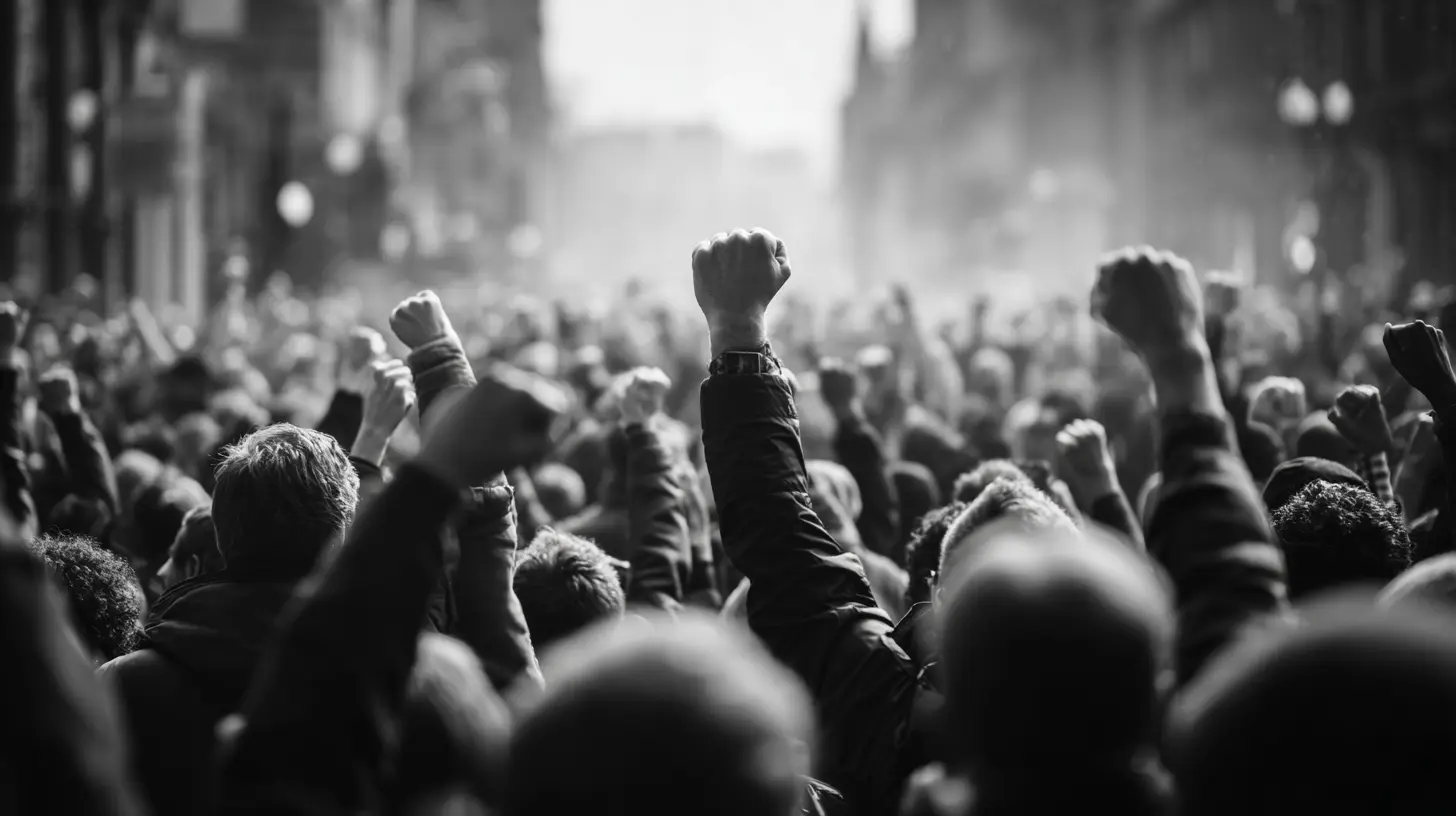
Before examining history, it helps to understand the logic of protest as a mechanism. Protest is a signaling technology. It converts diffuse private discontent into visible public pressure. That visibility matters because most people affected by a problem never coordinate with each other. A factory closure, a corrupt permit process, or a discriminatory policy harms thousands individually but organizes them rarely. A protest solves the coordination problem by giving people a shared time and place to act together.Protest also works through cost. Authorities can ignore quiet complaints at almost no political price. They cannot ignore crowds, boycotts, or strikes without paying a price in legitimacy, economic disruption, or international attention. The effectiveness of any tactic depends on how credibly it raises that cost while keeping the movement's own costs bearable for participants.
This framework explains a great deal of history. When the cost of communication was high, protest had to be local and physical. When communication became cheap, the calculus shifted. Every era's dominant tactics reflect the available tools and the specific vulnerabilities of the powers being challenged.
The Physical Street as the Original Stage
Early collective action
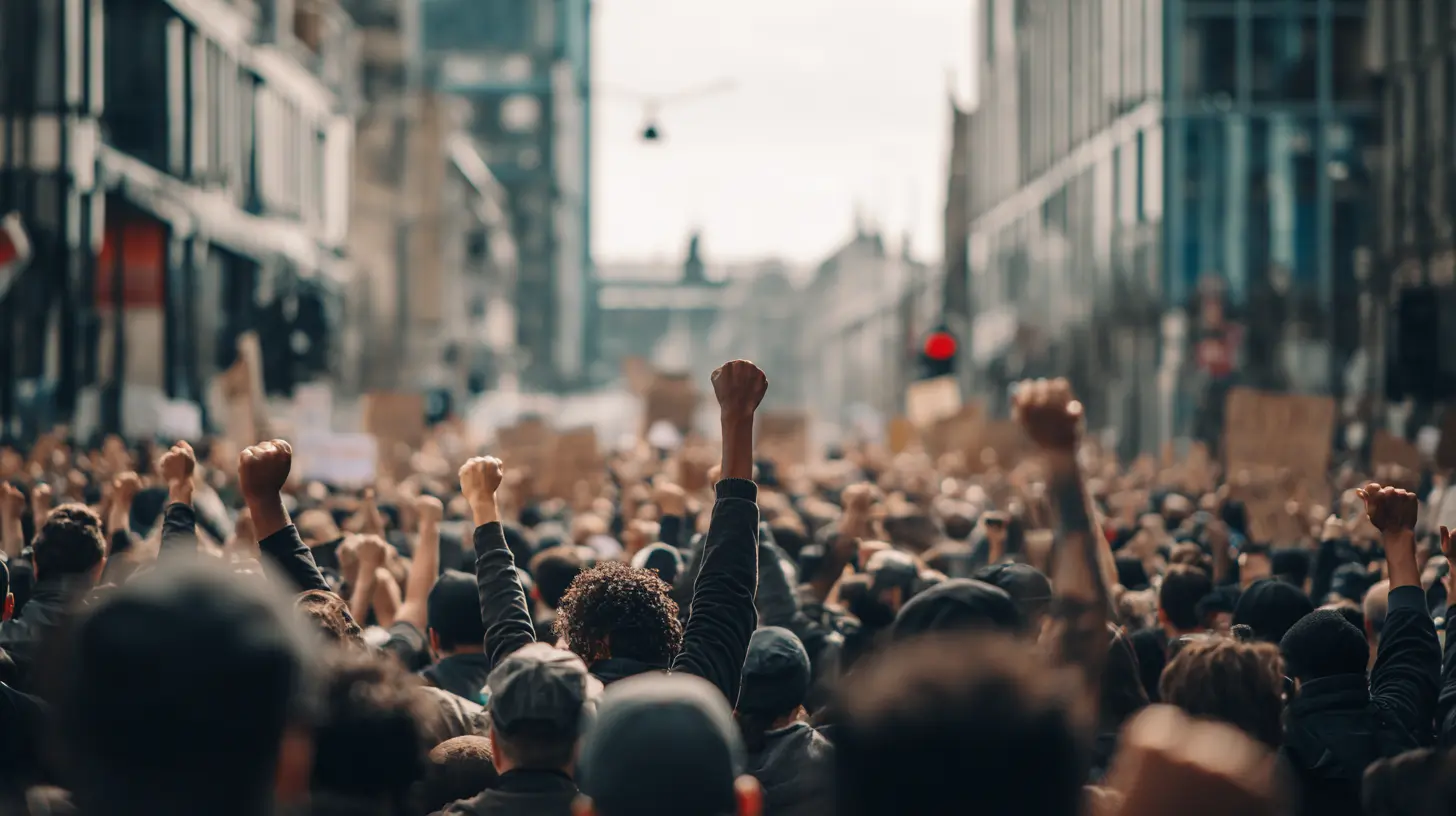
Collective action predates modern democracy. Grain riots, tax revolts, and labor uprisings appear across recorded history, from ancient Rome's secessions of the plebeians to medieval peasant revolts. These events shared a structure: a triggering grievance, a gathering in a symbolic location such as a market square or government building, and a demand delivered in person.The physical gathering was not merely symbolic. In societies without mass media, the crowd was the medium. Word of mouth was the only distribution channel, which meant a protest's reach was limited to those who could hear about it and walk to it. This imposed real constraints: movements were local, small by modern standards, and heavily dependent on geography and timing, such as market days when people were already assembled.
The rise of the mass march
The industrial era transformed protest. Urbanization concentrated workers in cities, printing presses and later newspapers allowed organizers to spread word widely, and the telegraph accelerated coordination. The mass march and the strike became viable at a scale never seen before.The suffragist and labor movements of the nineteenth and early twentieth centuries illustrate the pattern. Marches were carefully staged for press coverage. Organizers understood that a photograph of a thousand women in white, or a picket line outside a mill, would travel farther than the event itself. The tactic worked because it exploited a new vulnerability: public opinion, now shaped by mass-circulation newspapers, had become a real political force. A government that could ignore a petition could not easily ignore a front-page image of police attacking peaceful marchers.
This is an early example of a principle that persists today: protest tactics succeed when they align with the media environment of their time. The march was built for print. It was photogenic, narratively simple, and easy for a reporter to describe.
Civil disobedience and moral framing
The mid-twentieth century brought a refinement: disciplined civil disobedience designed to expose injustice rather than merely oppose it. The approach, associated with figures like Mohandas Gandhi and Martin Luther King Jr., involved deliberately breaking unjust laws while accepting the legal consequences, and doing so in full view of the public.Why did this work? It reframed conflict. Instead of a contest of force between protesters and the state, it created a moral contest. When peaceful demonstrators were met with violence, the state's legitimacy eroded in front of witnesses. The tactic converted the state's own coercive power into a liability. It required, however, two conditions: a public that could be moved by moral appeals, and media willing to show what happened. Where those conditions were absent, the tactic's leverage shrank considerably.
This is a critical trade-off to understand. Civil disobedience is powerful but conditional. It depends on the target audience's values and on credible documentation. It also depends on internal discipline, because a single violent incident can undo the moral framing of an entire campaign. Organizers in this tradition invested heavily in training and codes of conduct for exactly that reason.
The limits of the street
Physical protest has persistent weaknesses. It is resource intensive. It requires bodies, time, and often money for permits, transport, and legal defense. It is geographically constrained, so it tends to concentrate in cities and exclude people who cannot travel or risk arrest. It is also fragile: a single crackdown, a violent counter-protest, or simple fatigue can end a campaign.These limits are why the street has always been combined with other tools, such as boycotts, litigation, lobbying, and mutual aid. Successful movements rarely relied on protest alone. They used visibility to create leverage, then converted that leverage through institutions.
Broadcast Media and the Televised Protest
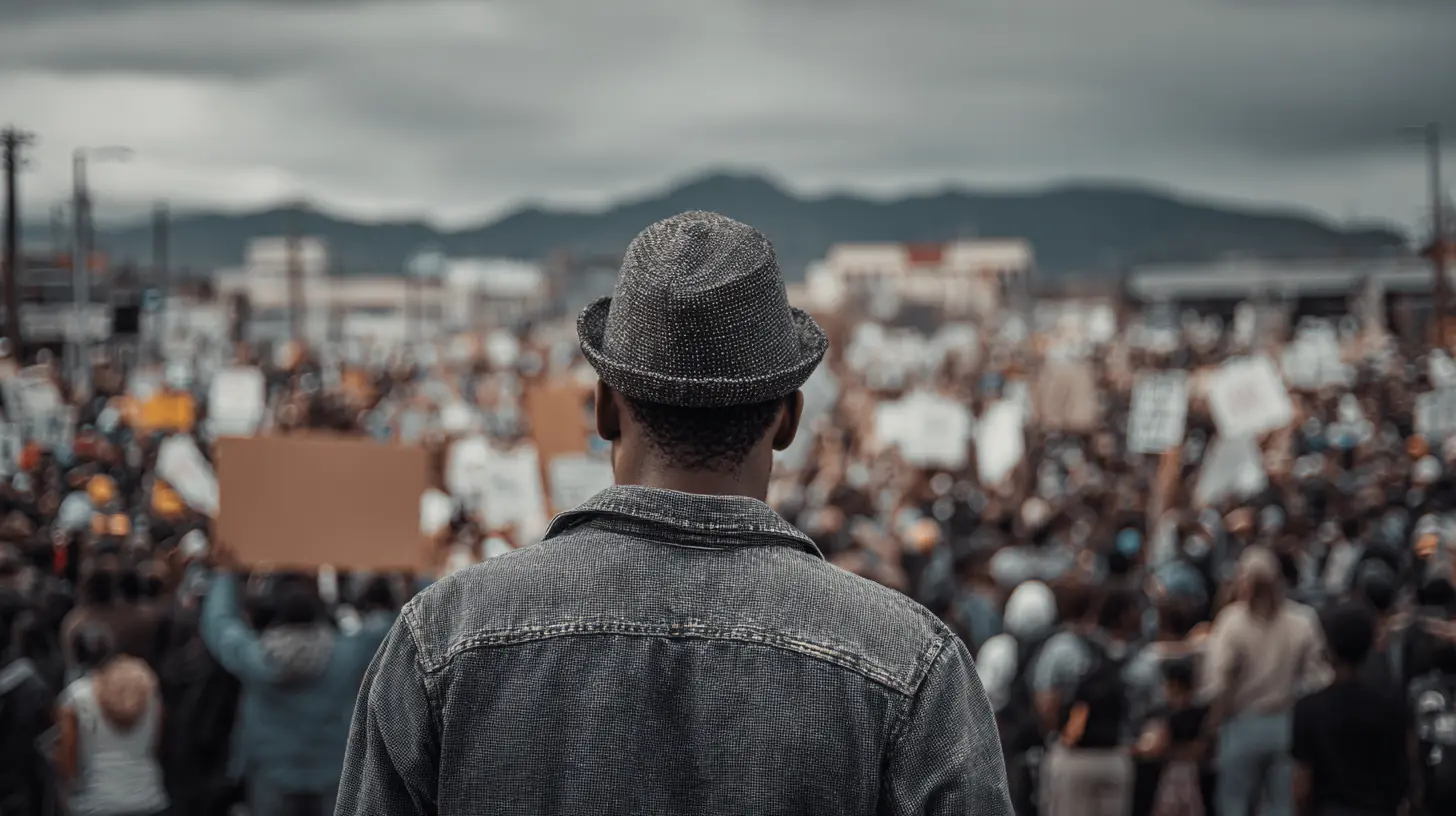
Television changed the equation again. From the mid-twentieth century onward, images could reach millions within hours. Protests were now designed for a camera, and the most consequential moments were often those that translated well to a screen.The trade-off was subtle but important. Television rewarded drama. A confrontation, a sit-in, a dramatic standoff made better footage than a long negotiation or a slow policy campaign. This created a quiet incentive toward spectacle. Movements that understood the medium gained enormous reach, but they also risked having their message compressed into a single image that stripped away context.
Organizers learned to manage this. They staged events at times that suited news cycles. They prepared spokespeople with clear, quotable demands. They provided press packets and advance notice to reporters. This professionalization improved reach but introduced a new dependency: the movement's narrative now passed through editors and producers who had their own priorities.
There was also a counterweight. Broadcast media made state violence harder to hide. Footage of crackdowns could shift public opinion rapidly and invite international scrutiny. Governments responded by managing access, restricting journalists, or controlling the narrative, which is why press freedom and protest freedom have historically been closely linked.
The Digital Shift
From websites to social platforms
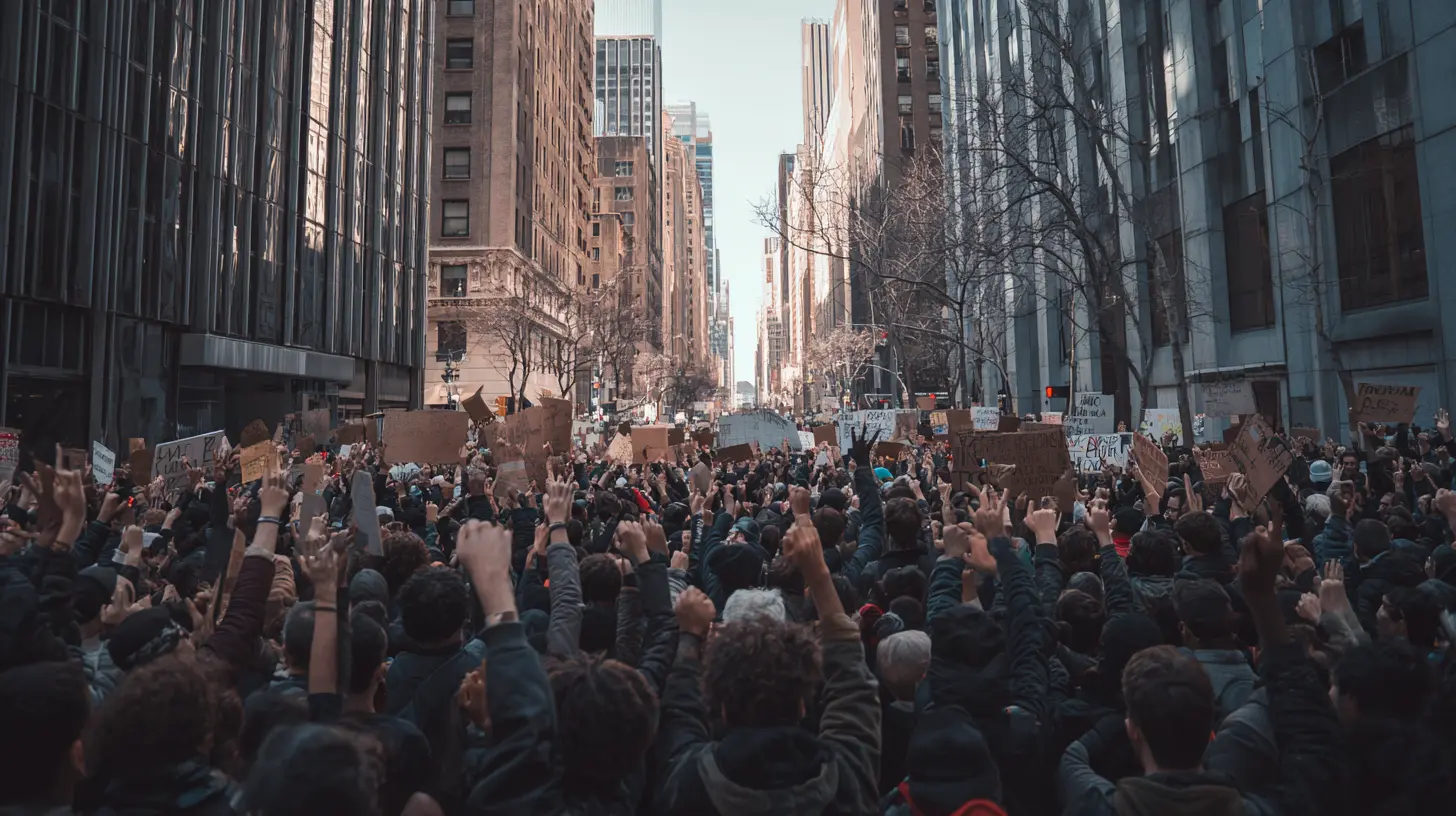
The internet first changed protest logistics. Email lists, forums, and early websites made it cheap to organize across distance. A campaign could coordinate dozens of local actions without a central office. Then social media changed the dynamics of visibility itself.Platforms like Facebook, Twitter, and later others made it possible to broadcast to large audiences at zero marginal cost. This removed the gatekeeper. A movement no longer needed an editor's permission to reach the public. It could publish directly, and it could do so in real time.
The consequences were dramatic. Mass mobilizations could be convened in days rather than months. Hashtags created shared identity and searchable archives. Live video let anyone document events as they happened, which made suppression riskier and evidence harder to erase.
What digital tools actually solve
It is worth being precise about what social media does well, because the hype often outpaces the reality.First, it lowers coordination costs. Finding sympathetic people, sharing plans, and adjusting tactics in real time becomes far easier.
Second, it enables rapid documentation. Citizen video has repeatedly changed the political calculus around police conduct and state violence, because the cost of hiding an incident rises when anyone can record it.
Third, it supports decentralized action. A single call can spark many local events without a central organizer, which makes movements harder to decapitate.
Fourth, it provides a persistent record. Posts, threads, and archives create a public memory that can outlast a news cycle.
What digital tools do not solve
Social media is a tool for visibility and coordination, not for durable organization. This distinction is where many movements stumble.Attention is volatile. A trending topic can vanish in days, replaced by the next cycle. Online enthusiasm does not automatically convert into sustained pressure. A million likes do not equal a million people willing to show up, donate, or endure risk.
Platforms are not neutral infrastructure. They are companies with rules, algorithms, and commercial interests. They can throttle reach, change policies, or remove content. Organizers who build entirely on a single platform are renting their megaphone, not owning it. This is a recurring failure mode: movements that scale fast on one platform can collapse just as fast when the platform's incentives shift.
Digital participation is also shallow by design. A share or a like costs almost nothing, which means it signals weak commitment. Authorities know this. A large online following is easy to dismiss unless it translates into offline action, money, votes, or disruption.
Finally, surveillance is a real concern. Digital organizing leaves data trails. Authorities and hostile actors can monitor public posts, identify participants, and use the same tools for counter-mobilization. Privacy practices are not optional for organizers working under repressive conditions.
Hybrid Organizing: The Current Standard
The most effective modern movements are hybrids. They use digital tools for the functions they perform well, such as coordination, documentation, and rapid response, while investing in offline structures for the functions that require depth.A useful way to think about this is to separate the layers of a campaign.
- The narrative layer: who tells the story and how. Digital platforms excel here.
- The coordination layer: how people find each other and act together. Digital tools are efficient but need backup channels.
- The commitment layer: who actually shows up, contributes, and stays. This is built offline through relationships, local groups, and repeated interaction.
- The durability layer: how the movement survives attention droughts and repression. This requires institutions, funds, legal support, and leadership that does not depend on a single viral moment.
Movements that skip the commitment and durability layers often produce a spike followed by a fade. Movements that invest in them can convert a viral moment into lasting change. The pattern repeats across countries and causes: the tools amplify, but the organization sustains.
A practical comparison
| Tactic | Strengths | Weaknesses | Best used when ||---|---|---|---|
| Street march | Visible, unifying, press-friendly | Resource heavy, geographically limited, risk of confrontation | You need public visibility and moral framing |
| Strike or boycott | Direct economic pressure | Requires high solidarity, can harm participants financially | You have concentrated economic leverage |
| Civil disobedience | Reframes conflict morally | Depends on audience values and documentation, demands discipline | The injustice is clear and the public can be moved |
| Online campaign | Cheap, fast, wide reach | Shallow commitment, platform dependency, surveillance risk | You need rapid coordination or documentation |
| Hybrid campaign | Combines reach with durability | Demands more planning and resources | You aim for sustained change |
Common Mistakes and Misconceptions
Several recurring errors undermine otherwise promising efforts.Mistaking reach for power. A large online audience feels like influence, but power comes from the ability to change someone's incentives. Before scaling a message, ask who needs to act differently and what would make them act.
Ignoring the opposition's playbook. Authorities adapt. Once a tactic becomes predictable, countermeasures follow: restricted permits, surveillance, counter-messaging, or legal pressure. Effective campaigns vary tactics and anticipate responses.
Neglecting internal discipline. A single act of violence or a fabricated provocation can destroy a movement's moral framing. Clear codes of conduct and rapid response protocols are not bureaucratic extras; they are protective infrastructure.
Assuming platforms are allies. Platforms optimize for engagement, not for your cause. Build independent channels such as email lists, messaging groups, and local networks so you are not stranded when policies change.
Skipping the conversion step. Visibility must be converted into concrete outcomes: policy change, negotiated agreements, electoral pressure, or institutional reform. Without a conversion strategy, momentum dissipates.
Overlooking participant safety. Digital organizing creates records. Consider what participants are exposed to, use appropriate privacy practices, and be honest about risks so people can make informed choices.
What Readers Should Consider Before Acting
If you are thinking about organizing or participating, a few questions will sharpen your decisions.What is the specific change you want, and who has the power to make it? Vague demands produce vague pressure. A named target and a concrete ask make it possible to measure progress and negotiate.
Which tactic fits your target's vulnerability? A company sensitive to reputation responds differently than a local government sensitive to turnout or a national government sensitive to international scrutiny. Match the tool to the pressure point.
What can your participants realistically sustain? A one-day march and a months-long boycott demand different levels of commitment. Be honest about capacity, and design for the level you actually have rather than the level you wish for.
How will you protect people? Consider legal risk, privacy, and the possibility of retaliation. Plan for it before it happens.
How will you know if it is working? Define indicators in advance. Attendance, media coverage, and engagement are inputs. Policy responses, negotiations, and behavioral change are outcomes. Track both.
The Through Line
The history of protest is not a story of tools replacing one another. It is a story of tools accumulating. The street march did not disappear when television arrived. Civil disobedience did not become obsolete when social media appeared. Each new channel added capacity while leaving the older ones intact, and the most capable movements learned to combine them.What has remained constant is the underlying logic. Protest works by making a grievance visible and raising the cost of ignoring it, while keeping the cost of participation bearable for ordinary people. Every tactic, from a picket line to a hashtag, is a variation on that equation. The tools change. The arithmetic does not.
Understanding that arithmetic is what separates a protest that makes noise from one that makes history. The former is easy to generate and easy to forget. The latter requires strategy, discipline, and the patience to build structures that outlast the moment.
all images in this post were generated using AI tools
Category:
History LessonsAuthor:

Zoe McKay