Teaching Colonialism: Challenges and Opportunities
26 October 2026
Colonialism is one of the most difficult subjects a teacher can carry into a classroom. It touches identity, family history, language, land, and power. Students do not encounter it as a neutral topic in a textbook. They encounter it as a story about where they live, who their ancestors were, and why the world looks the way it does. That is exactly what makes it worth teaching, and exactly what makes it hard to teach well.
This article is for teachers, curriculum designers, and school leaders who want to move past the safe routine of dates, maps, and treaties. It offers a critical look at the real challenges of teaching colonialism, the genuine opportunities those challenges create, and practical guidance on how to handle both with care and intellectual honesty.
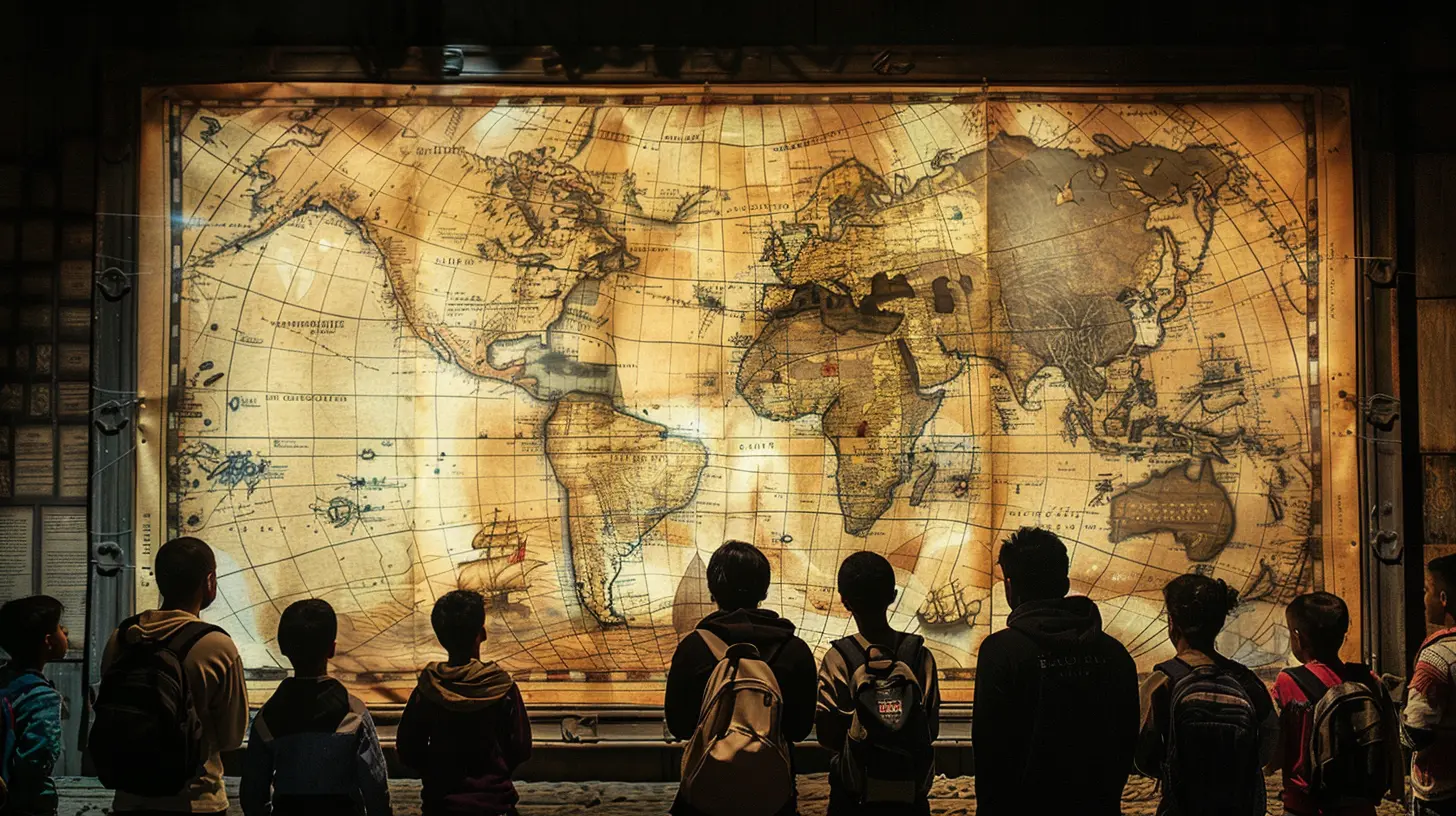
Why Colonialism Resists Simple Teaching
Most historical topics can be taught as a sequence of events. Colonialism cannot. It is not a single event but a centuries-long process that reshaped economies, borders, languages, legal systems, and ways of knowing. It involved many empires, many colonized peoples, and many different local arrangements. Treating it as one uniform story flattens exactly the complexity students most need to understand.There is also the problem of proximity. In countries with a colonial past, the subject is never fully in the past. Land disputes, language policy, museum collections, street names, and school curricula all carry colonial residue. A lesson on colonial borders can turn, without warning, into a conversation about a student's family. A discussion of assimilation policies can feel personal to a child whose grandparents were punished for speaking their own language.
Teachers who ignore this proximity tend to get one of two outcomes. Either the class stays politely superficial, or it becomes emotionally charged in ways nobody is prepared to manage. Neither serves the students.
A third difficulty is that colonialism produced the very institutions in which it is now taught. Schools, examinations, and academic disciplines were often shaped by colonial administrations. This does not make honest teaching impossible, but it does mean teachers should be aware that the structure of the classroom is part of the history being examined. That awareness alone changes how you frame the topic.
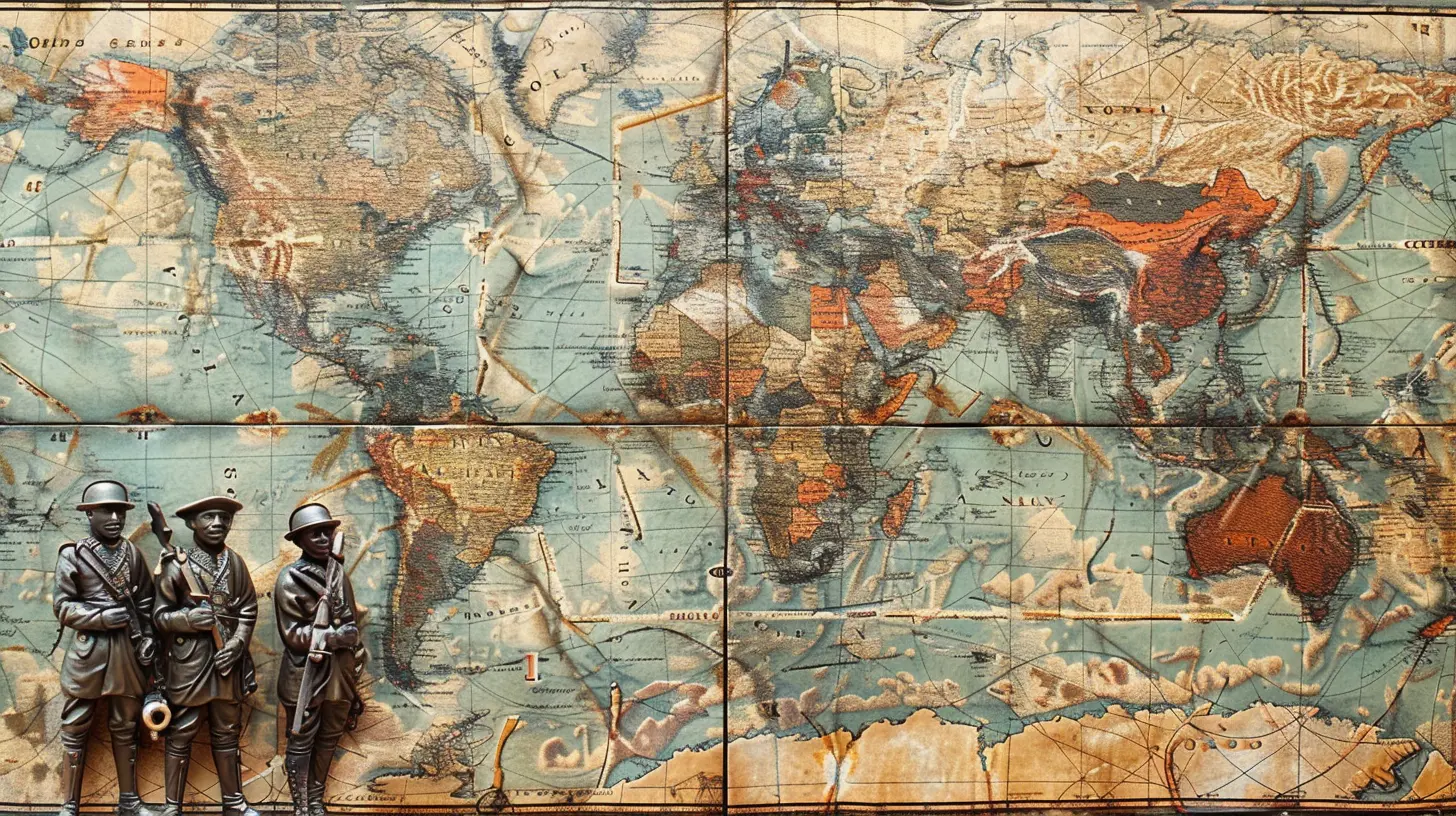
The Core Challenges, Examined Honestly
Emotional Weight and the Risk of Harm
For students from colonized communities, lessons on colonialism can reopen old wounds or, worse, turn them into exhibits. A student may be asked to speak for an entire people, to describe family trauma in front of peers, or to absorb images of violence against people who look like them without warning or context.The risk is real, and it is asymmetrical. Students from the colonizing country, or from groups that benefited, may feel accused. Students from colonized groups may feel exposed. Both reactions can derail a lesson if the teacher has not planned for them.
What works is preparation, not avoidance. Warn students before difficult material. Offer ways to engage without self-disclosure. Keep the analytical frame visible at all times: we are studying systems and decisions, not putting individuals on trial. Give students a moment to write before discussing aloud. These are small moves, but they change the emotional temperature of a room.
The Pull Toward Two Lazy Stories
Classrooms tend to drift toward one of two narratives. The first is the triumphalist story: colonialism brought roads, railways, and modern administration, and that is that. The second is the purely villainous story: colonialism was unrelieved brutality, and nothing else needs saying.Both are lazy, and both fail students. The triumphalist version ignores coercion, extraction, and the destruction of functioning societies. The villainous version, paradoxically, can also diminish colonized peoples by presenting them only as victims with no agency, no diplomacy, no resistance strategies, and no history of their own before or during colonization.
The more demanding and more truthful approach is to hold several truths at once. Colonial administrations did build infrastructure, usually to move resources and troops, and that infrastructure had long consequences. Colonized societies also negotiated, resisted, adapted, and sometimes split internally over how to respond. Teaching this complexity is harder than teaching either simple story, but it is the only version that respects students' intelligence.
The Problem of Scope
Colonialism spans every inhabited continent and several centuries. A teacher could spend a year on it and still leave things out. The temptation is to cover everything quickly, which produces a parade of names and dates with no depth.A better principle is to go deep rather than wide. One well-chosen case study, examined from multiple angles, teaches more about colonialism than a dozen countries skimmed in a week. Students who understand one case in detail, including its economy, its resistance movements, its cultural effects, and its aftermath, can transfer that understanding to other cases far more effectively than students who memorized a timeline.
Language and Framing Traps
The words teachers use carry hidden assumptions. "Discovery" implies that land was empty. "Settlement" softens invasion. "Tribal" is often applied to complex societies that had cities, trade networks, and law. "Developing countries" quietly measures the world against an industrial standard that colonialism itself helped create.These are not trivial word choices. They shape how students think. A teacher who notices the framing and discusses it openly turns vocabulary into a lesson in critical thinking. A teacher who lets colonial-era language pass unchallenged teaches it by default.

The Opportunities Most Teachers Miss
Colonialism as a Lesson in Systems Thinking
Few topics show so clearly how economic incentives, military power, law, and culture interact. Students can trace how a demand for a single commodity reshaped land ownership, labor, migration, and borders. That is systems thinking in practice, and it transfers to questions about supply chains, climate policy, and globalization today.The key move is to keep asking "why" and "then what." Why did this administration choose this policy? Who benefited? Who paid the cost? What happened to that structure after independence? Students who practice this on colonialism become better analysts of the present.
Local History as an Entry Point
National and global stories of colonialism can feel abstract. Local history does not. A street name, an old railway line, a mission school, a cemetery, a museum object, or a family photograph can anchor the whole topic in something students can see.This approach also sidesteps some of the emotional risks of national narratives, because it lets students examine evidence and ask questions rather than receive verdicts. A class that researches why a local landmark carries a particular name is doing real historical work, and the skills involved are the same ones professional historians use.
Teaching Historiography, Not Just History
Colonialism is one of the best available topics for teaching students that history is written by people, with interests and blind spots. Compare a colonial-era textbook with a post-independence one. Compare an official account with an oral history. Ask who kept records, who did not, and why.This is where the subject becomes genuinely powerful. Students stop asking "what happened" and start asking "how do we know, and who decided this was the story." That shift is the core of historical literacy, and it lasts long after the specific facts fade.
Connecting Past and Present Without Determinism
Colonialism shaped present-day borders, economies, and institutions. Students often want to draw a straight line from then to now. The opportunity, and the discipline, is to show influence without pretending causation is simple.A useful habit is to name the mechanism. Instead of saying "colonialism caused today's inequality," ask which specific structures carried forward: land registries, tax systems, education tracks, trade agreements. This keeps the analysis honest and prevents the fatalism that comes from treating history as destiny.
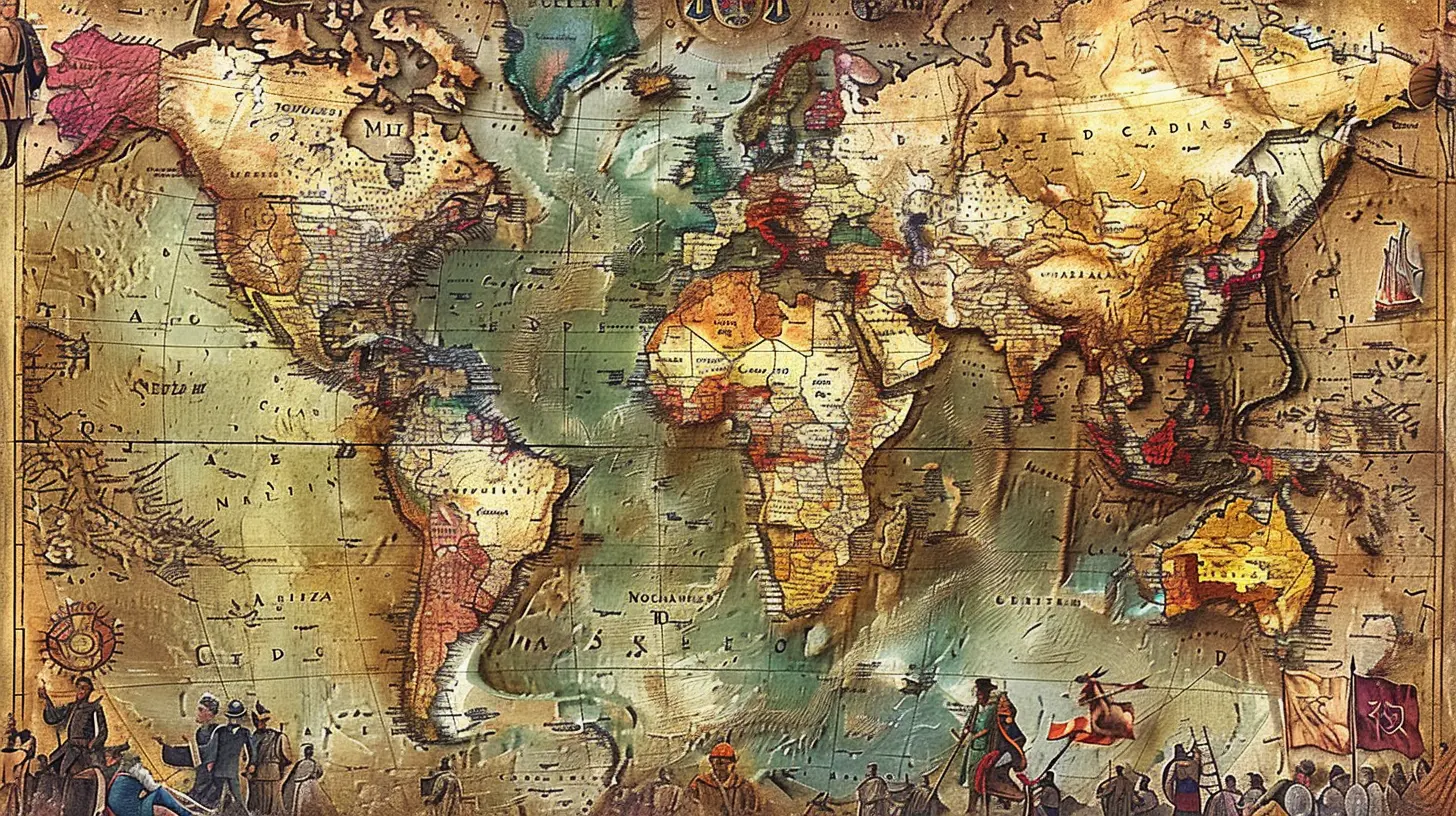
Practical Approaches That Work
Start With Questions, Not Verdicts
Open the unit with genuine historical questions rather than conclusions. What did colonial administrations say they were doing, and what did their records show they actually did? How did different groups within a colonized society respond, and why did they disagree? What survived, what changed, and what was destroyed?Questions give students room to think and give the teacher room to manage the emotional stakes. They also make assessment easier, because students can be evaluated on the quality of their reasoning rather than on whether they adopted the correct opinion.
Use Primary Sources With Care
Primary sources are the backbone of good history teaching, but colonial-era sources require special handling. Most were produced by administrators, missionaries, and companies. They reveal a great deal about colonial thinking and very little about colonized people's inner lives, unless you read them against the grain.Teach students to ask who wrote a document, for whom, and why. Pair administrative records with oral histories, letters, petitions, songs, or court testimony where available. When colonized voices are missing, make that absence itself the lesson. The silence in the archive is evidence.
Build in Structured Discussion
Unstructured debate on colonialism tends to reward the loudest voices and punish the most affected students. Structured formats work better. Think-pair-share, written reflections before discussion, assigned roles in a structured deliberation, and small-group analysis of documents all lower the temperature and raise the quality of thinking.It also helps to separate two kinds of questions. Factual and interpretive questions can be debated freely. Questions about personal or family experience should never be put to a vote or treated as positions to argue.
Assess Reasoning, Not Allegiance
If students believe the grade depends on expressing the correct moral view, they will write what they think the teacher wants, and the learning stops. Assess instead on evidence use, quality of argument, awareness of multiple perspectives, and the ability to explain why different people acted as they did.A strong essay on colonialism might argue a position the teacher disagrees with and still earn high marks, provided the evidence and reasoning hold up. That standard teaches more about intellectual honesty than any lecture on the subject.
Common Mistakes and Misconceptions
Treating colonialism as ancient history. Students often assume it ended long ago. In many places, independence came within living memory, and colonial-era laws and borders remain active. Teachers should establish the timeline clearly and let students see the continuity.Equating colonialism with one empire. British, French, Portuguese, Dutch, Belgian, Japanese, and other colonial projects differed enormously in law, ideology, and practice. Teaching one as the template produces distortion.
Assuming colonized peoples were passive. Resistance took many forms: armed struggle, legal challenge, strikes, flight, cultural preservation, religious adaptation, and quiet noncompliance. Omitting this agency is both inaccurate and demoralizing.
Avoiding the economic dimension. Colonialism was, among other things, an economic system. Leaving out land seizure, forced labor, taxation, and trade rules makes the topic feel like a matter of attitudes rather than structures.
Letting the present hijack the past. Current political debates can be relevant, but if every lesson becomes a proxy for today's arguments, students never understand the past on its own terms. Keep the historical questions central and connect to the present deliberately, not reflexively.
Skipping the aftermath. Independence did not reset the clock. Post-colonial decisions, both wise and disastrous, belong in the story. Without them, students learn to blame or credit colonialism for everything, which is its own kind of distortion.
Designing a Unit: A Workable Sequence
A unit that works usually moves through four phases. First, establish context: what the region was like before colonization, so students do not imagine a blank slate. Second, examine the colonial system: how power was taken, administered, and justified. Third, study responses: resistance, accommodation, and the internal debates within colonized societies. Fourth, trace the aftermath: what carried forward, what was dismantled, and what remains contested.Within each phase, use one strong case study and a handful of well-chosen sources. Resist the urge to add more countries. Depth beats coverage every time.
For assessment, combine a document-based task, a structured discussion, and a written argument. This mix captures different skills and gives students multiple ways to succeed.
Frequently Asked Questions
At what age can students handle this topic? Younger students can learn about fairness, land, and language without graphic detail. Older students can handle systems, ideology, and contested interpretations. Match the emotional weight to the developmental stage, and always preview materials.What if my own national curriculum is silent or one-sided? Teach the required content and add the missing questions alongside it. A single well-chosen source or a well-framed discussion can open a great deal, even within a constrained syllabus.
How do I handle a student who repeats colonial-era stereotypes? Treat it as a teachable moment about evidence and framing rather than a personal attack. Ask where the idea came from, what evidence supports it, and what the record actually shows. Public shame shuts down learning; inquiry does not.
Should I include my own views? Sparingly, and with clear labeling. Students should know what is evidence and what is the teacher's interpretation. Your views can model reasoning, but they should not become the answer key.
Final Thoughts
Teaching colonialism well requires more than knowledge of the subject. It requires judgment about sequence, framing, emotion, and evidence. The challenges are real: the material is painful, the scope is vast, and the language is loaded. But the opportunities are larger. Few topics teach systems thinking, source criticism, and historical empathy as effectively. Few topics matter as much to how students understand the world they live in.The teachers who do this well share a few habits. They ask questions before offering verdicts. They go deep instead of wide. They treat students as thinkers rather than audiences. And they never let a simple story stand in for a true one.
all images in this post were generated using AI tools
Category:
History LearningAuthor:

Zoe McKay
Discussion
rate this article
1 comments
Otis McCall
This article tackles an important and often sensitive topic. Teaching about colonialism can be complex, but it offers a chance to foster understanding and empathy. Engaging with these challenges not only enriches our students' perspectives but also encourages critical thinking about our shared history.
October 26, 2026 at 5:43 AM